 ADVERT
 ADVERT
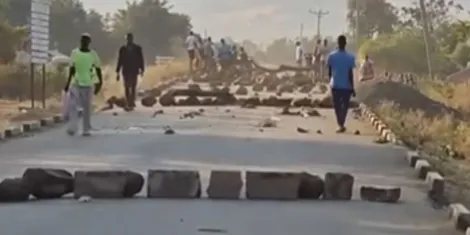
The violence that tore through Homa Bay on August 16, 2026, during the Linda Mwananchi political tour should not be reduced to another familiar exchange of political accusations.
It was a warning.
It was a warning about what happens when political competition becomes a contest of mobilisation, intimidation and street power; when young men are turned into instruments of political warfare; when security agencies appear unable or unwilling to prevent violence; and when, after the blood has been shed, politicians retreat into competing narratives while ordinary citizens are left counting the cost.
The immediate facts are disturbing enough. The violence left people dead and scores injured, vehicles torched, property destroyed and journalists assaulted. Initial reports put the death toll at two, while subsequent investigations and reporting have placed the number of fatalities at four. At least 46 people were reported injured in the initial aftermath.
Several journalists were also attacked. The Media Council of Kenya said at least eight journalists and two drivers were injured, with equipment destroyed or stolen and a media vehicle burnt.
 ADVERT
That alone should make Homa Bay a national political-security case study.
But the deeper lesson lies beyond the stones, pangas, teargas and burning vehicles.
The blame game has already begun
Predictably, the political class has entered the second phase of the conflict: accusation and counter-accusation.
Leaders associated with Linda Mwananchi have accused Homa Bay Governor Gladys Wanga, Homa Bay Town MP Peter Kaluma and elements of the security establishment of either facilitating or failing to prevent the violence. Governor James Orengo and Embakasi East MP Babu Owino publicly accused President William Ruto, Wanga and Kaluma of responsibility for the chaos.
Kaluma, in turn, has denied involvement and accused the Linda Mwananchi leadership of being connected to the violence. Wanga has repeatedly condemned the violence and rejected allegations linking her administration to it.
That is precisely where Kenyans should be careful.
Political accusations are not convictions. Neither a press conference nor a dramatic television clip establishes criminal responsibility. What matters is evidence, independent investigation, forensic analysis, witness testimony and ultimately a properly conducted judicial process.
But neither should political denial be allowed to become a substitute for investigation.
The latest investigation published by The Standard has raised serious questions about whether the violence was spontaneous or organised. It cites witnesses and confidential sources who allege that youths were mobilised before the rally, weapons distributed, logistical support provided and payments made after the operation. One source claimed payments ranging from Sh2,000 to Sh10,000 depending on the role allegedly played.
Those are grave allegations.
They must either be proved or disproved.
The most dangerous allegation is not who shouted what — but who organised whom
The most consequential question arising from Homa Bay is therefore not whether one politician made an inflammatory statement.
It is this:
Who recruited the youths, who equipped them, who financed them, who directed them and who protected them?
That is where a genuine investigation must go.
The Standard investigation alleges that preparations began weeks before August 16 and describes meetings at which youths were allegedly mobilised to prevent the Linda Mwananchi convoy from reaching Homa Bay town. It also alleges the distribution of crude weapons and the provision of logistical support.
Police have independently confirmed that one man repeatedly named in the investigation, Kassim Abdi Sebu, also known as Abdi Sebo, was wanted and had an outstanding arrest warrant. Homa Bay County Police Commander Lawrence Koilem said the man had previously been arrested but remained at large.
Yet these allegations remain allegations.
Governor Wanga has rejected claims that she organised violence, while Kaluma has described the allegations against him as false, malicious and defamatory. Wanga has instead called for an impartial, evidence-based investigation.
That is exactly what Kenya needs.
Not a political witch-hunt.
Not selective prosecution.
Not scapegoating.
An investigation.
The disturbing possibility of political protection
There is, however, another uncomfortable question that cannot be ignored.
What happens when the people who physically execute political violence are known to have political connections?
This is where Kenya’s history should make citizens deeply sceptical.
The familiar pattern is predictable: the politicians issue statements, the police announce arrests, suspects are produced, lawyers appear, accusations fly, the media report competing versions and eventually public attention moves elsewhere.
The powerful survive the political storm.
The foot soldiers remain exposed.
The latest Standard investigation itself raises questions about why a person whom police describe as wanted could allegedly remain at large. One senior police officer cited by the publication alleged that the suspect was enjoying protection from senior politicians. That claim has not been independently established and should itself be investigated rather than accepted as fact.
But if political connections really shield violent actors from prosecution, then Kenya has a much bigger problem than Homa Bay.
It has institutionalised impunity.
And then comes the inevitable war over the media
The latest development is telling.
Governor Wanga has lodged a formal complaint with the Media Council of Kenya over reports by KTN and The Standard concerning the August 16 violence. She accuses the media of publishing or broadcasting fabricated, unverified and prejudicial allegations and argues that her response was not adequately reflected.
Her right to challenge reporting she considers inaccurate is unquestionable.
The media must also be held to high standards. Serious allegations require corroboration, fairness and the opportunity for those accused to respond.
But there is an equally important principle: challenging journalism is not the same thing as disproving evidence.
Some of what happened in Homa Bay was captured in photographs, videos, broadcasts and eyewitness accounts. Journalists themselves became victims. Several media organisations reported attacks on their crews and destruction or theft of equipment.
Indeed, Amnesty International Kenya condemned the violence, attacks on journalists, destruction of property and alleged failure by security agencies to act effectively, warning that impunity for political intimidation has no place in a democracy.
The answer to disputed reporting is therefore not to attack the messenger.
It is to put the evidence on the table.
If a photograph is misleading, establish how.
If a video is manipulated, demonstrate it.
If an allegation is false, disprove it.
If a witness has lied, expose the lie.
And if concealed cameras, mobile-phone recordings, CCTV footage or other digital evidence corroborate what witnesses say, political denial cannot make that evidence disappear.
The real victims are not the politicians
There is an even more tragic dimension to this story.
It is the young man at the bottom of the political food chain.
The unemployed youth who is handed a few thousand shillings.
The young man told that another Kenyan is the enemy.
The one given a panga, stone or club and instructed to block a road.
The one promised protection because “someone powerful” is behind him.
For a few thousand shillings, he risks his freedom, his future and ultimately his conscience.
Politicians may move on.
They will hold another meeting.
They will issue another statement.
They will appear on television.
They will attend another rally.
They may even cross political lines and become allies tomorrow.
But the young man who has shed innocent blood cannot simply erase what happened.
If the long arm of the law eventually catches up with him, he may spend years defending himself in court.
If it does not, he still has to live with the memory.
That is the cruelest bargain in political violence.
The politician gets the power. The youth gets the criminal record, the injury, the death — or the psychological burden of having harmed another human being.
Allowing yourself to be misused is a zero-sum game
This is the lesson Homa Bay’s youth must learn before the 2027 election season gets even more heated.
Being a political supporter does not require becoming a criminal.
Supporting a candidate does not require attacking his opponent.
Defending a community does not require destroying another community’s property.
And being paid to commit violence does not make the violence legitimate.
The youth who accepts political money to assault another Kenyan is not winning.
He is being used.
The politician does not fight the battle personally. He does not stand in front of the panga. He does not necessarily sit in the police cell. He does not necessarily appear in court.
The young man does.
That makes political goonism one of the worst possible bargains a young Kenyan can make.
Homa Bay must become a test of whether Kenya has learnt anything
The danger now is that the Homa Bay bloodshed becomes another entry in Kenya’s long catalogue of political violence.
There will be counter-accusations.
There will be denials.
There will be claims that the other side started it.
There will be arguments over videos and photographs.
There will be accusations against the media.
There will be competing political narratives.
The rigmarole will go round and round.
And eventually, unless institutions act decisively, public attention will move on.
That is precisely how impunity survives.
The solution is straightforward, even if politically difficult: investigators must establish the chain of events from mobilisation to execution; identify those who physically committed crimes; establish who financed or equipped them; examine the conduct of security officers; preserve digital and CCTV evidence; protect witnesses; and follow the evidence wherever it leads — including into political offices if the evidence gets there.
No politician should be presumed guilty.
But no politician should be presumed untouchable either.
No youth should be prosecuted merely because he was convenient to arrest.
But neither should a politically connected suspect escape simply because someone powerful knows his telephone number.
The same law must apply to the organiser, financier, political sponsor, police officer and foot soldier.
That is the only way Homa Bay can become more than another political bloodbath.
The ultimate test will not be how loudly politicians accuse one another.
It will be whether, months from now, Kenya can answer a simple question:
Who sent the goons, who supplied them, who protected them — and who, if anyone, will actually face justice?
Until that question is answered, Homa Bay remains unfinished business.
And the greatest warning should go not only to politicians, but to the young people they recruit:
Do not sell your freedom, your future or your conscience for somebody else’s political ambition. In political violence, the politician may win the argument — but the youth almost always pays the price.



