 ADVERT

 ADVERThttps://youtu.be/Sny2O4mVqxU?feature=shared
Mt. Elgon is witnessing a significant push towards inclusive development, with investments in rural electrification, road infrastructure and secure land ownership offering fresh opportunities for households and businesses. The interventions, spearheaded by the national government, underscore a development agenda that seeks to bring essential services closer to communities while strengthening their economic independence.
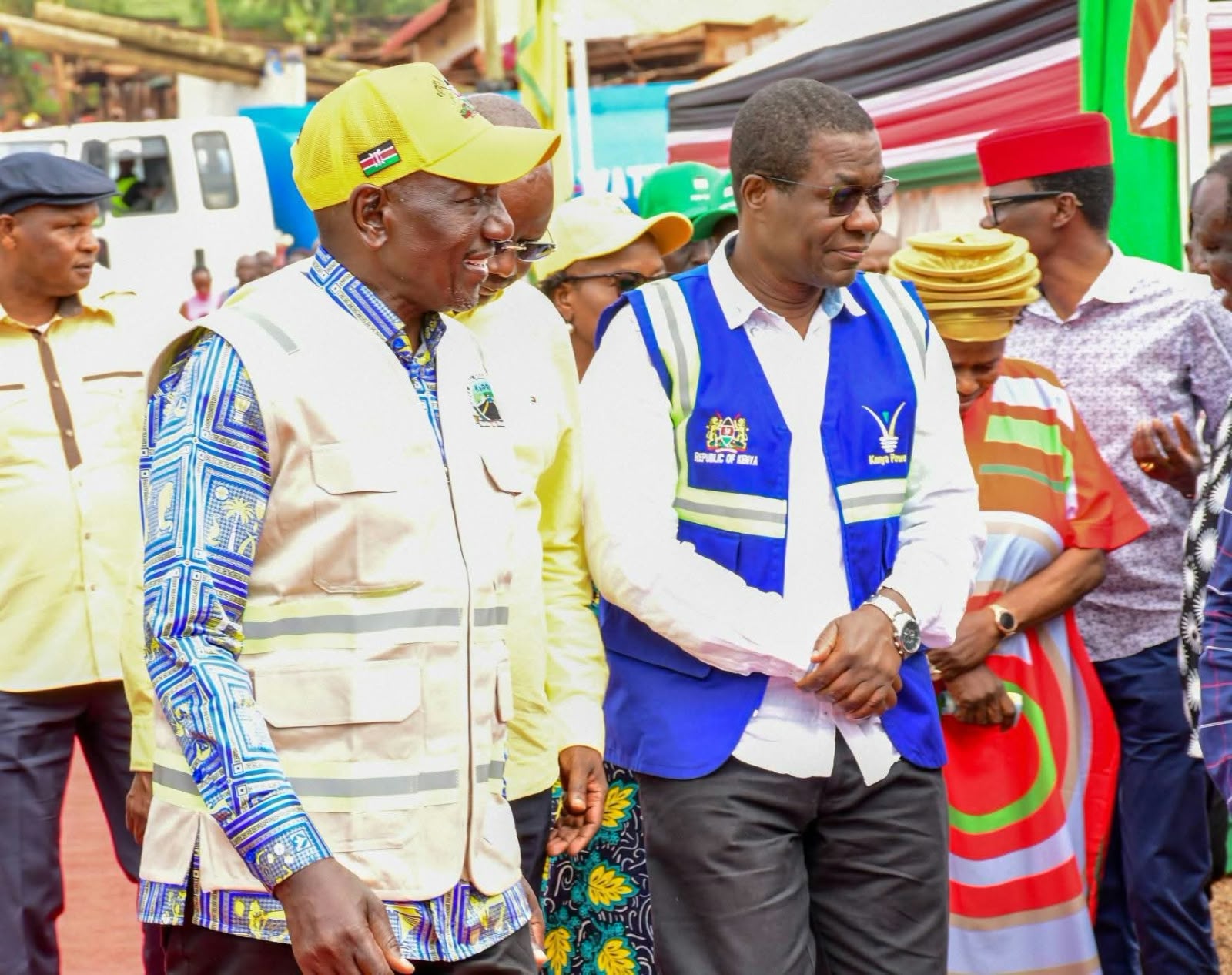
The flag-off of Last Mile Connectivity Programme (LMCP) materials for the Kaptalelio Dispensary in Masaek/Kipsigon, Mt. Elgon Constituency, is more than a routine public function. It represents a practical step towards addressing the infrastructure gaps that have historically constrained rural communities.
Cabinet Secretary for Energy and Petroleum Opiyo Wandayi joined President William Ruto in Bungoma County for the launch of the Kaptalelio LMCP Project, one of 27 electrification projects planned for Mt. Elgon Constituency at a combined investment of KSh177.9 million.
The programme targets 2,833 households, while the Kaptalelio project alone is expected to connect 122 households and numerous small businesses to electricity.
At its core, the initiative speaks to a fundamental question of equitable development: how can Kenya achieve meaningful national transformation when sections of its rural population remain disconnected from essential infrastructure and economic opportunities?
 ADVERT
The Last Mile Connectivity Programme seeks to bridge precisely this gap by extending electricity distribution networks to households, businesses and public institutions that remain beyond the reach of existing connections.
For rural families, electricity is no longer simply a symbol of modern living. It is an essential driver of education, healthcare, enterprise and improved living standards. It enables children to study after dark, traders to operate longer hours, farmers to explore value addition and health facilities to provide more reliable services.
The decision to use Kaptalelio Dispensary as the project’s launch location is particularly significant. A functional health facility requires dependable electricity to support lighting, vaccine refrigeration, maternal healthcare, sterilisation and the operation of essential medical equipment.
Reliable power can therefore transform the dispensary from a basic healthcare outpost into a more dependable frontline institution, improving the working environment for health professionals while enhancing patient care.
Electricity: Unlocking Rural Economic Potential
The wider Mt. Elgon electrification programme demonstrates the importance of coordinated investment rather than isolated interventions.
Under the Last Mile Connectivity Programme, Kenya Power and the Rural Electrification and Renewable Energy Corporation (REREC) work to expand electricity access through medium- and low-voltage distribution infrastructure, additional service lines and improved utilisation of existing transformers.
The objective is to ensure that proximity to an electricity network does not remain a privilege without practical benefit. Many rural households live relatively close to existing power infrastructure but remain unconnected because the final distribution lines and associated equipment have yet to reach them.
Closing this gap can significantly expand economic opportunities.
Electricity enables farmers to explore irrigation, grain milling, refrigeration and agricultural processing. Small traders can invest in refrigeration, electronic payment systems and improved business operations. Artisans can establish welding, carpentry, tailoring and other enterprises that depend on reliable power.
For young people, access to electricity also opens opportunities in digital learning, online services, technology and entrepreneurship.
The 122 households and numerous businesses targeted under the Kaptalelio project could therefore become beneficiaries of more than domestic lighting. Their connections represent potential gateways to income generation, employment creation and local economic growth.
Better Roads: Connecting Communities to Markets
The launch of the Bukhembe–Masaek–Cheptais Road adds another critical dimension to Mt. Elgon’s development agenda.
Electricity and roads are complementary investments. While electricity powers homes, institutions and businesses, roads connect people, products and services to wider economic opportunities.
A farmer may have access to electricity for food processing and preservation, but without an accessible road, transporting produce to markets remains difficult and expensive. Similarly, a business may enjoy reliable power but struggle to attract customers and receive supplies if the surrounding road network is inadequate.
Improved road connectivity reduces transportation difficulties, facilitates access to schools and healthcare facilities, strengthens trade and improves communication between rural settlements and commercial centres.
For communities in Mt. Elgon, the Bukhembe–Masaek–Cheptais Road is therefore an important component of the broader infrastructure investment.
The real value of development lies in understanding that infrastructure works best as an interconnected system. A dispensary becomes more effective when it has electricity and patients can reach it conveniently. A farmer becomes more productive when access to power is matched by reliable transport to markets.
Energy creates productive capacity; roads facilitate movement and trade. Together, they strengthen the foundations of rural prosperity.
1,800 Title Deeds: Land Ownership as Economic Security
Equally significant is the issuance of 1,800 title deeds to beneficiaries of Chebyuk Phase III.
Land ownership remains one of the most important foundations of economic security for Kenyan families. Beyond its monetary value, land represents identity, inheritance, social stability and an opportunity to build lasting livelihoods.
A title deed provides documented evidence of ownership, offering households greater certainty over their property and reducing the risks associated with competing claims and land disputes.
Secure tenure also encourages long-term investment in housing, agriculture and business premises. Depending on applicable lending requirements, documented ownership may improve access to financial services and investment opportunities.
For communities where land ownership has historically been a sensitive issue, transparent and lawful documentation is particularly important. It can strengthen confidence, reduce uncertainty and provide families with a firmer foundation for planning across generations.
The issuance of 1,800 title deeds should therefore be understood as more than an administrative exercise. It is an investment in household security, dignity and economic confidence.
A family that enjoys certainty over its land is better positioned to make long-term decisions, improve its property and invest in productive activities without the persistent fear of losing its rightful inheritance.
BETA and the Promise of Inclusive Development
These interventions broadly reflect the aspirations of the Bottom-Up Economic Transformation Agenda (BETA), which places ordinary citizens, small businesses, farmers and vulnerable households at the centre of national economic transformation.
The philosophy recognises that sustainable economic growth cannot be achieved by concentrating investment in major towns and established commercial centres while rural communities remain underserved.
The farmer seeking affordable access to markets, the trader requiring electricity, the parent seeking better healthcare and the young person searching for employment all need practical infrastructure to participate meaningfully in the economy.
In this context, electricity, roads and secure land ownership are not luxuries. They are essential conditions for productivity, self-reliance and shared prosperity.
Mt. Elgon’s development programme illustrates how public investment can address several interconnected challenges simultaneously.
However, the real measure of success will not be the number of projects announced or the value of investment figures presented at public functions. It will be the number of households actually connected, the quality and durability of the roads constructed, and the security of the land rights documented.
Implementation and Accountability Must Remain Central
While the announced interventions deserve recognition, their long-term impact will depend on effective implementation, transparency and accountability.
The government must ensure that electrification materials translate into completed household connections within reasonable timelines. Infrastructure works must meet appropriate quality standards, while road investments should incorporate proper maintenance arrangements to protect public resources.
Similarly, land documentation must be undertaken transparently, with due regard for legitimate ownership claims, applicable laws and the rights of all affected beneficiaries.
Community participation should extend beyond launch ceremonies. Residents must have opportunities to monitor implementation, report challenges and engage relevant government institutions and service providers.
National and county governments, local administration, utility providers and community representatives must work collaboratively to ensure that these projects respond to actual needs.
Development is most sustainable when communities are not merely recipients of public investment but active participants in shaping and protecting it.
Mt. Elgon’s Development Must Become a National Standard
The developments in Mt. Elgon carry a broader lesson for Kenya’s national development agenda.
The country’s progress should not be measured exclusively through major highways, urban infrastructure, industrial investments or headline economic statistics. It must also be measured through the everyday improvements experienced by ordinary citizens.
Can a rural dispensary preserve vaccines and attend to emergencies at night? Can a farmer transport produce to market without unnecessary delays? Can a small trader operate a productive business using reliable electricity? Can a family live, invest and plan confidently because its land ownership is legally documented?
These are equally important indicators of national transformation.
The 27 Last Mile Connectivity Programme projects worth KSh177.9 million, targeting 2,833 households, the Kaptalelio connection benefiting 122 households and numerous small businesses, the Bukhembe–Masaek–Cheptais Road and the 1,800 Chebyuk Phase III title deeds collectively represent an ambitious attempt to address the practical needs of Mt. Elgon residents.
If implemented effectively and sustained through proper maintenance and accountability, these investments could significantly improve livelihoods, stimulate local enterprise and strengthen community resilience.
Ultimately, the promise of development is not fulfilled when electricity poles are erected, roads are launched or title deeds are handed over. It is fulfilled when families experience tangible improvements in their living conditions and communities acquire the means to shape their own economic future.
For Mt. Elgon, the convergence of energy, road connectivity and secure land ownership offers an important opportunity to turn the promise of inclusive development into lasting prosperity.
Photo: Courtesy of Cabinet Secretary Opiyo Wandayi’s Communication Unit.