

• Sun. Nov 22nd, 2026
ADVERT

Business Leaders in Kenya Push for Inclusive Workplaces as Harassment Costs Firms Sh95.5 Billion Annually

ByLawrence

Nov 22, 2026
ADVERT
Spread the love
ADVERThttps://youtu.be/Sny2O4mVqxU?feature=shared

CEO Roundtable focused on practical action to retain and advance women, strengthen workplace safety, expand childcare support and build stronger leadership pipelines.

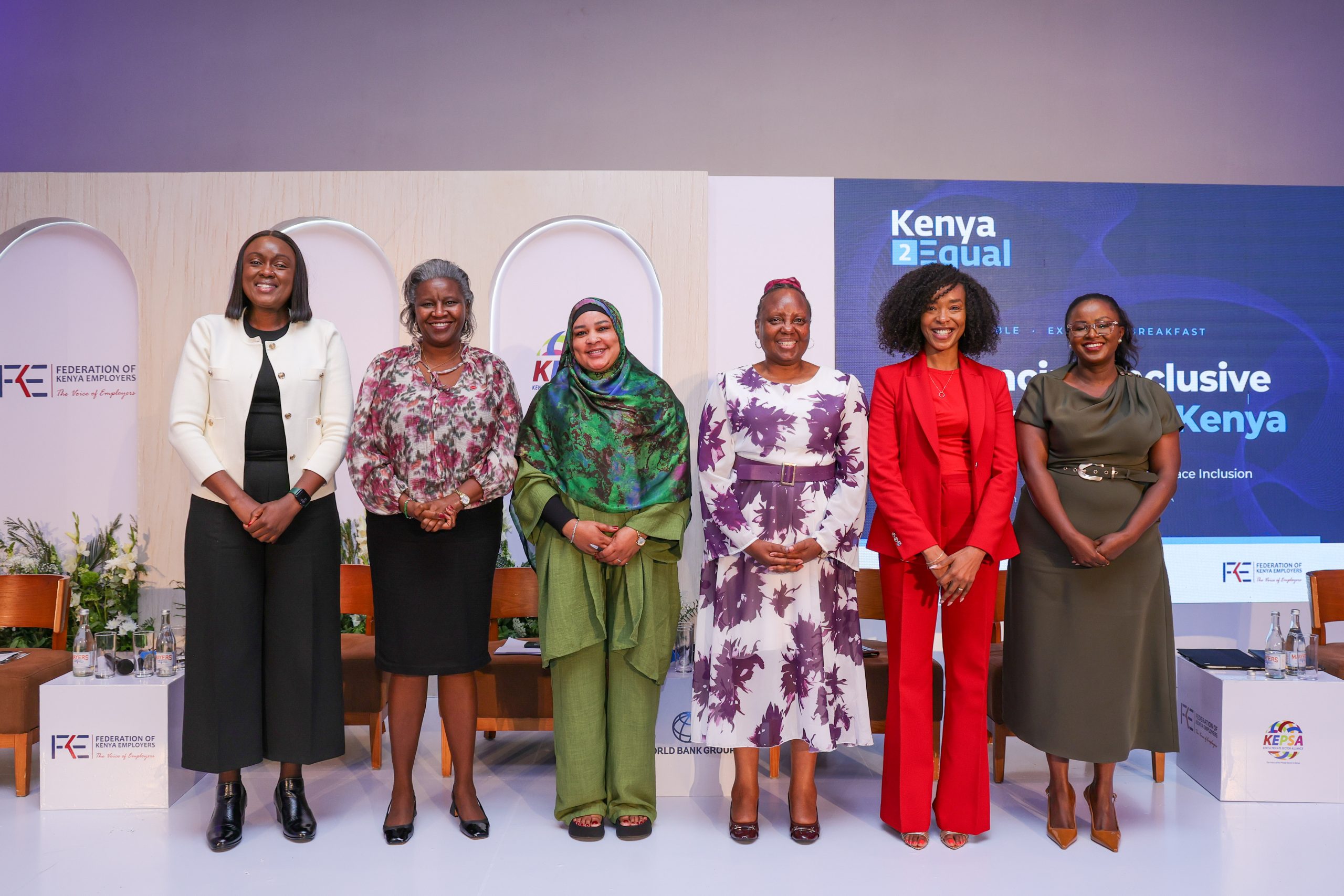
Business leaders in Kenya met in Nairobi on Thursday for a CEO Roundtable on Advancing Inclusive Workplaces, convened by the World Bank Group, Federation of Kenya Employers (FKE) and Kenya Private Sector Alliance (KEPSA), to identify practical actions businesses can take to attract, retain and advance women in the workplace amid an estimated Sh95.5 billion in annual harassment-related costs to businesses.
According to a 2025 study by the International Finance Corporation (IFC), a member of the World Bank Group focused on private sector development, gender-based violence and harassment (GBVH) cost Kenya’s private sector an estimated Sh67 billion in lost productivity and Sh28.5 billion in human resource expenses annually. The study, covering 26 companies, found that 33.2 per cent of employees had experienced GBVH, while 86 per cent of incidents went unreported. Affected employees lost an average of 24.3 working days annually.

Drawing on evidence and company experience, the business leaders explored executive actions that employers can sustain and scale, covering women’s retention and progression, leadership opportunities, care and childcare solutions, prevention of GBVH, and the role of executive leadership and accountability in driving lasting workplace inclusion.
Opening the roundtable, Gillian Rogers, IFC’s Principal Country Officer for Kenya, linked workplace inclusion directly to talent development and Kenya’s competitiveness.

ADVERT

“Together, we can build workplaces where women enter, stay, progress, and lead; where companies can draw on the full strength of their talent; and where inclusion translates into stronger people, stronger businesses, and a more competitive Kenyan economy,” said  Rogers.

The discussions also examined how childcare, flexible working arrangements and gender pay gaps affect employee retention and productivity. Women in sub-Saharan Africa perform two to three times more unpaid care work than men, limiting their career progression. IFC evidence also shows that employer-supported childcare can reduce absenteeism and improve employee productivity.

“Employers have a responsibility to create workplaces where employees feel safe, are treated fairly and have opportunities to grow. When businesses lose experienced workers because of harassment, unfair practices or inadequate support, they also lose valuable skills and productivity,” said Jacqueline Mugo, EBS, Executive Director and CEO of the FKE.

The roundtable further highlighted gaps in women’s representation in corporate leadership. Women account for approximately 40 per cent of entry-level private sector roles in Kenya, compared with 28 per cent of C-suite positions and 14 per cent of CEOs. Evidence also shows that companies with gender-diverse executive teams are 25 per cent more likely to outperform financially, while diverse management teams are associated with 19 per cent higher innovation revenue.

“Businesses are investing in developing talented women, but too few are progressing into senior leadership. We need CEOs to take greater responsibility for removing these barriers, strengthening promotion pathways and ensuring that gender equality becomes part of how businesses measure performance and growth,” said Carole Kariuki, Chief Executive Officer of KEPSA.

The World Bank Group has called on Kenyan companies to adopt EDGE certification, an internationally recognised standard for assessing gender equality in the workplace, including pay equity, leadership representation and career progression, to strengthen accountability and track progress on workplace inclusion.


www.engage.co.ke  

Author

Safaricom Appoints Boniface Mungania Chief Financial Services Officer In Major Leadership Move
Ne-Yo Lights Up Nairobi as Stanbic Bank’s Mashujaa Day Concert Draws 3,500 Fans Grammy-winning R&B superstar headlines ‘One Night Only: Brunch Edition’ at Ulinzi Sports Complex as Stanbic Bank backs Kenya’s creative economy and local enterprise NAIROBI, October 21, 2026 — Nairobi’s entertainment scene came alive on Mashujaa Day as approximately 3,500 music fans gathered at Ulinzi Sports Complex for One Night Only: Brunch Edition with Ne-Yo, a premium live-music experience title-sponsored by Stanbic Bank. The concert, held on Tuesday, October 20, delivered an afternoon of live performances, music and networking, bringing together Kenyan and international talent for a celebration that blended world-class entertainment with opportunities for the country’s growing creative economy. Performances began at 3:30 pm and concluded shortly after 8:00 pm, maintaining the event’s signature daytime brunch format while giving fans an opportunity to experience some of the biggest names on the lineup before nightfall. Kenyan musician Mutoriah opened the show with an energetic set, setting the pace for the afternoon. UK-based band Sol and the Gang followed with a vibrant performance before three-time Grammy Award-winning American R&B star Ne-Yo took centre stage to close the concert in style. Top Kenyan DJs kept the predominantly millennial audience entertained throughout the event, sustaining the energy between performances and reinforcing Nairobi’s growing appetite for curated, premium music experiences. Stanbic Bank puts creative economy in the spotlight Beyond the music, the concert highlighted the commercial opportunities generated by Kenya’s live-entertainment industry, with Stanbic Bank positioning its sponsorship as an investment in the wider creative ecosystem. The production created business opportunities across multiple segments of the value chain, including artists, sound engineers, stage and technical crews, production specialists, hospitality providers, security personnel, vendors and micro- and small enterprises. For an industry that relies heavily on collaboration among creative professionals and service providers, events of this scale can stimulate local demand, support livelihoods and open new commercial opportunities for businesses operating behind the scenes. Michael Mutiga, Chief Executive of Stanbic Bank Kenya and South Sudan, said the concert demonstrated how large-scale entertainment can combine audience appeal with tangible economic activity. “Yesterday was a powerful demonstration of what happens when world-class entertainment meets meaningful local economic impact,” Mutiga said. He noted that bringing more than 3,000 fans together went beyond the performances on stage, generating business for artists, technical teams, vendors, hospitality partners and small enterprises involved in delivering the event. “Kenya’s creative sector is a dynamic driver of growth, and Stanbic Bank remains committed to strengthening this ecosystem, raising its commercial profile, and supporting the livelihoods anchored in it,” he added. Creative industry contributes 5.32% of Kenya’s GDP The sponsorship comes against the backdrop of the creative economy’s contribution to employment, enterprise development and national output. A 2021 report by the World Intellectual Property Organization (WIPO) and the Kenya Copyright Board (KECOBO) placed the creative industry’s contribution to Kenya’s gross domestic product at 5.32%, while estimating that the sector provided formal employment for approximately 195,000 people. The industry also supports livelihoods across the informal economy, including performers, independent producers, event organisers, designers, content creators, technicians and small businesses that supply goods and services to entertainment productions. Stanbic Bank’s approach underscores the potential of cultural events to serve as more than marketing platforms. By bringing together consumers, performers, businesses and corporate sponsors, such events can create opportunities for local talent, showcase production capabilities and connect home-grown enterprises to wider commercial networks. However, the long-term impact of such initiatives depends on whether the opportunities generated translate into sustained contracts, improved incomes and stronger business prospects for local players beyond individual events. Stanbic Bank celebrates premium daytime entertainment Lilian Onyach, Head of Brand and Marketing at Stanbic Bank Kenya, said the event was designed to offer clients and music enthusiasts a distinctive, world-class daytime entertainment experience. She said the turnout and audience energy reflected the vibrancy of Kenya’s entertainment market and the growing appeal of carefully curated live-music events. “We set out to offer our clients and music enthusiasts a distinctive, world-class daytime experience, and the turnout and energy yesterday proved just how vibrant Kenya’s entertainment market is,” Onyach said. She added that the afternoon schedule allowed the event to preserve its brunch atmosphere while showcasing the artistry, logistical expertise and commercial capacity of Kenya’s creative industry. The format also reflects a broader opportunity for event organisers and sponsors to diversify entertainment offerings beyond traditional late-night concerts, creating experiences that appeal to audiences seeking music, social interaction and premium hospitality in a single setting. Brand recognition reinforces Stanbic Bank’s market position The Ne-Yo concert adds to Stanbic Bank’s brand-building initiatives as the lender continues to pursue market visibility through entertainment, customer engagement and support for economic activity. The bank was recently named Overall Best Bank in Kenya at the Think Business Awards. At group level, its parent, Standard Bank Group, was ranked Africa’s Most Valuable Bank Brand by Brand Finance for the fifth consecutive year. Through sponsorships such as One Night Only, Stanbic Bank is seeking to connect its brand with experiences that attract consumers while supporting businesses and professionals in adjacent industries. As Kenya’s creative sector continues to evolve, the commercial value of live entertainment will increasingly depend on the ability of organisers, sponsors and industry players to convert audience demand into sustainable opportunities for artists, entrepreneurs and the wider workforce. At Ulinzi Sports Complex, Ne-Yo provided the headline attraction, but the broader story extended beyond the stage: a major public celebration that brought international music to Nairobi while spotlighting the economic potential of Kenya’s creative industries
BAVal Maize Flour Takes Siaya by Storm as Green Army Sets Sights on New Markets Ahead of November Launch

Leave a Reply

Your email address will not be published. Required fields are marked *