 ADVERT

 ADVERT
Alego-Usonga Member of Parliament Samuel Onunga Atandi has unveiled a comprehensive school feeding support program targeting all 47 day secondary schools in his constituency — a bold initiative aimed at keeping students, particularly Form Four candidates, in classrooms as they prepare for national examinations this term.
The MP, while making the announcement under the hashtag #Telomarieny, said the program was designed in collaboration with local partners to “ensure that no student misses school due to hunger or lack of basic nutritional support.” The initiative, which officially began at the start of Term 3, includes the distribution of food items such as maize, beans, and cooking oil to schools across the constituency.
“We have put together a feeding support program for all day secondary schools in Alego-Usonga for Term 3,” Atandi stated. “Our goal is to keep students in school and improve performance, especially for those sitting their KCSE examinations.”
The Program: A Timely Intervention or a Political Gamble?
The program’s rollout has been met with a mix of optimism and skepticism within Alego-Usonga. While many parents and educators have lauded the initiative as timely—especially given the economic hardships that have made it difficult for families to provide consistent meals—some residents are cautious, recalling a previous education support scheme that failed to live up to expectations.
 ADVERT
Last year, Atandi launched a cross-constituency bursary initiative meant to pay school fees for all day secondary school students. The project, however, flopped amid claims of poor planning, funding shortfalls, and logistical confusion in identifying and disbursing funds to the intended beneficiaries.
That experience left many questioning whether feasibility studies were conducted before the launch of the new feeding initiative.
“We support the idea, but we also hope the MP has done his homework this time,” said a headteacher from a local day school who requested anonymity. “The last time, expectations were high, but the plan collapsed halfway.”
Feasibility and Funding Questions
While details of the program’s total cost and exact funding sources remain unclear, insiders within the MP’s camp insist that Atandi has the financial and logistical means to sustain it through Term 3.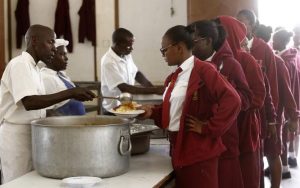
Sources close to the constituency office suggest that the program is a joint venture between the MP’s office, local businesses, and select development partners who have pledged short-term logistical support. However, as of now, there are no publicly available records detailing the size of the contributions or the duration of the partnership.
This lack of transparency has raised eyebrows among watchdog groups and civic organizations who argue that without clear documentation, it will be difficult to assess whether the project is sustainable—or merely another politically motivated publicity effort.
“Good intentions are not enough,” noted a Siaya-based education activist. “A proper needs assessment, a sustainability plan, and accountability mechanisms must be in place. Otherwise, this may turn into another short-lived photo opportunity.”
On the Ground: Hope and Hesitation
In several schools visited by SIAYA TODAY correspondents, headteachers confirmed receiving consignments of food items from Atandi’s coordination office. Students in institutions such as Nyangoma, Bar Olengo, and Siaya Township Secondary Schools expressed relief, saying that the initiative had already reduced absenteeism.
“We no longer have to go home for lunch or skip afternoon lessons because of hunger,” said one Form Four student in Nyangoma. “We just hope it continues until our exams are done.”
Teachers, however, remain cautiously optimistic. Many are waiting to see if the supplies will last the entire term, or if logistical bottlenecks—such as delayed deliveries or unequal distribution—will derail the effort as the term progresses.
Political Undercurrents and Future Prospects
Analysts view Atandi’s new program as both a humanitarian intervention and a political statement ahead of the next electoral cycle. By tackling an issue as immediate as student welfare, he may be attempting to re-establish credibility after the earlier bursary program faltered.
Political observers note that if the school feeding initiative succeeds, it could reposition Atandi as a results-oriented leader capable of delivering practical social interventions. Conversely, another failure could reinforce narratives of overambitious, under-planned populism.
For now, many residents of Alego-Usonga are choosing cautious optimism. The sight of food deliveries arriving at school compounds has revived hope among parents who have struggled to keep their children in class during tough economic times.
“If he manages to pull this off, it will be a game-changer,” said a parent from Boro. “But we’ve heard such promises before. Let’s wait and see.”
As Term 3 progresses, all eyes are on MP Samuel Onunga Atandi—not just to deliver food to hungry students, but to demonstrate that well-intentioned community programs can indeed translate into sustainable impact when grounded in solid planning and transparency.
Editor’s Note: This article is part of an ongoing investigation into education-based constituency projects in Siaya County. Future reports will track the implementation and impact of the Alego-Usonga feeding program through Term 3.



