 ADVERT

 ADVERT
In the wake of Raila Odinga’s passing, Gor Mahia Football Club has moved to fill the symbolic void left by the man who, for over two decades, embodied the club’s spirit, prestige, and political clout. The club’s Executive Committee on Thursday appointed Mr. Eliud Owalo as acting patron, marking a significant moment in both Gor Mahia’s leadership and Kenyan football’s intersection with politics.
Owalo, currently serving as Deputy Chief of Staff in charge of Performance and Delivery Management at State House, steps into a role long defined by Raila’s charisma, philanthropy, and unwavering loyalty to the K’Ogalo faithful. But the question now dominating conversations from Tom Mboya Street to the terraces of City Stadium is stark: Will Eliud Owalo have the guts to steer Gor Mahia from decades of financial struggle into the corporate stability and affluence it deserves?
A Legacy Too Large to Fill
For years, Raila Odinga’s patronage was more than ceremonial. It was emotional, historical, and financial. His presence elevated Gor Mahia beyond football — into a symbol of community pride, political identity, and national heritage. Under his watch, K’Ogalo not only reclaimed domestic glory as 21-time Kenyan Premier League champions, but also sustained their identity as Kenya’s most storied football club.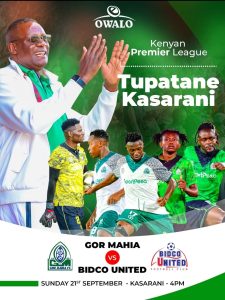
 ADVERT
Yet beneath that glittering legacy lay a persistent financial rot — unpaid player salaries, unstable sponsorships, and chaotic administration that has seen the club oscillate between triumph and turmoil.
“Raila was the heart of Gor Mahia, but even his influence could not insulate the club from structural poverty,” says sports economist Dr. Moses Were. “The issue was never about passion — it was about governance.”
Owalo’s New Burden: Passion Meets Performance
Owalo’s appointment comes at a time when Gor Mahia’s need for reform is existential. As a seasoned technocrat and economist with corporate experience, Owalo possesses the managerial toolkit that could turn K’Ogalo into a professionally run football enterprise. But will he dare to take the radical step — transforming Gor Mahia into a corporate entity with transparent financial systems and sustainable revenue models?
This would mean creating a limited company structure or a Gor Mahia Holdings body, regulated by a professional board overseeing sponsorships, merchandising, and player contracts — a move that could rescue the club from dependence on patronage and erratic fan contributions.
“If Owalo institutionalizes Gor Mahia, he will be making history — but he will also be challenging a deeply entrenched culture of informal control and political influence,” notes sports analyst Carol Radull.
Indeed, Gor Mahia’s survival has long been powered by emotional loyalty rather than financial discipline. Ticket sales are inconsistent, fan contributions are unpredictable, and sponsorships come and go with political winds.
From Political Symbol to Corporate Powerhouse?
Owalo’s dual identity — as a government insider and a lifelong Gor Mahia supporter — positions him uniquely to bridge public and private partnerships that could fund the club’s modernization. But that same proximity to power raises fears that Gor Mahia could once again be used as a political tool, rather than a sporting brand.
“Kenyan football is littered with the corpses of clubs that refused to evolve,” says former Gor Mahia treasurer George Bwana. “If Owalo truly loves this club, he must take it out of the political shadows and into the boardroom.”
That would mean tough decisions: enforcing financial audits, commercializing the brand, and reducing the club’s reliance on donations or political goodwill — all of which might alienate traditional supporters but attract long-term investors.
A Club at a Crossroads
Owalo’s immediate challenge is to unite a fractured fan base still mourning Raila and skeptical of political appointees. He must also reassure sponsors and players that Gor Mahia’s leadership transition will not disrupt the team’s competitive momentum — particularly as the club prepares for continental engagements.
Beyond sentiment, the true measure of Owalo’s tenure will lie in whether he can institutionalize accountability. Can he set up a Gor Mahia Foundation to support youth academies? Can he turn matchday experiences into revenue-generating events? Can he professionalize the club’s social media, branding, and merchandising to rival regional giants like Simba SC and TP Mazembe?
The Final Whistle
Eliud Owalo’s appointment symbolizes continuity — but his success will depend on courage. The courage to reform. The courage to confront entrenched interests. And the courage to turn passion into profitability.
For too long, Gor Mahia has lived on the charity of patrons and the tears of fans. The time for sentimental football is over. The time for corporate football — accountable, transparent, and profitable — has come.
As one diehard fan at Kaloleni put it:
“If Owalo can give us a Gor Mahia that feeds itself, not begs for survival — then he will have done what even Baba couldn’t finish.”
And that is the question history will answer: Will Eliud Owalo dare to make Gor Mahia a business — or will he keep it a beautiful, struggling memory?



