 ADVERT

 ADVERT
Kenya has reached a rare generational crossroads. For more than six decades, the Odinga name has towered over our politics — not as an aristocratic dynasty, but as a battered, resilient symbol of struggle, sacrifice, and stubborn defiance. But with Jaramogi long gone, Raila recently laid to rest, and Oburu Oginga advancing in age, the Odinga mantle now hangs in mid-air, waiting for the next worthy pair of shoulders.
Two names have stepped into the light, willingly or not: Jaoko Oburu Oginga and Winnie Odinga. Both young, both ambitious, both heirs to a political empire built on sweat and street battles rather than privilege. Both reportedly eyeing Lang’ata 2027. Yet Kenyans are asking — and rightfully so — who best fits the Odinga mould?
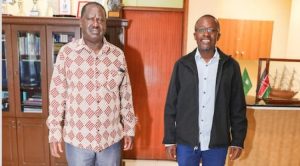
Jaoko Oburu: The Methodical Prince of Practical Politics
Jaoko is no lightweight.
He has served in government, advised at State House, and mobilized youth in multiple national campaigns. His stint as Siaya’s Roads and Public Works CECM placed him squarely in the engine room of county government. Before that, he helped build the “Friends of Raila” youth pressure group and later the Azimio Young Turks. This is not a man who wandered into politics; he has been incubated in it.
He brings to the table what every modern political machine needs: technical competence, bureaucracy fluency, and long strategic memory. If the Odinga legacy were being passed by institutional logic alone, Jaoko would be the frontrunner.
 ADVERT
But there’s a catch — and it’s not a small one.
Most of Jaoko’s rise has been through the family network, not the trenches. The Odinga brand was born on the protest lines, on defiance platforms, in detentions, on tear-gassed streets — not in boardrooms or advisory offices. That revolutionary electricity that once defined the Odingas does not quite radiate from Jaoko yet.
Competent? Yes.
Strategic? Absolutely.
Iconic? Not quite.
Winnie Odinga: The Reluctant Heiress Who Already Moves Crowds
Winnie Odinga didn’t choose the struggle — the struggle chose her.
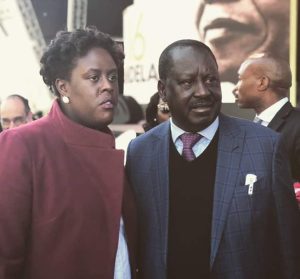
For nearly a decade, she was the unseen force behind Raila Odinga’s political machinery. Driver. Aide. Digital strategist. Liaison to foreign capitals. Chief communicator. The eyes and instincts of a daughter who understood Baba’s brand better than many veteran lieutenants.
Those who underestimate Winnie often confuse her age for inexperience. But Winnie has sat in rooms where national decisions were being negotiated; she has run messaging for campaigns that shifted national conversations; she has held the Odinga ground during moments of emotional crisis.
Her election to the East African Legislative Assembly (EALA) was not a token gesture. Her colleagues quietly praise her organization, discipline, and tactical sharpness — the unglamorous qualities that sustain political empires.
But what gives Winnie a subtle — yet powerful — advantage is something Jaoko cannot manufacture:
She is Raila’s daughter.
The emotional continuity she carries is unmistakable. The public sees in her the same rebel spark, the same stubborn resilience, and the same willingness to confront power without apology. The Odinga political philosophy — liberation, justice, defiance — seems to flow in her speech, posture, and instinct far more naturally.
Winnie also has something else Jaoko lacks:
the power to electrify the youth.
Her digital fluency, blunt authenticity, and unfiltered charisma give her immediate command of a demographic Raila won repeatedly.
Is she polished? Not fully.
Is she universally liked? Not yet.
But is she compelling? Absolutely.
Both Jaoko and Winnie are quietly circling Lang’ata, presumably with eyes for 2027. The symbolism is heavy. Lang’ata is the constituency that catapulted Raila into national stardom in 1992. It is the seat that established the Odinga mystique for an entire generation.
If the battle does materialize, Lang’ata will not be just a constituency — it will be the test of inheritance.
Jaoko will bring structure, experience, and economic messaging.
Winnie will bring identity, energy, and the emotional weight of a fallen icon.
And in Kenyan politics, identity often beats structure.
So Who Should Carry the Mantle?
Both deserve recognition. Both carry talent. Both represent two possible futures for the Odinga tradition:
Jaoko — the institutional, technocratic Odinga of the new political age.
Winnie — the fiery, emotional, grassroots Odinga who mirrors the older generation’s authenticity.
But if the question is who most naturally embodies the spirit of the Odinga struggle — the defiance, the resonance, the organic connection with the public — then Winnie holds a slight but significant edge.
Not because she is Raila’s daughter.
But because she feels like Raila’s daughter.
In politics, symbolism is not everything — but in moments of generational transition, symbolism is often the deciding factor.
The Odinga crown will not be inherited.
It will be earned.
And right now, Winnie Odinga seems closest to earning it.


