 ADVERT
 ADVERT
Kenya’s Ethics and Anti-Corruption Commission (EACC) has delivered its strongest performance yet in the fight against corruption, recovering Sh3.4 billion in illicit assets and tracing a staggering Sh22.9 billion in unexplained wealth during the 2024/2025 financial year.
Launched on December 8, 2025, at the Integrity Centre, the Commission’s annual report paints a picture of renewed vigour in tackling graft, with proactive measures averting an estimated Sh16.5 billion in potential public losses.
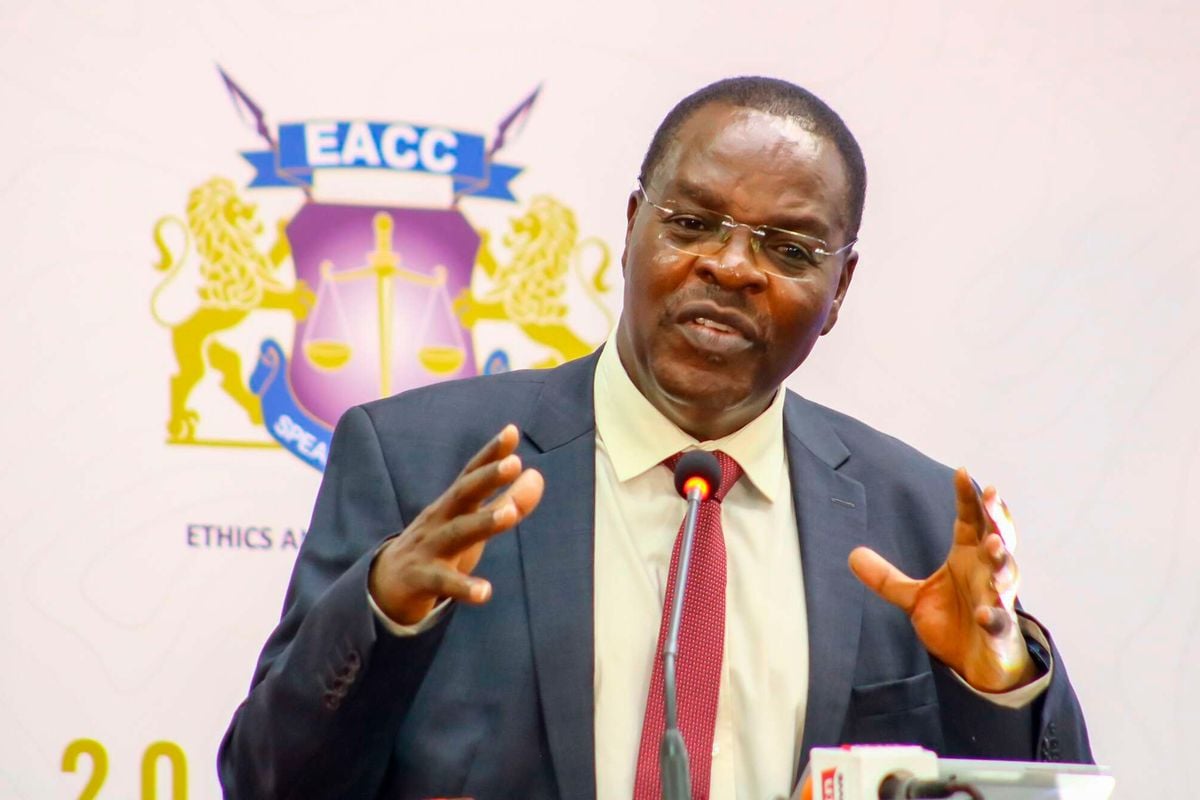
EACC Chairperson Dr. David Oginde hailed the achievements as evidence of growing institutional strength amid public demands for accountability, particularly from youth-led movements. “Corruption thrives when good people stay silent,” he warned, stressing the need for collective responsibility. CEO Abdi Mohamud described the report as “a mandate in print,” highlighting transparency and intelligence-led operations as key drivers of success.
At the heart of the Commission’s gains was a sharp focus on asset recovery. Investigators traced Sh22.9 billion in illegally acquired properties and funds, filing a record 79 civil suits worth Sh4.8 billion – the highest in five years. Notable recoveries included prime land in Nairobi valued at Sh1 billion and properties grabbed from public institutions like the Kenya Railways Corporation and Kenya Wildlife Service. Preservation orders secured Sh2.685 billion in assets, preventing suspects from dissipating proceeds of crime.
Proactive interventions proved particularly effective. Through 14 sting operations and disruptions, the EACC halted irregular tenders and payments, saving taxpayers Sh16.5 billion. Examples include blocking a Sh5.6 billion housing project riddled with flaws and suspending dubious payments in a Sh5.5 billion water agency deal.
 ADVERT
On the investigative front, the Commission processed 4,183 corruption reports – a robust intake reflecting increased public confidence. Of these, 1,846 were escalated for full probes, culminating in 175 files forwarded to the Director of Public Prosecutions (DPP). Courts delivered 33 convictions in 54 concluded cases, more than doubling the previous year’s tally, covering bribery, embezzlement, and procurement fraud.
Prevention and education efforts reached new heights. The EACC conducted 166 integrity tests across agencies like the Kenya Revenue Authority and National Police Service, exposing non-compliance in 152 instances. Outreach programs sensitized over 93,000 citizens and 128,000 learners in schools, while the National Integrity Academy trained thousands on ethics and governance. A new Practical Guide for Corruption Risk Assessment was rolled out to help public entities plug vulnerabilities.
Bribery remained the most reported offence, underscoring persistent challenges at service delivery points. The Commission also flagged systemic gaps, including weak enforcement of Chapter Six of the Constitution on leadership integrity, witness intimidation, and resource constraints.
Looking ahead, the EACC pledged closer monitoring of mega-projects, intensified youth engagement, and stronger multi-agency collaboration. As Dr. Oginde noted, recent reforms – including the Conflict of Interest Act and digitized procurement – are bolstering the anti-graft framework.
In a year marked by record recoveries and saved billions, the EACC’s report signals that Kenya’s war on corruption is gaining momentum. Yet, as Mohamud emphasized, sustained public support remains crucial to making graft “not just unacceptable, but impossible.”


