 ADVERT
 ADVERT
In Siaya’s shifting political theatre, power is no longer announced—it is signalled.
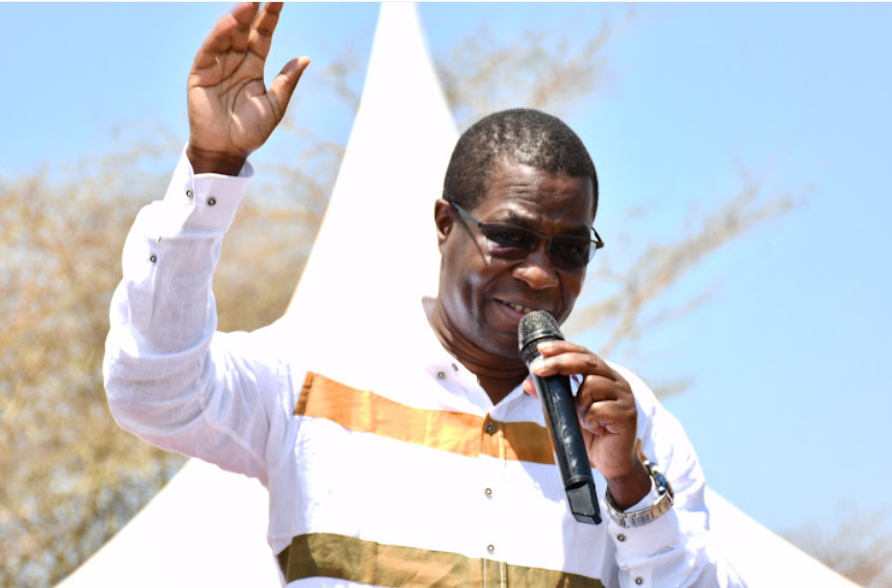
And increasingly, those signals point to one man: Energy Cabinet Secretary James Opiyo Wandayi.
From closed-door consultations at his rural Sidindi home to carefully choreographed public appearances, a pattern is emerging—one that suggests Wandayi is consolidating influence not through loud declarations, but through calibrated authority, elite access, and symbolic endorsements that seasoned observers say could shape the outcome of the 2027 elections.
The Day the Elders Came Calling
One of the clearest indicators of Wandayi’s rising stature came quietly—but did not go unnoticed.
 ADVERT
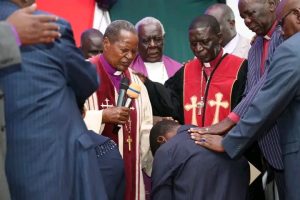
In late 2025, the Luo Council of Elders, led by chairman Ker Odungi Randa, paid a high-profile visit to Wandayi’s rural home in Ugunja. The meeting, attended by senior ODM figures including Oburu Oginga, immediately triggered speculation about shifting power centres in Luo Nyanza.
Photos and accounts from the gathering showed a carefully assembled political tableau—elders, party leadership, and elected officials converging not in Kisumu or Nairobi, but in Wandayi’s backyard.
Although the council was quick to dismiss claims of endorsing any “kingpin,” insisting “we have not endorsed anyone… that was very wrong”, the symbolism of the visit lingered.
In Luo political tradition, analysts note, such visits are rarely incidental. They are acknowledgments—of relevance, of access, and of emerging authority.
The Weekend Pilgrimages
Beyond formal meetings, a quieter ritual has taken shape.
Multiple local sources describe a steady stream of aspirants—MP hopefuls, MCA contenders, and gubernatorial hopefuls—making discreet weekend visits to Wandayi’s rural home.
These are not public rallies. There are no banners, no chants, no official statements.
Instead, they are private consultations—seeking guidance, gauging political winds, and, crucially, securing what insiders describe as “political blessings.”
“It’s not declared, but it’s understood,” said one local political operative familiar with the visits. “If you are serious about 2027 in Siaya, you pass through Ugunja.”
Okode’s Public Appeal—and a Rare Moment of Candour
If the private meetings signal influence, public moments have begun to confirm it.
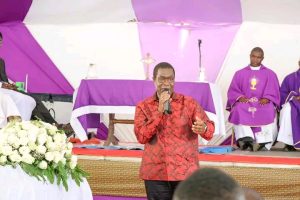
At a recent function in Ugunja attended by Wandayi, Siaya County Assembly Speaker George Okode made an unusually direct appeal—one that political observers interpret as both deference and calculation.
Switching to Dholuo, Okode acknowledged Wandayi’s track record in backing his political ambitions, effectively reminding him of past support while seeking continuity.
The subtext was unmistakable: in Siaya’s political calculus, Wandayi’s endorsement carries weight.
“It was not just a speech—it was a signal,” said a senior ODM insider. “Okode was saying publicly what many say privately.”
The Ugunja By-Election Blueprint
Wandayi’s ability to translate influence into outcomes was perhaps most clearly demonstrated during the Ugunja by-election.
Despite underlying tensions within ODM—particularly between Wandayi and Governor James Orengo—the party closed ranks behind a single candidate aligned with Wandayi.
The unity was striking. Orengo, Oburu Oginga, and the broader ODM machinery all rallied behind the same flag.
For analysts, this was more than party discipline—it was coordination.
“It showed that when it matters, decisions are negotiated—and Wandayi is central to those negotiations,” said a Kisumu-based political analyst.
Between State House and Bondo: The New Power Axis
Wandayi’s influence is also anchored in his proximity to state power.
Now serving as Cabinet Secretary for Energy, he operates at a strategic intersection between ODM structures and the national government.
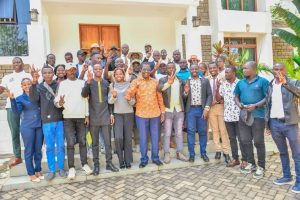
Alongside figures such as Principal Secretary Raymond Omollo and other Luo leaders engaging the Kenya Kwanza administration, Wandayi is increasingly viewed as part of a pragmatic bloc advocating engagement over isolation.
His role in mobilizing leaders for high-level meetings—including delegations to State House—has further reinforced perceptions of him as a bridge between Luo Nyanza and President William Ruto’s government.
Critics frame this as opportunism. Allies call it realism.
Managing Rivalries, Preserving Order
Perhaps the most intriguing aspect of Wandayi’s rise is how it coexists with rivalry—particularly with Governor Orengo.
The two are often cast as ideological opposites: one aligned with state engagement, the other rooted in opposition politics.
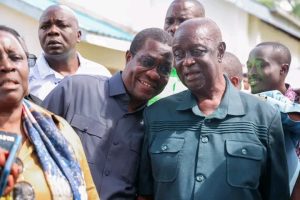
Yet, in practice, Siaya’s political class has repeatedly demonstrated a capacity for consensus when control of the county’s political direction is at stake.
The Ugunja by-election was one example. There are others—less visible, but equally telling.
“The rivalry is real,” said one ODM insider. “But so is the understanding that fragmentation is dangerous.”
The Oburu Factor and Succession Undercurrents
Within ODM’s evolving structure, Siaya Senator Oburu Oginga remains a central figure—particularly in navigating the party’s transition following Raila Odinga’s death.
But insiders say Oburu has also been instrumental in elevating Wandayi’s profile within key political circles, at times positioning him as a possible rallying point in the region’s leadership matrix.
Whether by design or convergence of interests, this alignment has further entrenched Wandayi within the inner workings of ODM’s strategic decisions.
The 2027 Equation: Power Without Proclamation
As Siaya heads toward 2027, the battle lines are forming—but not always visibly.
The gubernatorial race, the Senate seat, and the Woman Representative position are all expected to be fiercely contested. Yet the outcomes may hinge less on campaign rallies and more on internal alignments within ODM.
And within those alignments, Wandayi’s role is becoming increasingly difficult to ignore.
He does not declare himself kingmaker.
He does not need to.
The elders’ visit. The weekend pilgrimages. The public appeals. The quiet consensus-building.
Each is a piece of a larger puzzle—one that suggests that in Siaya’s next political chapter, power may not lie with those who speak the loudest, but with those who are consulted the most.
And in that calculus, all roads increasingly seem to lead to Wandayi.


