 ADVERT
 ADVERT
What began as a seemingly ordinary day for a small hotel owner in Nairobi has spiralled into a gripping national controversy—drawing in powerful politicians, raising legal questions, and igniting debate over power, accountability and leadership in Kenya.
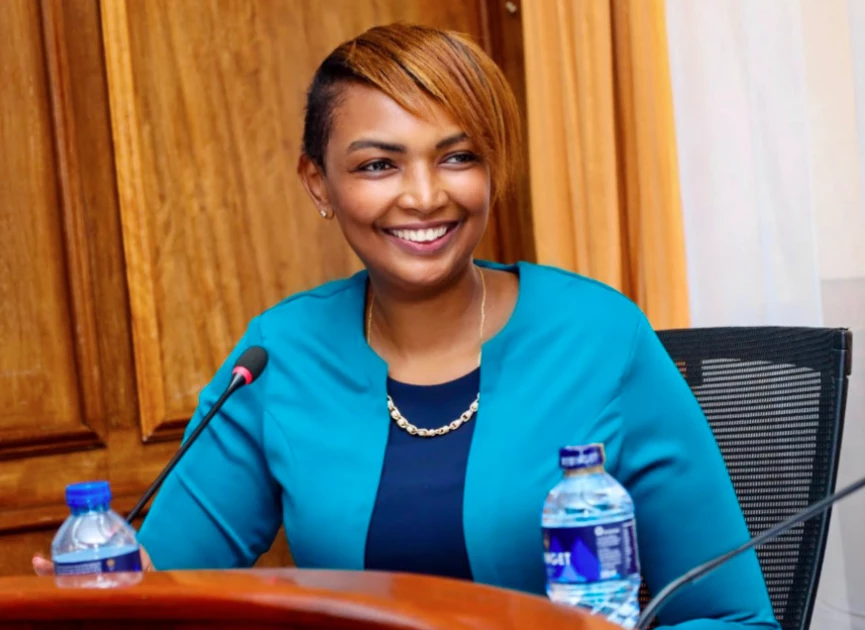
At the centre of the storm is nominated Senator Karen Nyamu, whose admitted act of “revenge” has transformed a local dispute into a national talking point.
For Dickens Odhiambo—popularly known as Kamau wa Kisumu—the day began with promise. At his modest eatery near Mama Lucy Hospital, business suddenly boomed as a large crowd streamed in.
Orders piled up. Food disappeared. Drinks were cleared off the shelves.
Within hours, his entire stock was gone.
 ADVERT
What appeared to be a stroke of luck quickly turned into a costly ordeal.
According to Odhiambo, the influx followed a visit by Nyamu, who had first confirmed ownership of the café before a wave of patrons—believed to be her supporters—descended on the establishment.
After the frenzy, Odhiambo says Nyamu requested his M-Pesa number, signalling that payment would follow.
It never did.
Left with empty shelves and unpaid bills, the trader would soon take his grievance public—setting off a chain reaction neither side may have anticipated.
But beneath the surface of the unpaid bill lies a deeper, more contentious backstory—one that appears to have triggered Nyamu’s actions.
Odhiambo had reportedly made claims in public forums alleging that the Senator had previously marshalled a group of youth to State House, Nairobi, for a high-profile event where motorbikes were issued.
According to his account, the motorbikes were presented for camera optics—only to be repossessed shortly after the event, leaving the beneficiaries disillusioned.
The claims, which touched on sensitive questions of political image-making and youth empowerment, appear to have struck a nerve.
Nyamu has not publicly substantiated or directly addressed the specifics of the motorbike allegation. However, she has acknowledged acting in retaliation—suggesting that Odhiambo’s remarks formed the basis of her grievance.
“I had no other way of revenging what you did to me,” she said, confirming she directed people to eat at his establishment.
Showing no remorse for her unbecoming behavior, Karen Nyamu goes ahead to record herself and share a video clip stating she could send another round of goons to eat and pay then reverse the money!
What might have remained a localized clash escalated when Odhiambo aired his complaints in a public civic forum, amplifying the issue beyond the confines of a single business dispute.
The story quickly gained traction—drawing public attention not only to the unpaid bill but also to the explosive allegations surrounding the motorbike incident.
The convergence of the two narratives—economic harm and reputational attack—turned the saga into a combustible mix of personal grievance and public accountability.

Enter Martha Karua.
The veteran politician and senior counsel has called for legal action against Nyamu, urging the aggrieved trader to pursue justice through the courts.
For Karua, the matter is not merely about who owes what—but about the standards expected of public office holders.
Her remarks frame the incident as a potential breach of leadership and integrity principles, raising the stakes far beyond a private dispute.
The allegations surrounding the State House motorbike event introduce a broader dimension to the controversy—one that speaks to the politics of optics.
If true, the claims suggest a troubling pattern: the use of public-facing events to project empowerment, only for the benefits to be short-lived or symbolic.
While unproven, the narrative has resonated in a country where youth unemployment and political patronage remain deeply sensitive issues.
In this context, Nyamu’s alleged retaliation—mobilizing people to consume goods without payment—has been interpreted by critics as an escalation that blurs the line between personal vendetta and misuse of influence.
Legal experts note that the case could unfold in several ways, from a civil suit over unpaid services to broader questions about intent and accountability.
Politically, the incident adds to Nyamu’s reputation as a polarizing figure—unafraid of confrontation, but often at the centre of controversy.
For Karua, it reinforces her long-standing stance on governance and ethical leadership.
Amid the political drama, the human impact remains stark.
For Odhiambo, the issue is not about headlines or political narratives—it is about lost income and business disruption.
For the youths referenced in the motorbike claims—if their accounts hold—the episode raises deeper concerns about trust, expectation and the realities of political engagement.
What makes this saga compelling is not just its drama, but what it reveals.
A leader admits to an act of revenge.
A citizen alleges economic harm.
Another leader calls for accountability.
And in the middle lies a country grappling with the meaning of power and responsibility.
Whether it ends in court or fades from the news cycle, the Nyamu saga has already forced a difficult but necessary question into the national conversation:
When politics, pride and power collide—who ultimately pays the price?


