

• Fri. Oct 23rd, 2026
ADVERT

Relief to Kenyan Workers as Court Rules 2.75 SHIF Deduction Unlawful Double-taxation

ByGad Wamalwa

Jun 24, 2025
ADVERT
Justice Chacha Mwita
Spread the love
ADVERT

The High Court in Nairobi on Monday 23 June, 2025 ruled that the government’s 2.75 per cent deduction on gross pay towards the Social Health Insurance Fund (SHIF) amounts to double taxation and is, therefore, unlawful.

Although a lawyer friend pointed out that the decision merely struck out the petition in abeyance to a pending judgement on a similar earlier petition, court records indicate the below proceedings.

Justice Chacha Mwita, in his decision, pointed out that the law permits only income tax to be deducted from gross income, making any further deductions illegal.

“There can be no other gross income from which the person can again contribute 2.75 per cent to the Fund under SHIA and the regulations made thereunder,” Mwita stated.

“Any subsequent or other statutory deduction(s) based on the person’s gross income after income tax, is undoubtedly double taxation, charge or levy because the same gross income will have been taxed more than once under the Income Tax Act and the regulations made under SHIA as contribution to the Fund.”

ADVERT

Although the judge found the deduction unlawful, he declined to issue any orders halting it, citing an ongoing appeal on the matter.

“By providing that a person contributes 2.75 per cent of his/her gross income to the Fund after paying income tax from the same gross income, the regulation introduces a negative element of taxation which is double taxation and would, as a result, make such a regulation unlawful,” he said.

The case had been filed by four doctors who argued that Kenyans were being forced to pay more for health cover, yet receiving less.
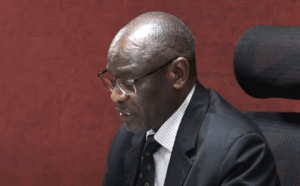
Justice Chacha Mwita

They also challenged the transfer of their personal data from the National Health Insurance Fund (NHIF) to the Social Health Authority (SHA) without consent.

“The fact that the Ministry single-sourced a consortium of Health Information System providers to handle health data under the Social Health Authority, one partner of whom is originally registered in a jurisdiction with a poor data privacy record, creates a real concern that safety of our personal data is not guaranteed,” the doctors stated.

They raised concerns about the involvement of Apeiro Limited, a company linked to India’s Adani Group, in managing the Universal Health Coverage system.

The firm leads a consortium that won a Sh104 billion contract to provide technology for the programme.

Dr Cherono Siele, one of the petitioners, told the court that she previously contributed KES 1,700 monthly to NHIF and that her employer also made payments to boost medical cover for civil servants.

She explained that this was enough for her family’s needs without further insurance. She added that under SHIF, her family would now be required to pay KES 21,000 per month.

“The benefits I would draw from this exaggerated contribution from SHIF are totally inadequate for myself, let alone my household,” Cherono said.

She also stated that SHIF would provide KES 43,000 cover per household annually, which was insufficient given that her family’s monthly medical expenses averaged KES 9,500.

“This new fund is being imposed on me because I would ordinarily not sign up to such a raw deal voluntarily. This imposition violates my rights to property and privacy. SHIF should not be mandatory,” she said.

Dr Clarence Eboso said she was concerned that her data had been moved to SHA without her approval.

“The fact that the first respondent is aware of their obligations, but still violates the rights of the data subjects, is concerning and suggests that their actions are not in good faith,” Eboso said.

She added: “I have not signed any consent form allowing the Social Health Authority to process my personal data as required by the Data Protection Act.”

The four petitioners sued the Social Health Authority and the Attorney General and included the Ministry of Health, NHIF, Federation of Kenya Employers, and Law Society of Kenya as interested parties.

They want the court to stop SHIF deductions and block the government from forcing them to join the scheme.

The government told the court that the case was overtaken by events since an appeal is already ongoing.

It also argued that SHIF is necessary to achieve universal health coverage and that a fair system has been set up to determine contributions from all Kenyans, whether employed or not.


Author

Leave a Reply

Your email address will not be published. Required fields are marked *

ALSO READ

Ne-Yo Lights Up Nairobi as Stanbic Bank’s Mashujaa Day Concert Draws 3,500 Fans Grammy-winning R&B superstar headlines ‘One Night Only: Brunch Edition’ at Ulinzi Sports Complex as Stanbic Bank backs Kenya’s creative economy and local enterprise NAIROBI, October 21, 2026 — Nairobi’s entertainment scene came alive on Mashujaa Day as approximately 3,500 music fans gathered at Ulinzi Sports Complex for One Night Only: Brunch Edition with Ne-Yo, a premium live-music experience title-sponsored by Stanbic Bank. The concert, held on Tuesday, October 20, delivered an afternoon of live performances, music and networking, bringing together Kenyan and international talent for a celebration that blended world-class entertainment with opportunities for the country’s growing creative economy. Performances began at 3:30 pm and concluded shortly after 8:00 pm, maintaining the event’s signature daytime brunch format while giving fans an opportunity to experience some of the biggest names on the lineup before nightfall. Kenyan musician Mutoriah opened the show with an energetic set, setting the pace for the afternoon. UK-based band Sol and the Gang followed with a vibrant performance before three-time Grammy Award-winning American R&B star Ne-Yo took centre stage to close the concert in style. Top Kenyan DJs kept the predominantly millennial audience entertained throughout the event, sustaining the energy between performances and reinforcing Nairobi’s growing appetite for curated, premium music experiences. Stanbic Bank puts creative economy in the spotlight Beyond the music, the concert highlighted the commercial opportunities generated by Kenya’s live-entertainment industry, with Stanbic Bank positioning its sponsorship as an investment in the wider creative ecosystem. The production created business opportunities across multiple segments of the value chain, including artists, sound engineers, stage and technical crews, production specialists, hospitality providers, security personnel, vendors and micro- and small enterprises. For an industry that relies heavily on collaboration among creative professionals and service providers, events of this scale can stimulate local demand, support livelihoods and open new commercial opportunities for businesses operating behind the scenes. Michael Mutiga, Chief Executive of Stanbic Bank Kenya and South Sudan, said the concert demonstrated how large-scale entertainment can combine audience appeal with tangible economic activity. “Yesterday was a powerful demonstration of what happens when world-class entertainment meets meaningful local economic impact,” Mutiga said. He noted that bringing more than 3,000 fans together went beyond the performances on stage, generating business for artists, technical teams, vendors, hospitality partners and small enterprises involved in delivering the event. “Kenya’s creative sector is a dynamic driver of growth, and Stanbic Bank remains committed to strengthening this ecosystem, raising its commercial profile, and supporting the livelihoods anchored in it,” he added. Creative industry contributes 5.32% of Kenya’s GDP The sponsorship comes against the backdrop of the creative economy’s contribution to employment, enterprise development and national output. A 2021 report by the World Intellectual Property Organization (WIPO) and the Kenya Copyright Board (KECOBO) placed the creative industry’s contribution to Kenya’s gross domestic product at 5.32%, while estimating that the sector provided formal employment for approximately 195,000 people. The industry also supports livelihoods across the informal economy, including performers, independent producers, event organisers, designers, content creators, technicians and small businesses that supply goods and services to entertainment productions. Stanbic Bank’s approach underscores the potential of cultural events to serve as more than marketing platforms. By bringing together consumers, performers, businesses and corporate sponsors, such events can create opportunities for local talent, showcase production capabilities and connect home-grown enterprises to wider commercial networks. However, the long-term impact of such initiatives depends on whether the opportunities generated translate into sustained contracts, improved incomes and stronger business prospects for local players beyond individual events. Stanbic Bank celebrates premium daytime entertainment Lilian Onyach, Head of Brand and Marketing at Stanbic Bank Kenya, said the event was designed to offer clients and music enthusiasts a distinctive, world-class daytime entertainment experience. She said the turnout and audience energy reflected the vibrancy of Kenya’s entertainment market and the growing appeal of carefully curated live-music events. “We set out to offer our clients and music enthusiasts a distinctive, world-class daytime experience, and the turnout and energy yesterday proved just how vibrant Kenya’s entertainment market is,” Onyach said. She added that the afternoon schedule allowed the event to preserve its brunch atmosphere while showcasing the artistry, logistical expertise and commercial capacity of Kenya’s creative industry. The format also reflects a broader opportunity for event organisers and sponsors to diversify entertainment offerings beyond traditional late-night concerts, creating experiences that appeal to audiences seeking music, social interaction and premium hospitality in a single setting. Brand recognition reinforces Stanbic Bank’s market position The Ne-Yo concert adds to Stanbic Bank’s brand-building initiatives as the lender continues to pursue market visibility through entertainment, customer engagement and support for economic activity. The bank was recently named Overall Best Bank in Kenya at the Think Business Awards. At group level, its parent, Standard Bank Group, was ranked Africa’s Most Valuable Bank Brand by Brand Finance for the fifth consecutive year. Through sponsorships such as One Night Only, Stanbic Bank is seeking to connect its brand with experiences that attract consumers while supporting businesses and professionals in adjacent industries. As Kenya’s creative sector continues to evolve, the commercial value of live entertainment will increasingly depend on the ability of organisers, sponsors and industry players to convert audience demand into sustainable opportunities for artists, entrepreneurs and the wider workforce. At Ulinzi Sports Complex, Ne-Yo provided the headline attraction, but the broader story extended beyond the stage: a major public celebration that brought international music to Nairobi while spotlighting the economic potential of Kenya’s creative industries