 ADVERT
 ADVERT
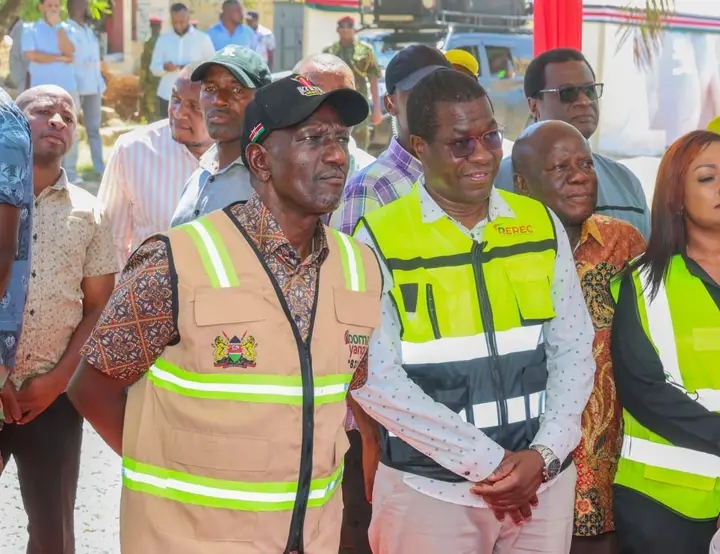
Cabinet secretary of Energy and Petroleum Opiyo Wandayi joined President William Ruto on a development tour of the Coast Region to flag off the Kinango Last Mile Connectivity Project by REREC in Kwale County, an event that should prompt a sober and earnest conversation about what it means to bring electricity to the parts of Kenya that have long been left at the margins of infrastructure planning. The symbolic act of launching such a project is more than a ceremonial undertaking because it represents a commitment to ensuring that electricity reaches homes, clinics, schools, and businesses that have for years struggled without reliable power supply. Access to electricity is not merely about convenience but about creating conditions that allow communities to participate fully in economic life and to benefit from essential public services. In a country pursuing broad based development, the expansion of electricity infrastructure should be treated as a central pillar of national progress because no meaningful transformation can occur where communities remain disconnected from reliable energy.
The focus on last mile connectivity demonstrates the importance of shifting attention from large scale infrastructure announcements to the practical realities of ensuring ordinary citizens benefit from public investment. Connecting households and local enterprises to stable electricity supply directly affects the quality of life and creates opportunities for economic empowerment. It enables entrepreneurs to operate more efficiently, supports health facilities in delivering better services, and improves learning environments in schools. Such initiatives remind the country that development should not only be measured by the scale of projects launched but also by the direct impact those projects have on the daily lives of citizens. The real value of infrastructure lies in how effectively it improves livelihoods and reduces inequality between regions and communities that have historically experienced uneven access to services.
The Kinango Last Mile Connectivity Project also raises important questions about sustainability and accountability in public infrastructure development. Too often, projects are celebrated at their launch stage only for communities to later encounter unreliable service, neglected infrastructure, or slow maintenance responses. This creates frustration and weakens public confidence in development programs. To avoid such outcomes, there must be deliberate efforts to ensure quality implementation, proper supervision, and long term maintenance planning. Infrastructure should not be approached as a short term political achievement but as a lasting investment that future generations can depend on. The institutions responsible for delivering electricity services must therefore prioritize durability, reliability, and community needs over temporary visibility and political symbolism.
The emphasis on extension and reinforcement of electricity distribution infrastructure reflects the reality that expanding access alone is not enough if reliability remains weak. Communities that experience frequent outages or unstable supply cannot fully benefit from electrification. Reliable power is essential for productive economic activity, efficient public services, and household stability. Strengthening distribution systems ensures that as more households are connected, the overall network remains capable of supporting increased demand without constant interruptions. This balance between expansion and reliability should guide planning and implementation because successful electrification depends not only on connecting more users but also on ensuring that those connections deliver dependable service over time.
The broader significance of such projects also lies in the relationship between development and public trust. When citizens see governments deliver essential services effectively, confidence in institutions grows stronger. Reliable electricity supply demonstrates that public resources are being directed toward meaningful improvements in people’s lives. This strengthens the relationship between leaders and communities and reinforces the idea that development promises can translate into tangible outcomes. Public trust is built not through speeches or ceremonies alone but through consistent delivery of services that improve living conditions. In this regard, projects like the Kinango initiative carry both technical and political significance because they represent the government’s ability to respond to the practical needs of citizens.
 ADVERT
Coordination between national agencies and local leadership will be critical in determining whether the project achieves its intended impact. Effective implementation requires collaboration in planning, land access arrangements, public communication, and maintenance structures. Communities should be adequately informed and involved throughout the process so that projects are understood not as external interventions but as shared development initiatives. Transparency in procurement and implementation is equally important because accountability helps ensure that public funds are used effectively and that infrastructure projects meet the standards expected by citizens. Strong oversight mechanisms create confidence that development initiatives are being managed responsibly and in the best interest of the people.
The economic importance of reliable electricity cannot be overstated. Small businesses often depend heavily on stable power supply to operate efficiently and remain competitive. Reliable electricity supports refrigeration, communication, lighting, and production activities that directly influence productivity and income generation. In many communities, access to electricity can transform local economies by encouraging investment, expanding opportunities for entrepreneurship, and creating a more conducive environment for commerce. Electrification therefore acts as a foundation upon which broader economic activity can grow and thrive. Development initiatives aimed at expanding electricity access should consequently be accompanied by supportive measures that encourage productive use of energy and strengthen local enterprise development.
The impact of electrification on social services is equally significant. Health facilities with dependable electricity are better equipped to provide consistent care, operate medical equipment, and improve service delivery. Schools benefit from improved learning environments where students and teachers can access digital resources and conduct educational activities more effectively. Households experience greater convenience, safety, and improved living standards when reliable electricity becomes part of everyday life. These outcomes demonstrate that energy access is closely linked to broader social development goals and should therefore be treated as an essential public priority rather than a secondary infrastructure concern.
Affordability must also remain central to conversations about electricity expansion. Extending infrastructure alone does not guarantee meaningful access if connection costs or recurring expenses remain beyond the reach of ordinary households. Policymakers must therefore consider approaches that make electricity accessible to lower income communities while ensuring the long term sustainability of the energy sector. Development should not create situations where infrastructure exists physically but remains economically inaccessible to many intended beneficiaries. True inclusion requires balancing expansion with affordability so that households and businesses are able to use electricity in ways that genuinely improve their livelihoods.
There is also a need to ensure that the design and reinforcement of electricity infrastructure align with the country’s long term energy goals. Modern energy systems must be adaptable, efficient, and capable of integrating evolving technologies that improve sustainability and service delivery. Investments made in electricity distribution today should anticipate future demands and support the transition toward cleaner and more resilient energy systems. Planning for the future requires policymakers to think beyond immediate political timelines and focus on building infrastructure that remains effective and relevant for many years ahead. The Coast Region stands to benefit greatly from an energy system that is stable, adaptable, and responsive to changing economic and social needs.
Community participation should remain a central feature of development projects such as the Kinango Last Mile Connectivity initiative. Citizens must be given opportunities to engage with implementers, raise concerns, and contribute to discussions about service delivery priorities. Communities that feel included in development processes are more likely to support and protect public infrastructure. Civic engagement also strengthens accountability by ensuring that the voices of ordinary citizens remain part of decision making processes. Development becomes more sustainable when communities are treated not as passive recipients but as active stakeholders in shaping their own progress.
The launch of the Kinango Last Mile Connectivity Project therefore represents more than the expansion of electricity infrastructure in Kwale County. It reflects a broader national responsibility to ensure that development reaches communities that have historically remained underserved. The long term success of such initiatives will depend not on the symbolism of their launch but on the consistency, transparency, and commitment demonstrated throughout implementation and maintenance. Sustained investment, strong oversight, and meaningful public engagement will determine whether the project delivers lasting transformation for households, businesses, and public institutions across the region.
If Kenya is serious about inclusive development, then projects aimed at expanding electricity access must be approached with long term commitment and careful planning. Reliable and affordable electricity has the power to strengthen livelihoods, improve service delivery, and deepen public confidence in institutions. The challenge now is to ensure that the promise represented by the Kinango initiative translates into measurable improvements in everyday life for the people it is intended to serve.
James Kilonzo Bwire is a media practitioner based in Siaya



