 ADVERT
 ADVERT
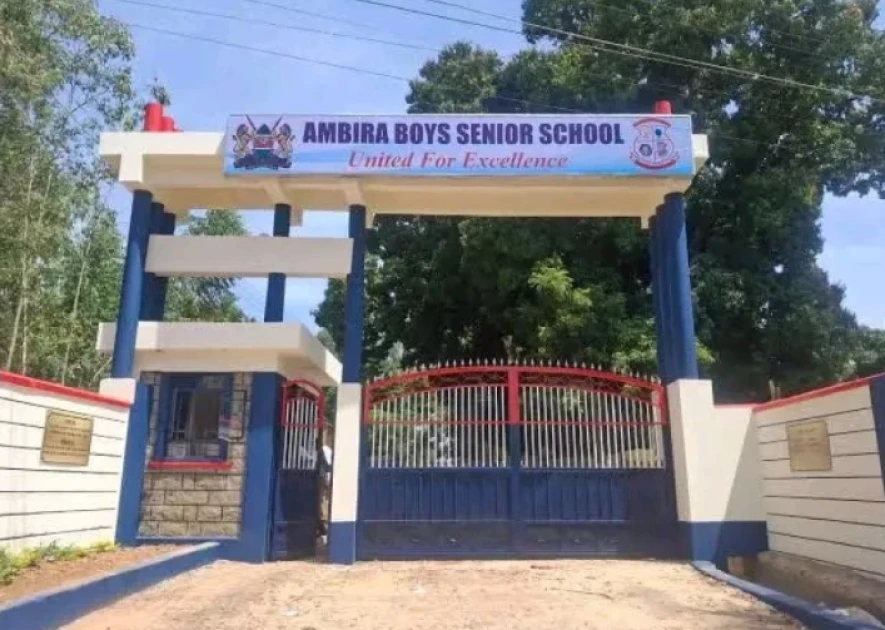
A group of 165 parents from Ambira Boys High School has moved to the High Court of Kenya seeking urgent orders to stop the institution from enforcing a KSh33,000 levy on Grade 10 students following a destructive student strike that left property worth an estimated KSh50 million in ruins.
In a constitutional petition filed before the court’s Human Rights Division, the parents argue that their children were not involved in the unrest that occurred on May 18 and 19, and should not be collectively punished for actions allegedly committed by other learners.
The petition names the school’s Chief Principal and Board of Management, alongside the Principal Secretary for Basic Education under the Ministry of Education Kenya and the Teachers Service Commission, as respondents. The parents contend that the levy violates fundamental rights guaranteed under the Constitution, including the right to education, fair administrative action, equality, and a fair hearing.
According to court filings, tensions escalated after a parents’ meeting held on May 21, where the school administration reportedly assured guardians that Grade 10 learners—then in their first year of senior secondary under the Competency-Based Curriculum—would not face disciplinary sanctions as they were not implicated in the chaos.
However, that assurance was later contradicted by a formal directive instructing all students to report back to school on June 2, accompanied by a mandatory contribution of KSh33,000 per learner to fund repairs.
 ADVERT
The parents argue that the decision amounts to punitive collective responsibility and has effectively locked out students from less affluent households, who are unable to raise the required amount.
“Education is a constitutional right, not a privilege contingent on arbitrary levies,” the petition states, adding that the school’s actions are “unlawful, unreasonable and procedurally unfair.”
The petitioners are seeking multiple remedies, including a declaration that the levy is unconstitutional, orders compelling the school to readmit all affected students unconditionally, and compensation for the alleged violation of their children’s rights.
The case adds to a growing national debate on accountability and discipline in schools, particularly in the wake of rising incidents of student unrest across the country. While school administrations have defended cost-sharing measures as necessary to restore damaged infrastructure, critics argue that blanket penalties risk entrenching inequality and undermining access to education.
The High Court is expected to issue directions on the matter in the coming days, with the outcome likely to set a precedent on how schools handle financial liability in cases of student-led destruction.
— Ends —



