 ADVERT
 ADVERT
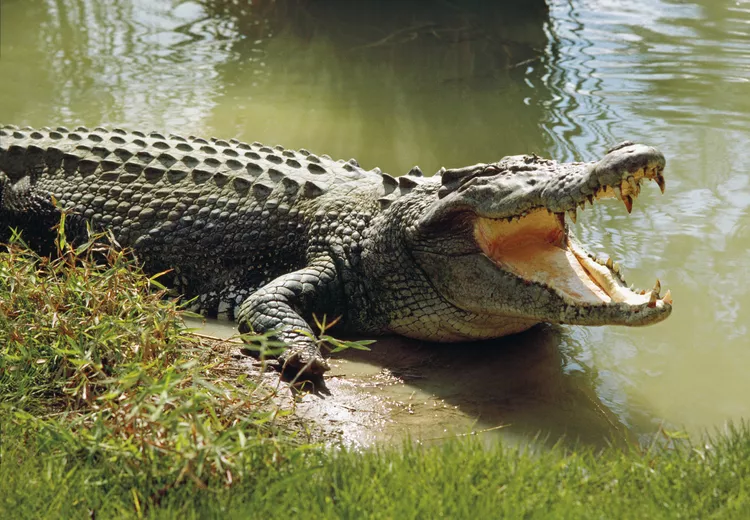
A wave of grief and fury has gripped East Yimbo after six residents were mauled to death by crocodiles at Daraja along River Yala, with locals now accusing the Siaya County Government of presiding over a preventable, recurring tragedy.
What authorities have often treated as isolated incidents is now being exposed as a deadly pattern — one that experts and residents say is rooted in failed governance, ecological neglect, and a glaring absence of safe water infrastructure.
Speaking during a hard-hitting episode of Siaya’s premier online talk show HARD TALK, hosted by digital strategist Lawrence Jeffrey, panelists Alfred Ayiro, Dr. David Oremo, and veteran conservationist Ayiro Lwala delivered a scathing, evidence-backed critique of the crisis.
“This Is Not Tragedy — It Is a Pattern”
Dr. David Oremo, a community mobilizer and founder of the Acacia Community Development Association (ACDA), laid bare a chilling record of repeated deaths — all linked to the same cause: lack of safe water alternatives.
 ADVERT
“In November 2025, a Grade Six pupil was killed fetching water. In March 2026, a young father, John Otieno, died at the same river. Days later, Lucy Adhiambo was dragged in at dusk. A 14-year-old boy, Pascal Okoth, was taken while bathing. A fisherman was killed at Oele Beach,” Dr. Oremo recounted.
“Different victims, same geography, same cause — people are forced into a lethal environment because they have no safer option. This is not random. It is predictable, repeated harm.”
Using a scientific Drivers-Pressures-State-Impact-Response (DPSIR) model, Dr. Oremo explained that population growth and unmet water demand are the primary drivers, with residents walking up to three kilometres for water — far beyond the county’s own 500-metre access target.
“The river has become the default tap,” he said. “And tragically, also a killing field.”
Alfred Ayiro: ‘Give People Water, Save Lives’
Resident Alfred Ayiro pointed directly to the county’s failure to provide clean and accessible water points, arguing that the solution lies in reducing human contact with crocodile-infested waters.
“Crocodiles attack people in water,” Alfred said. “So the most logical intervention is simple — provide alternative water sources for domestic use and livestock. Reduce contact, reduce deaths.”
Alfred Ayiro dismissed claims that the crocodiles are an external problem, insisting they are indigenous to the Yala ecosystem.
“These crocodiles were here long before the Luo migration of the 16th century. This is their habitat. The burden is on us to adapt intelligently.”
He further revealed that human-wildlife conflict is crippling livelihoods, with nearly three-quarters of arable land in Siaya lying fallow due to invasions by hippos and monkeys — a sign, he said, of a broader ecological breakdown.
Ecological Collapse and Human Error
Dr. Oremo reinforced this point, illustrating how human interference has destabilized the ecosystem.
“When apex predators like leopards were eliminated, monkeys multiplied unchecked. Now we are dealing with cascading ecological imbalance,” he explained. “What we see in Yimbo is not just wildlife conflict — it is the cost of long-term environmental mismanagement.”
He added that degraded riparian zones, wetland encroachment, deforestation, and overfishing have pushed crocodiles closer to human activity zones, turning common water-fetching points into predictable ambush sites.
Ayiro Lwala: ‘Leaders Missing in Action’
Veteran conservationist Ayiro Lwala turned his fire on county leadership, accusing officials of abandoning critical environmental conversations while prioritizing politics.
“Where are county officials when these life-and-death discussions are happening?” Lwala posed. “They are absent here but present in droves at political rallies. That is unacceptable.”
Lwala also highlighted stalled conservation efforts, noting that the gazettement of the Lake Kanyaboli National Game Reserve has been derailed by poor public participation and weak stakeholder engagement.
“This is a governance failure,” he said. “You cannot protect ecosystems without involving the people who live in them.”
Law, Rights, and Accountability
Dr. Oremo was unequivocal: the crisis is also a constitutional failure.
“Article 43 guarantees every Kenyan the right to clean and safe water,” he said. “Every trip to that river is a sign that the state has failed in that obligation.”
He outlined clear legal responsibilities:
– Siaya County Government — to deliver water infrastructure, enforce land use planning, and protect riparian zones
– National Government and KWS — to manage wildlife conflict and compensate victims
– Village Units — to coordinate local vigilance and early warning systems
“The law is clear. What is missing is delivery, accountability, and urgency,” he stated.
Missed Opportunities, Urgent Solutions
All panelists agreed that solutions are within reach — but require political will.
They called for immediate activation of already budgeted water projects such as Bar Kanyango, Got Matar, Agola, and PENWA, alongside expansion of solarized water systems to eliminate reliance on the river.
Alfred Ayiro urged the county to engage investors like Lake Agro to harness existing water resources near the former Dominion Farms weir, transforming risk into opportunity.
Dr. Oremo proposed a comprehensive roadmap:
– Immediate action: protected water access points, rapid-response teams, and public awareness on compensation rights
– Medium-term: enforceable riparian buffers and a community-driven land use plan under the Physical and Land Use Planning Act
– Long-term: climate-resilient livelihoods, wetland restoration, and access to climate adaptation financing
Despite the anger, the panelists were united on one principle — crocodiles are not the enemy.
“These animals are part of Yala Swamp’s natural heritage,” Ayiro emphasized. “The answer is coexistence, not elimination.”
Dr. Oremo echoed the sentiment: “The goal is not to remove overlap between humans and wildlife — it is to manage it safely and sustainably.”
For the people of East Yimbo, the message is urgent and unmistakable: this crisis is no longer about wildlife — it is about governance, rights, and survival.
Unless the county government moves swiftly to bridge the gap between policy and reality, residents warn that River Yala will continue to live up to its new, chilling reputation — a river that gives life, but just as easily takes it away.



