 ADVERT
 ADVERT
Achieng Masawa believes that economic emancipation must be the foundation upon which political and social progress in Luo Nyanza is built, and her participation in the Luo Caucus (Duondwa) in Nairobi makes clear the seriousness with which she approaches that conviction.
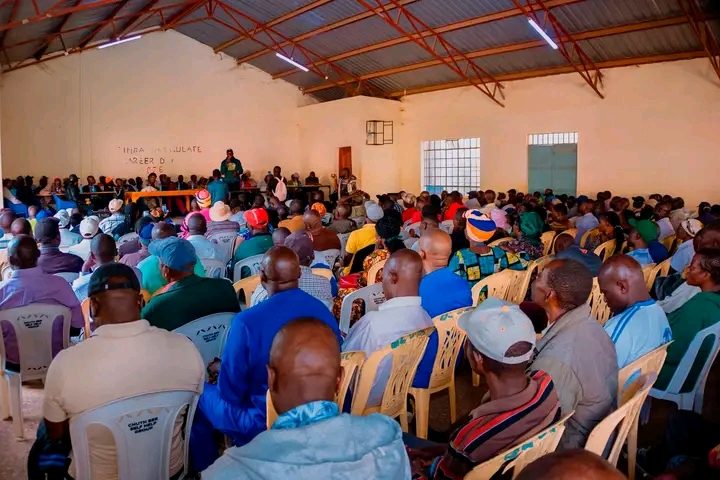
The gathering, attended by a wide cross section of regional leaders, professionals, and business stakeholders, was not a mere political photo opportunity; it was a deliberate convening to align local priorities with national development pathways and to craft a practical blueprint for community led prosperity.
Masawa’s message was straightforward: sustainable growth cannot be an afterthought of political campaigns; it must be central to the strategy that leaders present to their constituents. By foregrounding economic self reliance, she challenged the familiar narrative of dependency that too often reduces regional ambition to a competition for scarce national resources rather than a plan to unlock local potential.
Her insistence on connecting grassroots needs to broader national platforms reflected an understanding that influence in Nairobi and at national decision making tables must be leveraged to create enabling environments for local enterprise and youth opportunity.
In articulating a consultative framework to be taken from the capital back to the counties, Masawa signaled a commitment to listening as much as to leading; the promise to roll out Duondwa’s economic agenda across Luo Nyanza embodies a practical approach that begins with community input and aims for collective ownership.
 ADVERT
Under the banner “Uwezo Wetu, Ustawi Wetu,” she placed youth empowerment and local enterprise at the center of her 2027 bid for Siaya County Woman Representative, framing these priorities not as campaign slogans but as pillars of a regional renewal that can withstand political cycles.
Her participation alongside senior regional voices underscored the necessity of unity in purpose: building networks across counties, strengthening ties with business actors, and synchronizing with national leadership are all components of an integrated strategy to mobilize resources, skills, and markets.
Yet Masawa’s intervention goes beyond political alliance; it asserts a developmental ethos that privileges agency, capacity building, and sustainable livelihoods. By advocating for economic frameworks that are consultative and community rooted, she recognizes that empowerment is not merely the distribution of funds or patronage but the cultivation of systems that enable entrepreneurship, create reliable pathways for youth employment, and institutionalize support for local industries.
The Nairobi engagement therefore becomes a model for how political actors from the region can reconceive their role: not only as contenders for office but as architects of economic ecosystems that endure beyond tenure.
This reframing demands patience, policy literacy, and the willingness to engage with both formal institutions and informal networks that sustain everyday commerce in Luo Nyanza. Masawa’s approach implies working across sectors including education, access to capital, market linkages, and regulatory environments to create a coherent package that nurtures domestic capacities rather than perpetuating external dependency.
Such a vision also calls for prioritizing accountability and transparency, because sustainable economic development is undermined when resources and opportunities are distributed through opaque channels.
By orienting her campaign around clear economic objectives, she invites scrutiny and engagement, turning promises into measurable commitments that communities can assess and hold leaders to.
Importantly, the consultative nature of the Duondwa framework signals a departure from top down decision making. It suggests a model where policy is informed by lived experience and where local entrepreneurs and youth have a voice in shaping the programs that affect them.
This participatory stance strengthens legitimacy and builds the social capital necessary for ambitious reforms to take root. In making economic emancipation the backbone of her political project, Masawa also nudges a broader conversation about regional identity and self determination.
Economic progress, in this telling, is inseparable from dignity and the ability of communities to chart their futures. By tying social empowerment to tangible economic outcomes, she reframes politics as service to collective welfare rather than transactional exchange.
The implications for governance are clear: leaders must be judged on their capacity to create durable opportunities, to catalyze local industries, and to foster inclusive platforms where youth and small enterprises can thrive.
Masawa’s emphasis on networks between counties, businesses, and national institutions reflects a pragmatic recognition that scale matters. Local initiatives must be linked to larger markets and policy frameworks to transcend limitations of size and isolation.
Her appeal to build strong economic linkages is therefore a strategic call to mobilize resources, expertise, and markets in ways that amplify local ingenuity rather than dilute it.
As she prepares to carry the Duondwa framework into the counties, the test will be translating broad principles into concrete programs that address barriers to enterprise including access to finance, mentorship, infrastructure, and predictable regulatory support.
Success will hinge on the capacity to design interventions that are context sensitive and to cultivate partnerships that bring technical know how and capital into alignment with community priorities.
For voters weighing her candidacy, Masawa offers a compelling proposition: a politics anchored in empowerment, a campaign that prioritizes sustainable livelihoods, and a leadership style that seeks to unify rather than divide.
Her platform challenges opponents and allies alike to move beyond rhetoric and to commit to measurable economic transformation for Luo Nyanza.
As an aspirant for the Siaya County Woman Representative seat, her focus on economic emancipation gives her political message a distinct direction. It places the question of what representation should deliver at the center of public discussion and presents leadership as a responsibility to create opportunities, strengthen communities, and promote sustainable development.
Her emphasis on youth empowerment and local enterprise also speaks to the importance of creating conditions in which people can participate meaningfully in the economy and improve their livelihoods through their own efforts.
The broader significance of her message lies in the connection she makes between economic strength and political empowerment. Communities that develop strong economic structures are better positioned to participate in development decisions and to engage leadership from a position of confidence and purpose.
Masawa’s argument therefore extends beyond her individual political ambitions. It presents an approach in which regional development should be guided by collective responsibility, organized participation, and practical economic priorities.
The banner “Uwezo Wetu, Ustawi Wetu” captures this emphasis on the ability of communities to contribute to and benefit from their own development. It also reinforces the idea that economic advancement should involve the people themselves and not remain confined to political offices or formal institutions.
Masawa’s support for taking the Duondwa consultative economic framework to the grassroots is therefore an important element of her political message. It recognizes that policies and development plans are more meaningful when they respond to the experiences and priorities of the communities they are intended to serve.
Consultation creates an opportunity for local voices to contribute ideas, identify challenges, and participate in shaping solutions. For Siaya County, this approach offers a useful basis for discussing how political leadership can become more responsive to economic concerns affecting women, youth, entrepreneurs, and households.
It also creates room for leaders to be assessed not simply by the promises they make but by the clarity of the plans they present and their willingness to engage communities throughout the development process.
Masawa’s emphasis on local enterprise is equally significant because economic progress depends on the ability of individuals and communities to participate in productive activity.
Supporting local enterprise requires attention to the environment in which businesses operate, the opportunities available to young people, access to skills, financial support, market connections, and policies that encourage innovation and investment.
A political agenda that recognizes these areas can contribute to a more comprehensive understanding of empowerment. It moves the conversation away from short term assistance and toward the creation of conditions that allow people to build sustainable livelihoods.
This is particularly relevant to her campaign for the Siaya County Woman Representative position because women and young people remain central to the economic and social wellbeing of communities.
Her participation in the Luo Caucus also demonstrates the importance she attaches to regional coordination. Economic development cannot be approached in isolation when communities share markets, social networks, institutions, and common interests across county boundaries.
Stronger coordination among leaders, professionals, businesses, and grassroots actors can help create a common understanding of regional priorities.
Masawa’s involvement therefore places her within a broader conversation about how Luo Nyanza can organize its economic interests and engage national development structures more effectively.
The focus on collaboration provides an alternative to fragmented approaches in which individual communities pursue development priorities without sufficient connection to wider regional opportunities.
For Siaya County, this discussion is important because political leadership must increasingly be evaluated through the quality of ideas presented to the public.
Voters deserve to understand what candidates believe, what priorities they intend to pursue, and how those priorities connect to the needs of the people.
Masawa’s decision to make economic emancipation a central part of her campaign gives her candidacy a clear thematic identity.
Her message emphasizes empowerment, enterprise, youth opportunity, consultation, and regional cooperation. These themes provide a basis upon which her leadership proposition can be discussed and assessed.
Ultimately, Achieng Masawa is positioning herself as a candidate who wants economic development to become a central language of representation in Siaya County.
Her involvement in the Luo Caucus presents a political approach that seeks to connect local priorities with regional organization and national engagement.
By emphasizing self reliance, consultation, youth empowerment, and local enterprise, she is advancing a message that places economic capacity at the heart of political and social progress.
As an aspirant for the Siaya County Woman Representative seat, her challenge will be to translate these principles into clear and practical commitments that respond to the expectations of the people.
The strength of her political proposition will depend on how effectively she sustains this focus and demonstrates that economic emancipation can remain at the center of responsible, inclusive, and community focused leadership.
James’ Kilonzo Bwire is a Media and Communication Practitioner


