 ADVERT
 ADVERT
From Migingo to Hama, Nairobi must confront the widening gap between East African integration and the protection of Kenyan sovereignty.
Kenya must decide whether its celebrated hospitality towards East African neighbours is being matched by an equally firm commitment to protecting its citizens, territorial interests and economic lifelines.
The arrest of 28 Kenyan fishermen by Ugandan security personnel on Lake Victoria in September 2026 is more than another border incident. It is a sobering reminder that the promise of East African integration remains incomplete when citizens can cross borders in pursuit of economic opportunity but encounter intimidation, uncertainty and the confiscation of their livelihoods when disputes arise.
The fishermen were arrested during a Saturday-night marine operation on allegations of crossing into Ugandan waters and using prohibited fishing equipment to catch mukene, commonly known as silverfish. Their detention followed the destruction of illegal fishing gear estimated to be worth seven billion Ugandan shillings at Dolwe Island landing site in Namayingo District.
According to Uganda’s Daily Monitor, some of the arrested fishermen maintained that they had not knowingly crossed into Ugandan waters because the boundary was not clearly marked. Others complained that Kenya’s fisheries authorities had failed to provide adequate guidance on permissible fishing methods.
 ADVERT
Namayingo Resident District Commissioner Emmy Mitala subsequently ordered their release in the interest of good relations between the two countries, while directing that their boats be returned without the prohibited equipment. He also announced plans for discussions on harmonising enforcement and demarcating the boundary.
The release was welcome. But it does not resolve the larger problem.
Why should fishermen whose livelihoods depend on a shared lake repeatedly find themselves caught between competing interpretations of maritime boundaries, different fisheries regulations and security operations whose consequences can be devastating for their families?
And why, after years of diplomatic engagement, does this problem continue to recur?
These are questions that the Kenyan government can no longer afford to answer with expressions of regret and promises of future consultations.
THE PARADOX OF EAST AFRICAN INTEGRATION
Kenya has embraced regional integration as a strategic instrument for expanding trade, strengthening economic cooperation and facilitating the movement of people across East Africa.
Under the East African Community Common Market Protocol, citizens of partner states enjoy rights relating to entry, movement and residence, subject to the protocol’s provisions and applicable national laws. Kenya’s immigration framework also exempts citizens of East African Community partner states from the electronic travel authorisation requirement for stays of up to 180 days.
This openness is not a weakness. It is an economic and diplomatic asset.
Kenyan traders travel to neighbouring countries to seek markets. Ugandan businesses depend on Kenyan transport corridors and commercial infrastructure. Workers, professionals, investors and families move across national boundaries, sustaining an increasingly interconnected regional economy.
The people of western Kenya and eastern Uganda have particularly deep historical, cultural and commercial connections. Long before modern passports and immigration controls, communities around Lake Victoria traded fish, agricultural produce and other commodities across the lake.
It would therefore be both impractical and undesirable for Kenya to retreat into isolationism.
But regional integration must be reciprocal in spirit, even where national regulations differ.
The freedom to move across borders must never be confused with permission to disregard another country’s sovereignty, and Kenya’s hospitality must never be mistaken for an inability to defend its citizens.
There is an important distinction between welcoming neighbouring citizens into Kenya and failing to protect Kenyans when they encounter difficulties abroad.
The first demonstrates confidence in regional cooperation. The second risks turning generosity into a strategic liability.
Kenya must not abandon integration. It must insist that integration delivers tangible protection, predictable rules and fair treatment for its citizens.
MIGINGO: A SMALL ISLAND, A BIG NATIONAL QUESTION
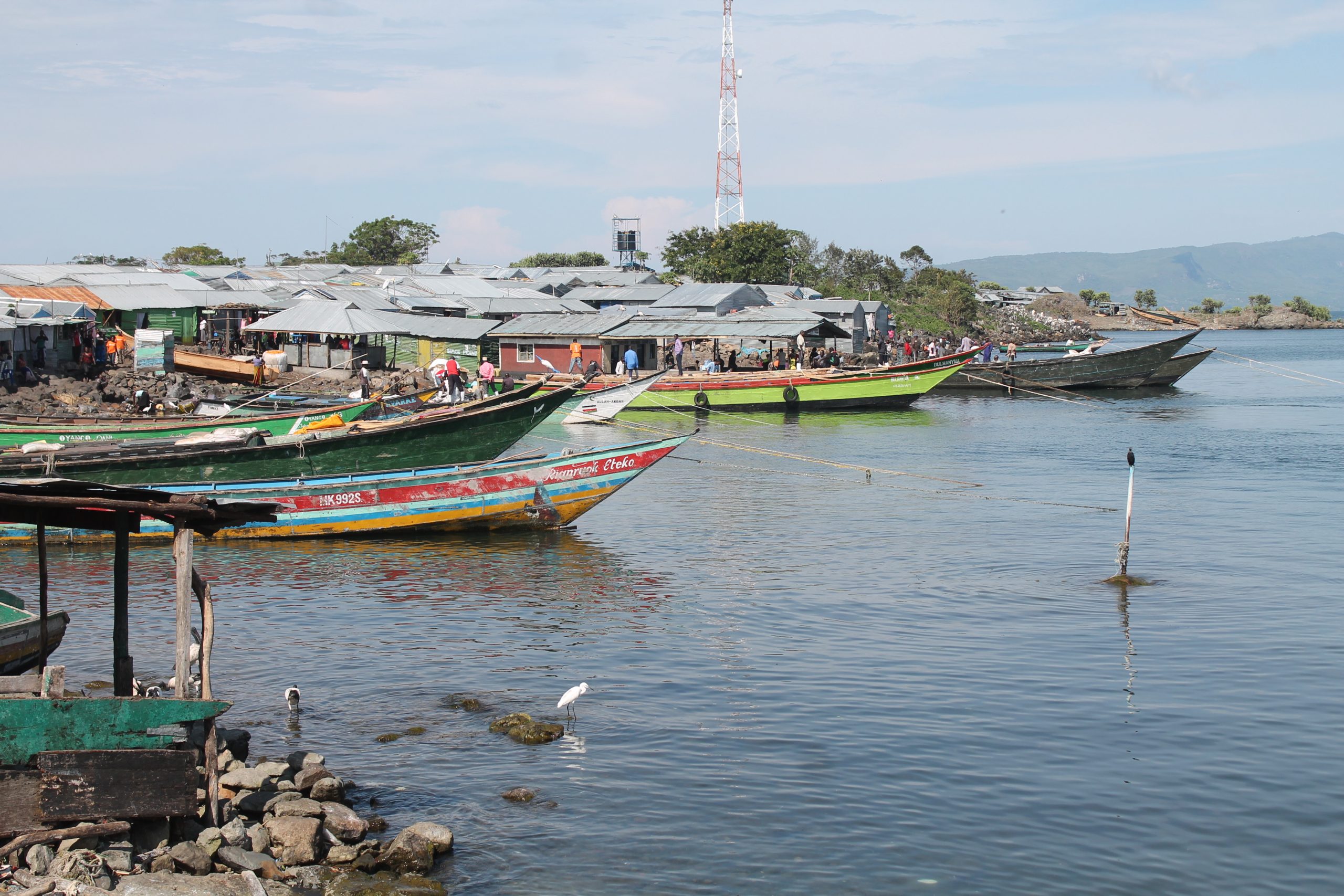
Few places illustrate the complications of Kenya-Uganda relations more vividly than Migingo Island.
This tiny rocky outcrop in Lake Victoria became the centre of a major diplomatic controversy in 2008 and 2009. Its strategic importance has little to do with its physical size and everything to do with the rich fishing grounds surrounding it, particularly those associated with the lucrative Nile perch trade.
The dispute exposed the vulnerability of fishing communities whose livelihoods depend on access to waters that are difficult to navigate and whose boundaries are not always obvious to those working on them.
In 2009, a joint technical survey was initiated to clarify the Kenya-Uganda boundary around the island. Contemporary reporting indicated that the island lay on the Kenyan side of the boundary, approximately 510 metres from the line.
Ugandan President Yoweri Museveni subsequently acknowledged that Migingo Island itself was Kenyan, while maintaining that nearby waters fell within Uganda’s jurisdiction. The distinction between ownership of the island and the delimitation of surrounding waters became central to the continuing disagreement.
The immediate diplomatic confrontation eased, but the underlying problems did not disappear.
Kenyan fishermen continued to report arrests, harassment and the confiscation of boats, fish and fishing equipment by Ugandan security personnel. Disagreements over fishing licences, permissible gear and access to productive waters continued to complicate relations.
In January 2025, the Kenya News Agency reported renewed calls by Migingo residents for the government to publish the findings of the joint boundary survey. The report, according to those petitioning the government, was needed to clarify the island’s status and address continuing complaints about the treatment of Kenyan residents and fishermen.
The continuing demand for transparency is itself troubling.
If the governments of Kenya and Uganda commissioned a technical process to clarify their boundary, the findings should not remain an enduring source of uncertainty for the very communities whose livelihoods depend on them.
The public deserves to know what the survey established, where the boundary lies, what agreements the two governments subsequently reached and which outstanding questions remain unresolved.
This is not an argument for confrontation with Uganda. It is an argument for ending ambiguity.
A boundary that exists in official documents but cannot be understood by fishermen operating on the water is a boundary that demands better communication, clearer demarcation and stronger institutional cooperation.
HAS KENYA SACRIFICED TOO MUCH IN THE NAME OF PEACE?
Kenya’s handling of the Migingo controversy has frequently been interpreted by frustrated citizens as an excessive willingness to accommodate Uganda at the expense of national interests.
The perception is understandable.
When fishermen repeatedly complain of mistreatment, when questions about the boundary remain unanswered and when the government appears unable to provide a lasting solution, restraint begins to look less like statesmanship and more like helplessness.
Nevertheless, the facts require an important distinction: there is no established basis for declaring that Kenya formally ceded Migingo Island to Uganda.
The historical record instead points to a complicated dispute involving territorial claims, surrounding waters, fishing rights and efforts to prevent an escalation into armed confrontation.
Kenya’s decision to pursue diplomatic engagement rather than military confrontation was defensible. No responsible government should risk bloodshed over a territorial disagreement that can be addressed through international law, technical demarcation and bilateral negotiations.
But diplomacy cannot be measured solely by the absence of war.
Its success must also be judged by whether citizens are safe, agreements are implemented, boundaries are respected and the economic activities of border communities can proceed without persistent fear.
Peace that leaves fishermen exposed to repeated arrests and uncertainty is an incomplete achievement.
If restraint is necessary to preserve good relations, it must be accompanied by tangible gains for the people whose livelihoods are affected.
Otherwise, the costs of diplomatic accommodation fall disproportionately on ordinary citizens while political leaders congratulate themselves on maintaining cordial relations.
That is not a sustainable model of good neighbourliness.
THE HAMA QUESTION AND THE WIDER LAKE VICTORIA PROBLEM
The concerns surrounding Hama and the wider Sigulu Islands area reinforce the need for a more comprehensive approach to Lake Victoria’s cross-border challenges.
The lake is not merely a geographical feature separating Kenya, Uganda and Tanzania. It is a shared economic ecosystem supporting millions of people through fishing, trade, transport and related industries.
Its waters are also governed by overlapping national jurisdictions, fisheries regulations and enforcement arrangements that must be understood by communities operating across the lake.
Historical research on cross-border fishing in Lake Victoria has documented disagreements over special fishing licences, the movement of fish to markets in Kenya, the use of prohibited gear and the treatment of fishermen working near national boundaries.
Such tensions are not confined to one island or one country.
The September 2026 arrests demonstrate that the problem remains relevant. Uganda’s authorities say they are enforcing fisheries regulations and protecting fish stocks. Kenyan fishermen, meanwhile, complain that unclear boundaries and inadequate guidance leave them vulnerable to arrest.
Both concerns deserve serious attention.
Uganda has a legitimate interest in enforcing its laws within its territory and protecting fisheries from destructive practices. Kenya has an equally legitimate obligation to ensure that its citizens understand the applicable rules and receive lawful, humane treatment when they are arrested.
The answer is neither to excuse illegal fishing nor to dismiss every complaint against Ugandan security personnel.
It is to establish a system in which boundaries are visible, regulations are harmonised where possible, enforcement is accountable and innocent mistakes do not become recurring diplomatic crises.
On the question of Hama specifically, the government should provide a clear public account of any outstanding territorial or fisheries disagreements and the status of the arrangements governing access to the surrounding waters.
The issue should be resolved through documented evidence and agreed boundaries, not through competing national narratives.
THE DOUBLE STANDARD KENYA MUST NOT IGNORE
The deeper concern is the possibility of an imbalance between Kenya’s commitment to regional openness and its capacity to secure reciprocal treatment for its citizens.
It would be simplistic to claim that Uganda’s immigration policy is universally restrictive or that Kenyan authorities never enforce immigration and fisheries laws. Both countries have legal obligations, and both possess legitimate security and regulatory interests.
But Kenya must examine whether its regional engagement is producing adequate results for ordinary Kenyans.
The problem is not that Kenya welcomes Ugandans, Tanzanians, Rwandans, Burundians, South Sudanese or Congolese citizens under regional integration arrangements.
The problem arises when the government celebrates the benefits of free movement without demonstrating equal determination to address the difficulties Kenyan citizens face across the same regional space.
A Kenyan trader detained over a disputed consignment, a fisherman arrested over an unclear boundary or a businessperson whose property is confiscated during a cross-border enforcement operation should not be left to navigate a complex diplomatic dispute alone.
Regional citizenship means little if the institutions established to facilitate integration cannot provide practical assistance when disputes arise.
The government must therefore move beyond the assumption that cordial relations between presidents and ministers automatically translate into security for citizens.
Diplomatic warmth is valuable. Institutional accountability is indispensable.
KENYA MUST STOP TREATING FISHERMEN AS AN AFTERTHOUGHT
One of the most disturbing features of the Lake Victoria disputes is the apparent disconnect between high-level diplomatic engagement and the everyday realities of fishing communities.
For many households in Migori, Siaya and Busia counties, fishing is not an occasional commercial activity. It is the foundation of household income, education, food security and local employment.
A confiscated boat can destroy a family’s principal productive asset. Seized fishing gear can deprive a household of income for weeks or months. Detention can expose families to additional financial pressure, while injuries or deaths can leave dependants without their primary source of support.
These consequences demand a coordinated government response.
Kenya should establish a permanent Lake Victoria fisheries and border-protection mechanism involving the Ministry responsible for foreign affairs, the State Department responsible for fisheries, maritime security agencies, county governments, Beach Management Units and representatives of fishing communities.
Its mandate should include providing reliable information about international boundaries, coordinating responses to arrests, documenting complaints, facilitating legal assistance and monitoring the implementation of bilateral agreements.
Fishermen should also receive practical training on permissible fishing gear, licensing requirements, boundary awareness and procedures to follow when intercepted by foreign security personnel.
Where the boundary is difficult to identify on the water, Kenya and Uganda should jointly install suitable markers where technically feasible and provide accessible maps, navigation information and community education.
The governments should consider a joint incident-reporting system through which fishermen can promptly report arrests, alleged mistreatment, confiscation of property and other disputes.
Such a system would replace fragmented complaints with verifiable records, making it easier to distinguish legitimate enforcement from alleged misconduct.
Above all, Kenya must improve its own fisheries enforcement. The September 2026 reports indicated that some equipment prohibited in Uganda continued to be used in Kenyan waters. If accurate, that inconsistency weakens Kenya’s position when challenging the consequences of illegal fishing across the border.
Kenyan authorities must enforce their own laws with equal seriousness.
Protecting fishermen does not mean granting them a licence to fish illegally. It means ensuring that enforcement is lawful, proportionate and consistent, while defending their rights whenever those rights are violated.
THE EAST AFRICAN COMMUNITY MUST DO MORE
The East African Community cannot afford to reduce integration to the movement of goods, the removal of immigration barriers and declarations of regional solidarity.
The community must also confront the disputes that undermine public confidence in the integration project.
The Lake Victoria Fisheries Organization provides an established regional framework for cooperation in fisheries management. Kenya, Uganda and Tanzania should use it more effectively to harmonise fisheries rules, improve enforcement coordination and develop practical arrangements for cross-border fishing communities.
The EAC should also facilitate a transparent process for addressing the outstanding questions surrounding Migingo and other disputed or poorly understood areas of the lake.
Where the parties disagree, independent technical expertise and mutually accepted legal procedures should take precedence over unilateral assertions.
The objective should be a durable settlement that protects national sovereignty while recognising the shared ecological and economic character of Lake Victoria.
Such an arrangement need not weaken national borders. On the contrary, a clearly defined and mutually respected boundary is a precondition for sustainable regional cooperation.
The same principle applies to the treatment of detained fishermen.
Authorities should be able to verify nationality, explain the alleged offence, protect the detainees’ rights and communicate promptly with the relevant consular or diplomatic representatives.
Where offences have been committed, the law should take its course. Where boundaries or regulations are unclear, the governments should correct those deficiencies rather than repeatedly allowing fishermen to bear the consequences.
Regional integration cannot succeed if the people living along its borders experience it primarily as a source of uncertainty.
THE PRESIDENT MUST DEMAND RESULTS, NOT MERELY REASSURANCES
The Kenya-Uganda relationship is too important to be reduced to periodic diplomatic protests whenever another group of fishermen is arrested.
Uganda is a major regional partner. Kenya benefits from cross-border trade, transport connectivity, investment and economic cooperation with its neighbour. Both countries have powerful incentives to preserve peaceful relations.
Precisely because the relationship matters, Nairobi must address its difficult questions directly.
The Kenyan government should publish all legally releasable findings and agreements relating to the Migingo boundary, explain which issues remain unresolved and establish a time-bound process for completing outstanding technical work.
It should also seek a formal bilateral agreement setting out the treatment of detained fishermen, procedures for verifying alleged offences, the handling and return of confiscated property, and mechanisms for resolving complaints against security personnel.
Where allegations of abuse are substantiated, those responsible should face appropriate accountability measures.
Where Kenyan fishermen have violated Ugandan law, they should be held accountable through lawful procedures.
Neither nationality nor political convenience should determine whether justice is done.
Kenya must also strengthen support for the affected communities. County governments and national agencies should document losses, facilitate access to legal assistance and explore lawful mechanisms for emergency support to households whose livelihoods are disrupted by cross-border incidents.
These are practical steps, not hostile gestures.
A government that can negotiate regional trade arrangements should be capable of negotiating a clear, enforceable framework for protecting the fishermen who sustain a significant part of the Lake Victoria economy.
SOVEREIGNTY WITHOUT HOSTILITY
There is no contradiction between defending Kenyan sovereignty and maintaining peaceful relations with Uganda.
Indeed, the two objectives should reinforce each other.
Sovereignty is not demonstrated by inflammatory rhetoric, military posturing or reckless confrontation. It is demonstrated by a government’s ability to define its territory, enforce its laws, protect its citizens and resolve disputes through credible institutions.
Likewise, good neighbourliness is not measured by how often one government accommodates another. It is measured by the ability of both countries to respect agreements, resolve disagreements and protect the interests of their respective populations.
Kenya must reject the false choice between confrontation and capitulation.
It should neither threaten Uganda unnecessarily nor tolerate a situation in which recurring incidents become an accepted feature of life for Kenyan fishermen.
The lesson of Migingo is that unresolved boundaries and ambiguous fishing rights can turn a tiny island into a major diplomatic liability. The latest arrests show that the lessons have yet to be fully absorbed.
The appropriate response is firmer diplomacy, greater transparency, stronger domestic enforcement and a regional framework that makes the rights and obligations of fishermen unmistakably clear.
CONCLUSION: OPEN BORDERS MUST NOT MEAN EXPOSED CITIZENS
Kenya’s commitment to East African integration is worth defending. The movement of people, the expansion of trade and the development of shared markets offer enormous opportunities for the region.
But integration must work for ordinary citizens, not merely governments and businesses.
The fishermen of Lake Victoria deserve to know where they may lawfully operate, which equipment they may use and what protections they can expect if a dispute arises. Their families deserve a government that does not forget them once the headlines fade.
Migingo should no longer be a symbol of diplomatic ambiguity. The questions surrounding Hama and other cross-border fishing areas should be addressed through evidence, agreed boundaries and transparent procedures. And the repeated arrest of Kenyan fishermen should prompt lasting institutional reforms rather than another cycle of outrage followed by silence.
Kenya should remain open to its neighbours. It should continue to champion regional integration and peaceful coexistence.
But it must also make clear that friendship between states carries responsibilities on both sides.
The ultimate test of East African integration is not how freely our neighbours can enter Kenya. It is whether Kenyans can live, trade and work across the region with dignity, security and the assurance that their government will stand firmly behind them.
Kenya does not need a hostile relationship with Uganda. It needs a more effective one—built on mutual respect, transparent agreements, accountable enforcement and an unambiguous commitment to protecting the citizens of both countries.
That is not nationalism at the expense of integration.
It is what genuine integration demands.
Editorial
12th October, 2026
Lawrence Jeffrey
Siaya