 ADVERT
 ADVERT
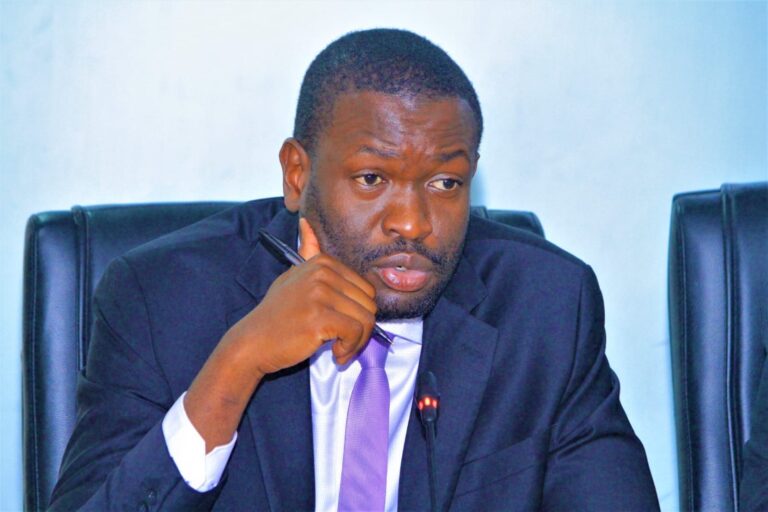
The Orange Democratic Movement (ODM) has now confirmed what had for days lingered as speculation: Nairobi Senator Edwin Sifuna is no longer the party’s Secretary General.
The decision, coming at a politically delicate moment as Kenya inches closer to another election cycle, is not just a routine leadership change—it bears the hallmarks of a calculated internal purge. And while it may deliver short-term calm within sections of the party, it raises deeper concerns about ODM’s long-term political health, ideological clarity, and national standing.
Sifuna’s removal is widely interpreted as a victory for the dominant “Linda Ground” faction, which has in recent months sought to consolidate influence and mute dissenting or independent voices within the party’s upper ranks. In that narrow sense, the decision may indeed achieve one immediate objective: internal tranquility.
But political tranquility achieved through subtraction rather than consensus often comes at a cost.
For years, Sifuna stood out as one of ODM’s most assertive, articulate, and policy-driven figures. He was not merely a party functionary; he was a frontline communicator who consistently engaged national issues with clarity and conviction. Whether defending ODM’s positions or challenging opponents, he projected a sense of ideological grounding that gave the party both visibility and voice.
 ADVERT
His exit leaves behind a noticeable void—one that is unlikely to be filled by mere administrative replacements.
More critically, the move risks reinforcing a troubling perception: that ODM is gradually sidelining strong-willed leaders in favor of politically compliant operatives. The danger here is not just about personalities—it is about the kind of political culture the party is cultivating.
A party dominated by individuals driven more by proximity to power than by policy conviction risks losing its intellectual edge, its reformist identity, and ultimately, its credibility with voters.
In removing Sifuna, ODM may have inadvertently strengthened a cohort of what critics describe as “spineless political operatives”—figures who thrive on opportunism rather than ideology, loyalty to individuals rather than institutions, and short-term positioning rather than long-term vision.
Such a shift, if left unchecked, could fundamentally alter the party’s character.
Yet, in a twist that ODM’s strategists may not have fully anticipated, Sifuna’s removal could paradoxically elevate his national political profile. Freed from the constraints of party bureaucracy and internal factional balancing, he now has the latitude to redefine himself beyond the role of Secretary General.
In Kenyan politics, perceived victimhood within party structures often translates into political capital. Leaders who are seen as principled, outspoken, and unfairly pushed aside frequently re-emerge with broader appeal. Sifuna’s reputation as a bold communicator and policy-oriented politician positions him uniquely to leverage this moment—not as a setback, but as a springboard.
Indeed, his exit from ODM’s top administrative ranks may quietly strengthen his credentials as a potential presidential contender or national-level political force in the years ahead. Detached from internal party constraints, he could craft an independent political identity that resonates beyond ODM’s traditional base.
Historically, ODM has prided itself on being more than just a regional outfit. It has projected itself as a national movement anchored on reform, inclusivity, and democratic ideals. But decisions that appear to punish assertiveness while rewarding conformity risk chipping away at that identity.
At a time when Kenyan voters are increasingly attentive to governance, accountability, and policy substance, weakening the party’s most effective communicators and thinkers could prove politically costly.
To be clear, political parties have every right to reorganize and recalibrate their leadership. Internal discipline and cohesion are legitimate concerns. But the manner, timing, and implications of such decisions matter.
In the heat of an approaching election cycle, stability is currency. Strong voices are assets. Internal diversity, when well managed, is a strength—not a liability.
ODM’s leadership must now confront a critical question: has it strengthened the party’s unity, or merely silenced its most independent voice?
Because while the removal of Sifuna may quiet internal tensions today, it risks creating a deeper, more consequential vacuum—one where conviction gives way to convenience, and where political survival takes precedence over ideological clarity.
And in the unforgiving arena of national politics, a party that loses its spine may not only weaken itself—but inadvertently create the very rivals it sought to contain.



