

• Fri. Oct 23rd, 2026
ADVERT

ODM Axes Sifuna: A Calculated Purge That Risks Hollowing Out the Party’s Spine

Byadmin

Jul 10, 2026
ADVERT
Spread the love
ADVERT

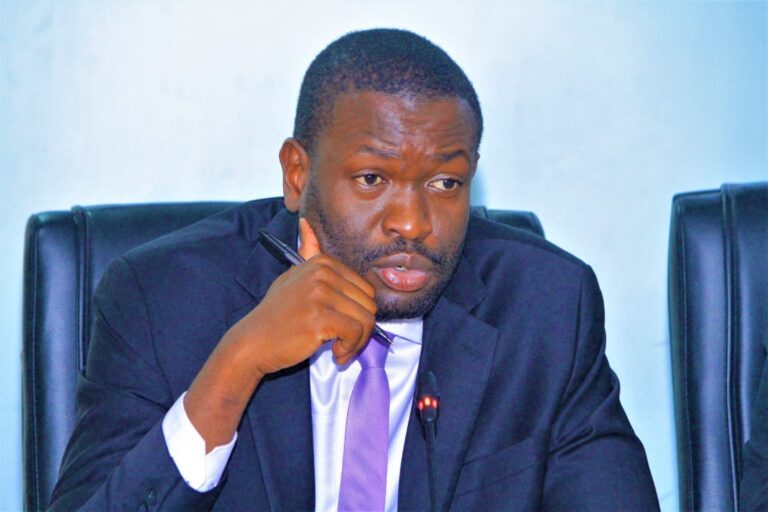
The Orange Democratic Movement (ODM) has now confirmed what had for days lingered as speculation: Nairobi Senator Edwin Sifuna is no longer the party’s Secretary General.

The decision, coming at a politically delicate moment as Kenya inches closer to another election cycle, is not just a routine leadership change—it bears the hallmarks of a calculated internal purge. And while it may deliver short-term calm within sections of the party, it raises deeper concerns about ODM’s long-term political health, ideological clarity, and national standing.

Sifuna’s removal is widely interpreted as a victory for the dominant “Linda Ground” faction, which has in recent months sought to consolidate influence and mute dissenting or independent voices within the party’s upper ranks. In that narrow sense, the decision may indeed achieve one immediate objective: internal tranquility.

But political tranquility achieved through subtraction rather than consensus often comes at a cost.

For years, Sifuna stood out as one of ODM’s most assertive, articulate, and policy-driven figures. He was not merely a party functionary; he was a frontline communicator who consistently engaged national issues with clarity and conviction. Whether defending ODM’s positions or challenging opponents, he projected a sense of ideological grounding that gave the party both visibility and voice.

ADVERT

His exit leaves behind a noticeable void—one that is unlikely to be filled by mere administrative replacements.

More critically, the move risks reinforcing a troubling perception: that ODM is gradually sidelining strong-willed leaders in favor of politically compliant operatives. The danger here is not just about personalities—it is about the kind of political culture the party is cultivating.

A party dominated by individuals driven more by proximity to power than by policy conviction risks losing its intellectual edge, its reformist identity, and ultimately, its credibility with voters.

In removing Sifuna, ODM may have inadvertently strengthened a cohort of what critics describe as “spineless political operatives”—figures who thrive on opportunism rather than ideology, loyalty to individuals rather than institutions, and short-term positioning rather than long-term vision.

Such a shift, if left unchecked, could fundamentally alter the party’s character.

Yet, in a twist that ODM’s strategists may not have fully anticipated, Sifuna’s removal could paradoxically elevate his national political profile. Freed from the constraints of party bureaucracy and internal factional balancing, he now has the latitude to redefine himself beyond the role of Secretary General.

In Kenyan politics, perceived victimhood within party structures often translates into political capital. Leaders who are seen as principled, outspoken, and unfairly pushed aside frequently re-emerge with broader appeal. Sifuna’s reputation as a bold communicator and policy-oriented politician positions him uniquely to leverage this moment—not as a setback, but as a springboard.

Indeed, his exit from ODM’s top administrative ranks may quietly strengthen his credentials as a potential presidential contender or national-level political force in the years ahead. Detached from internal party constraints, he could craft an independent political identity that resonates beyond ODM’s traditional base.

Historically, ODM has prided itself on being more than just a regional outfit. It has projected itself as a national movement anchored on reform, inclusivity, and democratic ideals. But decisions that appear to punish assertiveness while rewarding conformity risk chipping away at that identity.

At a time when Kenyan voters are increasingly attentive to governance, accountability, and policy substance, weakening the party’s most effective communicators and thinkers could prove politically costly.

To be clear, political parties have every right to reorganize and recalibrate their leadership. Internal discipline and cohesion are legitimate concerns. But the manner, timing, and implications of such decisions matter.

In the heat of an approaching election cycle, stability is currency. Strong voices are assets. Internal diversity, when well managed, is a strength—not a liability.

ODM’s leadership must now confront a critical question: has it strengthened the party’s unity, or merely silenced its most independent voice?

Because while the removal of Sifuna may quiet internal tensions today, it risks creating a deeper, more consequential vacuum—one where conviction gives way to convenience, and where political survival takes precedence over ideological clarity.

And in the unforgiving arena of national politics, a party that loses its spine may not only weaken itself—but inadvertently create the very rivals it sought to contain.

Author

Leave a Reply

Your email address will not be published. Required fields are marked *

ALSO READ

Ne-Yo Lights Up Nairobi as Stanbic Bank’s Mashujaa Day Concert Draws 3,500 Fans Grammy-winning R&B superstar headlines ‘One Night Only: Brunch Edition’ at Ulinzi Sports Complex as Stanbic Bank backs Kenya’s creative economy and local enterprise NAIROBI, October 21, 2026 — Nairobi’s entertainment scene came alive on Mashujaa Day as approximately 3,500 music fans gathered at Ulinzi Sports Complex for One Night Only: Brunch Edition with Ne-Yo, a premium live-music experience title-sponsored by Stanbic Bank. The concert, held on Tuesday, October 20, delivered an afternoon of live performances, music and networking, bringing together Kenyan and international talent for a celebration that blended world-class entertainment with opportunities for the country’s growing creative economy. Performances began at 3:30 pm and concluded shortly after 8:00 pm, maintaining the event’s signature daytime brunch format while giving fans an opportunity to experience some of the biggest names on the lineup before nightfall. Kenyan musician Mutoriah opened the show with an energetic set, setting the pace for the afternoon. UK-based band Sol and the Gang followed with a vibrant performance before three-time Grammy Award-winning American R&B star Ne-Yo took centre stage to close the concert in style. Top Kenyan DJs kept the predominantly millennial audience entertained throughout the event, sustaining the energy between performances and reinforcing Nairobi’s growing appetite for curated, premium music experiences. Stanbic Bank puts creative economy in the spotlight Beyond the music, the concert highlighted the commercial opportunities generated by Kenya’s live-entertainment industry, with Stanbic Bank positioning its sponsorship as an investment in the wider creative ecosystem. The production created business opportunities across multiple segments of the value chain, including artists, sound engineers, stage and technical crews, production specialists, hospitality providers, security personnel, vendors and micro- and small enterprises. For an industry that relies heavily on collaboration among creative professionals and service providers, events of this scale can stimulate local demand, support livelihoods and open new commercial opportunities for businesses operating behind the scenes. Michael Mutiga, Chief Executive of Stanbic Bank Kenya and South Sudan, said the concert demonstrated how large-scale entertainment can combine audience appeal with tangible economic activity. “Yesterday was a powerful demonstration of what happens when world-class entertainment meets meaningful local economic impact,” Mutiga said. He noted that bringing more than 3,000 fans together went beyond the performances on stage, generating business for artists, technical teams, vendors, hospitality partners and small enterprises involved in delivering the event. “Kenya’s creative sector is a dynamic driver of growth, and Stanbic Bank remains committed to strengthening this ecosystem, raising its commercial profile, and supporting the livelihoods anchored in it,” he added. Creative industry contributes 5.32% of Kenya’s GDP The sponsorship comes against the backdrop of the creative economy’s contribution to employment, enterprise development and national output. A 2021 report by the World Intellectual Property Organization (WIPO) and the Kenya Copyright Board (KECOBO) placed the creative industry’s contribution to Kenya’s gross domestic product at 5.32%, while estimating that the sector provided formal employment for approximately 195,000 people. The industry also supports livelihoods across the informal economy, including performers, independent producers, event organisers, designers, content creators, technicians and small businesses that supply goods and services to entertainment productions. Stanbic Bank’s approach underscores the potential of cultural events to serve as more than marketing platforms. By bringing together consumers, performers, businesses and corporate sponsors, such events can create opportunities for local talent, showcase production capabilities and connect home-grown enterprises to wider commercial networks. However, the long-term impact of such initiatives depends on whether the opportunities generated translate into sustained contracts, improved incomes and stronger business prospects for local players beyond individual events. Stanbic Bank celebrates premium daytime entertainment Lilian Onyach, Head of Brand and Marketing at Stanbic Bank Kenya, said the event was designed to offer clients and music enthusiasts a distinctive, world-class daytime entertainment experience. She said the turnout and audience energy reflected the vibrancy of Kenya’s entertainment market and the growing appeal of carefully curated live-music events. “We set out to offer our clients and music enthusiasts a distinctive, world-class daytime experience, and the turnout and energy yesterday proved just how vibrant Kenya’s entertainment market is,” Onyach said. She added that the afternoon schedule allowed the event to preserve its brunch atmosphere while showcasing the artistry, logistical expertise and commercial capacity of Kenya’s creative industry. The format also reflects a broader opportunity for event organisers and sponsors to diversify entertainment offerings beyond traditional late-night concerts, creating experiences that appeal to audiences seeking music, social interaction and premium hospitality in a single setting. Brand recognition reinforces Stanbic Bank’s market position The Ne-Yo concert adds to Stanbic Bank’s brand-building initiatives as the lender continues to pursue market visibility through entertainment, customer engagement and support for economic activity. The bank was recently named Overall Best Bank in Kenya at the Think Business Awards. At group level, its parent, Standard Bank Group, was ranked Africa’s Most Valuable Bank Brand by Brand Finance for the fifth consecutive year. Through sponsorships such as One Night Only, Stanbic Bank is seeking to connect its brand with experiences that attract consumers while supporting businesses and professionals in adjacent industries. As Kenya’s creative sector continues to evolve, the commercial value of live entertainment will increasingly depend on the ability of organisers, sponsors and industry players to convert audience demand into sustainable opportunities for artists, entrepreneurs and the wider workforce. At Ulinzi Sports Complex, Ne-Yo provided the headline attraction, but the broader story extended beyond the stage: a major public celebration that brought international music to Nairobi while spotlighting the economic potential of Kenya’s creative industries