 ADVERT
 ADVERT
Kenya’s long-standing struggle with divisive politics has once again taken center stage, with the National Cohesion and Integration Commission (NCIC) issuing a firm warning to political leaders accused of fueling hate speech and ethnic polarization.
In a notable shift toward greater accountability, the Commission has announced that it will actively monitor public discourse and periodically publish the names of individuals found to be propagating inflammatory rhetoric. The move signals a more assertive approach by the watchdog at a time when political temperatures are gradually rising ahead of future electoral cycles.
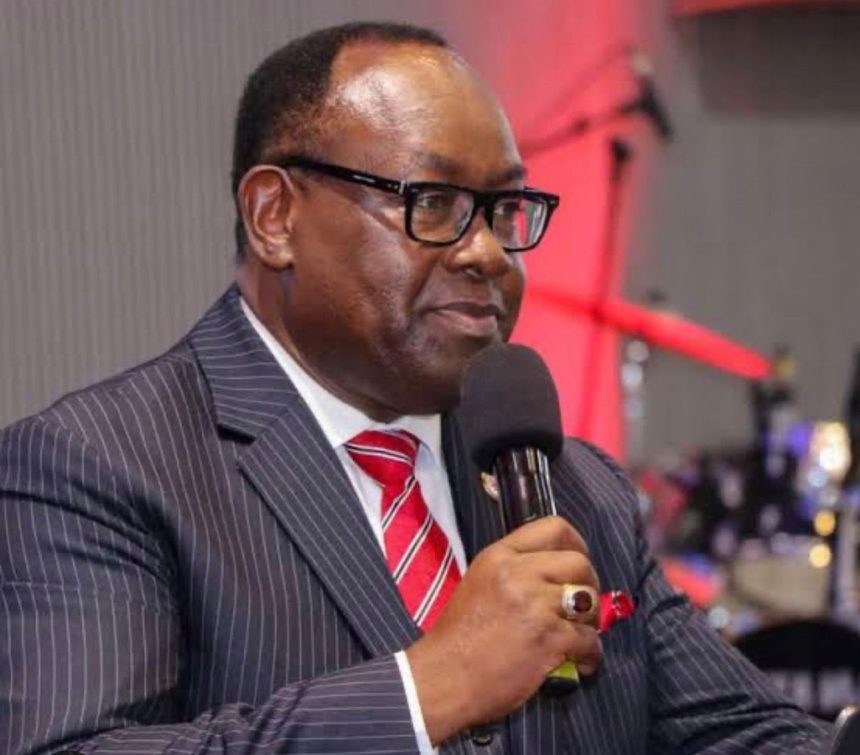
NCIC Chairperson Kepha Omae underscored that freedom of expression must be exercised within the confines of the law, emphasizing that enforcement will be applied without regard to political affiliation. His remarks reflect growing concern among state institutions and civil society over the persistence of reckless political messaging, particularly at public gatherings and across digital platforms.
Government officials have echoed similar sentiments. Interior Cabinet Secretary Kipchumba Murkomen reaffirmed the state’s commitment to curbing violence linked to political activity, warning that criminal elements operating under the cover of political mobilization will be dealt with firmly. Prime Cabinet Secretary Musalia Mudavadi also maintained that the government would not shield individuals who incite violence or facilitate disorder, while COTU Secretary General Francis Atwoli called for strict adherence to existing laws governing public conduct.
Collectively, these statements project a unified stance against hate speech. However, they also bring into focus a recurring challenge in Kenya’s governance landscape: the gap between policy pronouncements and consistent enforcement. While the legal framework to address incitement and hate speech is well established, its application has at times been criticized as uneven, raising concerns about selective accountability.
 ADVERT
As Kenya reflects on its past—particularly episodes where inflammatory rhetoric contributed to electoral unrest—the NCIC’s renewed vigilance may be viewed as both timely and necessary. Still, its success will depend on transparent processes, credible investigations, and public confidence that enforcement will remain impartial.
Beyond Kenya’s borders, developments in Uganda offer a contrasting but instructive perspective on the intersection of politics, speech, and media freedom. A quiet wave of online dissent has been building around Major General Muhoozi Kainerugaba, following actions perceived by critics as restrictive, including moves affecting media houses linked to the Nation Media Group.
This situation highlights a broader regional tension: how to balance state authority, media independence, and responsible communication in an increasingly digital political environment. In Kenya, media dynamics remain complex, with different outlets often perceived through political lenses. While such perceptions may vary, they underscore the importance of safeguarding editorial independence while encouraging responsible journalism.
History suggests that attempts to curtail media operations—especially in politically sensitive periods—can have unintended consequences, including eroding trust and amplifying dissent. As such, many analysts argue that constructive engagement between the state and the press is more sustainable than confrontation.
Ultimately, Kenya’s current moment presents both a warning and an opportunity. The NCIC’s proactive posture could help reset the tone of national discourse if implemented fairly and consistently. At the same time, it invites broader reflection on the responsibilities shared by political leaders, institutions, the media, and citizens in shaping a cohesive society.
The path forward lies not only in enforcement but also in fostering a political culture that values restraint, accountability, and respect for diversity. Whether this latest push translates into lasting change will depend on the willingness of all actors to move beyond rhetoric and uphold the principles that underpin Kenya’s democratic aspirations.
Lawrence Jeffrey Ochieng
Editor-in-chief
Siaya, 28th June, 2026



