 ADVERT
 ADVERT
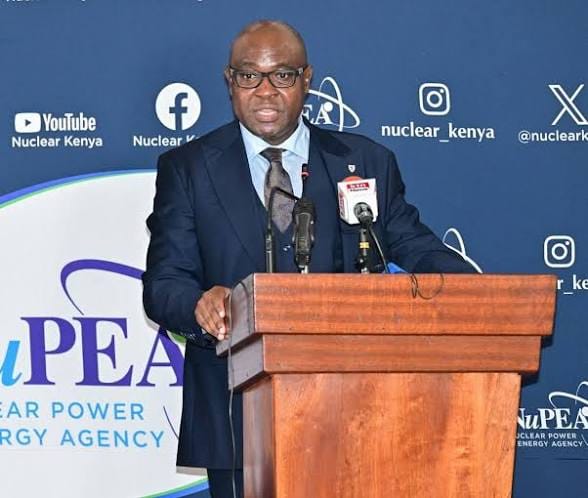
The debate over Kenya’s first nuclear power plant in Siaya is not simply about technology or cost. It is about how a nation balances urgent energy needs with legitimate community concerns, how it interprets safety in the context of modern nuclear engineering, and how it builds public confidence without dismissing fear as ignorance. The response by NuPEA CEO Justus Wabuyabo in The Standard’s Leaders Corner must be read as more than a rebuttal to one article. It is a statement of principle on how Kenya intends to enter the nuclear age, with attention to international safeguards, with recognition of community voice, and with a clear insistence that nuclear power remains central to long term national development. This position reflects a broader understanding that nuclear energy cannot be advanced on technical grounds alone. It must also be grounded in social legitimacy, regulatory credibility, and a clear demonstration that national interest does not override local safety and environmental protection.
The core of the concern raised in the original article is the perception of risk. Residents and critics point to the proximity of the proposed site to Lake Victoria, the possibility of seismic activity, the management of radioactive waste, and the adequacy of public participation. These are not trivial matters. Any national nuclear programme must treat them as central design questions rather than afterthoughts. Wabuyabo’s position, as reflected in his public statements and parliamentary briefings, is that contemporary nuclear technology has moved far beyond the vulnerabilities associated with earlier generations of reactors. He argues that modern plants incorporate multiple, redundant safety systems that make catastrophic failure extremely unlikely under normal and abnormal conditions. He also notes that international partners and the IAEA will not permit construction to proceed unless a country can demonstrate that safety, security, and safeguards meet strict global standards. This is an important point. Kenya’s nuclear path is not being charted in isolation. It is embedded in a global framework of peer review, technical cooperation, and regulatory expectations that shape every major decision from site selection to licensing. The presence of international oversight does not remove all risk, but it introduces external checks that reduce the possibility of unilateral decisions that compromise safety or bypass established procedures.
At the same time, technical assurances alone cannot resolve anxiety. The history of large infrastructure projects in Kenya shows that trust is built through process as much as through engineering. Wabuyabo acknowledges this when he describes the shift from high level institutional engagement to village level sensitisation. He frames public participation not as a box to be ticked but as a constitutional right and a technical necessity for a successful national nuclear programme. This framing matters. It recognises that community consent is not an obstacle to be overcome but a condition for durable project legitimacy. It also signals that NuPEA understands that opposition in Siaya is not merely about misinformation. It is about land, livelihood, water, and the fear that a national project may override local interests. A credible nuclear programme must address these concerns directly, not only through technical briefings but through sustained dialogue that allows residents to see how their input shapes outcomes. This means that information must flow in both directions. The agency must listen to local knowledge about land use, water sources, and environmental sensitivities, and it must show how that knowledge influences site design, emergency planning, and benefit sharing arrangements. Without this two way engagement, even the most advanced technical safeguards will struggle to gain public acceptance.
The question of site selection sits at the heart of this tension. Critics highlight that earlier government assessments reportedly flagged the Lake Victoria region as unsuitable due to seismic and environmental risks. Some observers have pointed to NuPEA’s own Strategic Environmental and Social Assessment, which they say raised concerns about geological instability in parts of the Rift system and the broader Lake Victoria basin. Wabuyabo and NuPEA counter that an extensive screening process eliminated vulnerable sites and that Lenya Village emerged as the preferred location after regional assessments. They add that both the preferred and alternative sites will undergo detailed characterisation before any licensing or construction approvals are issued. This sequence is critical. It means that the current designation is not a final green light but a stage in a longer, evidence driven process that includes environmental and social impact assessments. For the public, the challenge is to distinguish between political momentum and regulatory finality. The government may be committed to nuclear energy as a strategic goal, but the law and international norms still require that each step be validated by technical and environmental review. This distinction is essential for maintaining credibility. If communities believe that decisions have already been made regardless of evidence or consultation, they will view all subsequent processes as formalities rather than genuine opportunities to influence outcomes.
Safety also extends beyond the reactor itself. It includes the management of spent fuel, the protection of water resources, and the preparedness of emergency response systems. Wabuyabo’s references to international conventions and IAEA collaboration are meant to assure the public that Kenya is aligning its regulatory framework with global best practice. He notes that the Cabinet has approved the ratification of four international nuclear safety conventions and that these are awaiting parliamentary consideration. This legislative step is not symbolic. It binds Kenya to external oversight and creates legal obligations that reinforce domestic regulation. For residents who worry that national interest may override local safety, these international commitments provide an additional layer of accountability. They do not eliminate risk, but they reduce the space for arbitrary decision making and raise the cost of cutting corners. These conventions also require regular reporting, peer review missions, and adherence to updated safety standards. Over time, this creates a culture of continuous improvement rather than one off compliance. It also means that Kenya’s nuclear regulators will be expected to operate with a level of independence and technical capacity that matches international expectations. This is a demanding requirement, but it is also an opportunity to strengthen the entire energy governance system.
 ADVERT
The economic dimension cannot be ignored. Proponents argue that nuclear power will provide stable, large scale, low carbon electricity that can support industrialisation and reduce reliance on variable renewable sources. They present the Siaya project as the foundation of a new industrial phase for Kenya, one that requires dependable baseload power. Critics counter that the cost is too high and that the funds could be directed to other energy or development priorities. Wabuyabo’s position is that nuclear energy is a strategic necessity, not a luxury. He frames it as part of Kenya’s long term transformation under Vision 2030 and beyond. This is a policy choice with intergenerational implications. It assumes that Kenya’s electricity demand will grow substantially and that a diversified mix including nuclear will be more resilient than a system dependent on a narrower set of sources. Whether this assumption holds will depend on future demand patterns, regional power trade, and the pace of renewable cost declines. But the logic behind the choice is clear. Kenya is positioning nuclear power as a pillar of future energy security. This logic also extends to questions of energy sovereignty. A country that can generate large amounts of reliable electricity from domestic sources reduces its exposure to external fuel price shocks and supply disruptions. For a nation that has long faced volatility in oil markets and periodic stress in the regional power pool, this argument carries significant weight.
Public communication is where many of these threads converge. Wabuyabo’s Leaders Corner piece is itself an instrument of that communication. It seeks to reframe the narrative from one of reckless gamble to one of managed, regulated, and internationally supervised national project. It also attempts to separate technical safety from emotional fear without dismissing the latter. This is a delicate balance. If the tone is too dismissive, it deepens distrust. If it is too tentative, it fuels the impression that the government is unsure of its own programme. The most effective path is to maintain clarity on what is known, what is still under study, and what cannot be decided until further assessments are complete. It is also to show, not just tell, how community concerns are being integrated into project design and decision making. This means moving beyond general assurances and providing specific information on how environmental safeguards will work, how emergency plans will be tested, how waste will be managed, and how benefits will be shared with host communities. It also means acknowledging uncertainty where it exists and explaining how it will be reduced over time through further study and monitoring. Transparent communication does not eliminate disagreement, but it creates a shared basis for informed debate.
The Siaya nuclear debate will not be resolved by a single article or a single statement. It will unfold over years of technical work, regulatory review, and community engagement. The role of opinion pieces like Wabuyabo’s is to set the terms of that conversation. They can emphasise that safety is non negotiable, that public participation is substantive, and that nuclear energy is being pursued as a long term national priority rather than a short term political project. They can also acknowledge that uncertainty and anxiety are natural responses to a technology that is new to Kenya. The test for NuPEA and the government will be whether their actions match these commitments. If they do, the Siaya project may become a model of how Kenya can adopt complex technology with both ambition and caution. If they do not, the gap between assurance and experience will widen, and the legitimacy of the entire nuclear programme will be called into question. This test will be applied at every stage, during site characterisation, during environmental and social impact assessment, during licensing, during construction, and during operation. Each stage will offer opportunities to build trust or to erode it. The cumulative effect of these moments will determine whether the project is seen as a national achievement or as a source of lasting division.
In the end, the question is not whether Kenya can build a nuclear power plant. Technical capacity can be developed, and international partners are available. The question is whether Kenya can build one in a way that earns and keeps public trust. That requires more than technical briefings and legal frameworks. It requires a culture of transparency, a willingness to slow down when evidence is incomplete, and a genuine respect for the voices of those who will live closest to the plant. Wabuyabo’s Leaders Corner response points in this direction. Whether it becomes the guiding practice of the nuclear programme will determine whether the Siaya project is remembered as a turning point in Kenya’s energy future or as a cautionary tale about the limits of top down ambition. The stakes extend beyond Siaya. They touch on how Kenya approaches all major infrastructure decisions in an era of heightened public scrutiny and environmental awareness. If the nuclear programme demonstrates that it is possible to pursue ambitious national goals while upholding rigorous safety standards and meaningful community participation, it will set a precedent for other sectors. If it fails to do so, the consequences will be felt not only in energy policy but in the broader relationship between the state and its citizens.
The broader thematic focus of this debate is the relationship between national development and local rights. Nuclear energy is being advanced as a solution to a national problem, the need for reliable, large scale, low carbon electricity to support economic growth and industrialisation. But the burdens and risks of this solution will be concentrated in specific communities. This asymmetry creates a moral and political challenge. It requires the state to demonstrate that national benefit does not come at the expense of local safety and environmental integrity. It also requires mechanisms to ensure that host communities share in the benefits of the project in tangible and lasting ways. This is not only a matter of fairness. It is also a matter of practicality. Projects that are perceived as imposed or extractive tend to face sustained opposition, delays, and sometimes outright failure. Projects that are perceived as jointly owned and mutually beneficial are more likely to endure. The nuclear programme therefore cannot be separated from questions of equity, representation, and benefit sharing. These are not peripheral concerns. They are central to the viability of the entire endeavour.
Another key theme is the role of expertise and public understanding in complex technical decisions. Nuclear energy is inherently complex. It involves advanced engineering, regulatory science, environmental assessment, and emergency planning. Most citizens will not have detailed technical knowledge in these areas. This does not mean that their concerns should be dismissed as uninformed. It means that the state has a responsibility to make technical information accessible, to explain uncertainties clearly, and to create spaces where questions can be asked and answered without intimidation. Wabuyabo’s emphasis on sensitisation and education reflects this responsibility. But education must not be confused with persuasion. The goal should be to enable informed judgement, not to secure predetermined outcomes. This requires humility on the part of technical agencies. It requires an acknowledgment that experts do not have all the answers, that risks cannot be reduced to zero, and that reasonable people may differ on how much risk is acceptable. A mature nuclear programme will treat public scepticism as a resource rather than a nuisance. It will use sceptical questions to identify blind spots, to improve designs, and to strengthen safeguards. In this way, public engagement becomes part of the safety system itself.
The international dimension adds another layer of complexity. Kenya’s nuclear ambitions are situated within a global landscape of shifting energy priorities, geopolitical competition, and evolving safety norms. Some countries are expanding their nuclear fleets, while others are phasing out nuclear power in favour of renewables. International partners may offer technology, financing, and training, but they also bring their own strategic interests. This creates both opportunities and vulnerabilities. On the one hand, Kenya can benefit from the experience and resources of countries with established nuclear programmes. On the other hand, it must guard against becoming a testing ground for technologies or arrangements that would not be accepted in the partner countries themselves. The emphasis on IAEA standards and international conventions is a way of anchoring Kenya’s programme in globally recognised norms. But these norms must be implemented in ways that reflect local conditions and priorities. Blind adoption of external models without adaptation can create new forms of dependency and undermine local ownership. The challenge is to draw on international expertise while maintaining national agency and accountability.
Environmental considerations form another central theme. Nuclear power is often presented as a low carbon alternative to fossil fuels, aligned with global climate goals. This is a significant advantage in a world facing accelerating climate change. But low carbon does not mean no impact. Nuclear plants require large amounts of water for cooling, produce long lived radioactive waste, and create potential hazards in the event of accidents or attacks. The Siaya location near Lake Victoria raises specific concerns about water quality, aquatic ecosystems, and the livelihoods of communities dependent on the lake. These concerns must be addressed through rigorous environmental assessment, continuous monitoring, and adaptive management. They must also be integrated into the broader national conversation about energy and environment. Kenya cannot pursue climate mitigation in ways that compromise local environmental health or biodiversity. The nuclear programme must therefore be evaluated not only in terms of carbon emissions but in terms of its overall environmental footprint. This requires a holistic approach that considers water, land, waste, and ecosystem impacts alongside energy output.
Governance and institutional capacity are equally critical. A nuclear programme demands strong, independent regulators, clear legal frameworks, and robust oversight mechanisms. It requires institutions that can resist political pressure, enforce safety standards, and hold operators accountable. It also requires transparency in decision making and access to information for the public. Weak governance in any of these areas can undermine even the most advanced technology. Wabuyabo’s references to international conventions and regulatory alignment are an acknowledgment of this reality. But declarations of intent must be matched by institutional reforms and resource allocation. This includes investing in human capital, building technical expertise, and creating cultures of integrity within regulatory bodies. It also means ensuring that communities have access to independent expertise and legal support so that they can participate meaningfully in oversight processes. Without these foundations, the nuclear programme risks becoming a source of corruption, capture, or regulatory failure. With them, it can become a catalyst for broader improvements in public administration and accountability.
The temporal dimension of nuclear energy also deserves attention. Nuclear projects have long lead times, often spanning decades from planning to decommissioning. This means that decisions made today will affect future generations who have no voice in current debates. It also means that assumptions about future energy demand, technology, and geopolitics may prove wrong. A prudent approach must therefore incorporate flexibility and adaptability. It must allow for course corrections as new information emerges and as conditions change. It must also consider exit strategies and end of life planning from the outset. This long term perspective challenges the short term incentives of political cycles and budget pressures. It requires a commitment to continuity and consistency across administrations and policy shifts. The nuclear programme cannot be treated as a political project that rises and falls with electoral fortunes. It must be anchored in durable national consensus and institutional memory. This is difficult to achieve, but it is essential for managing the risks and responsibilities that nuclear energy entails.
Finally, the Siaya debate raises questions about national identity and aspiration. Nuclear energy is often seen as a marker of technological maturity and modernity.


