 ADVERT

 ADVERThttps://youtu.be/Sny2O4mVqxU?feature=shared
ACK Maseno West Cathedral Fundraiser Highlights the Church’s Enduring Role in Moral Leadership, Social Cohesion and Community Development
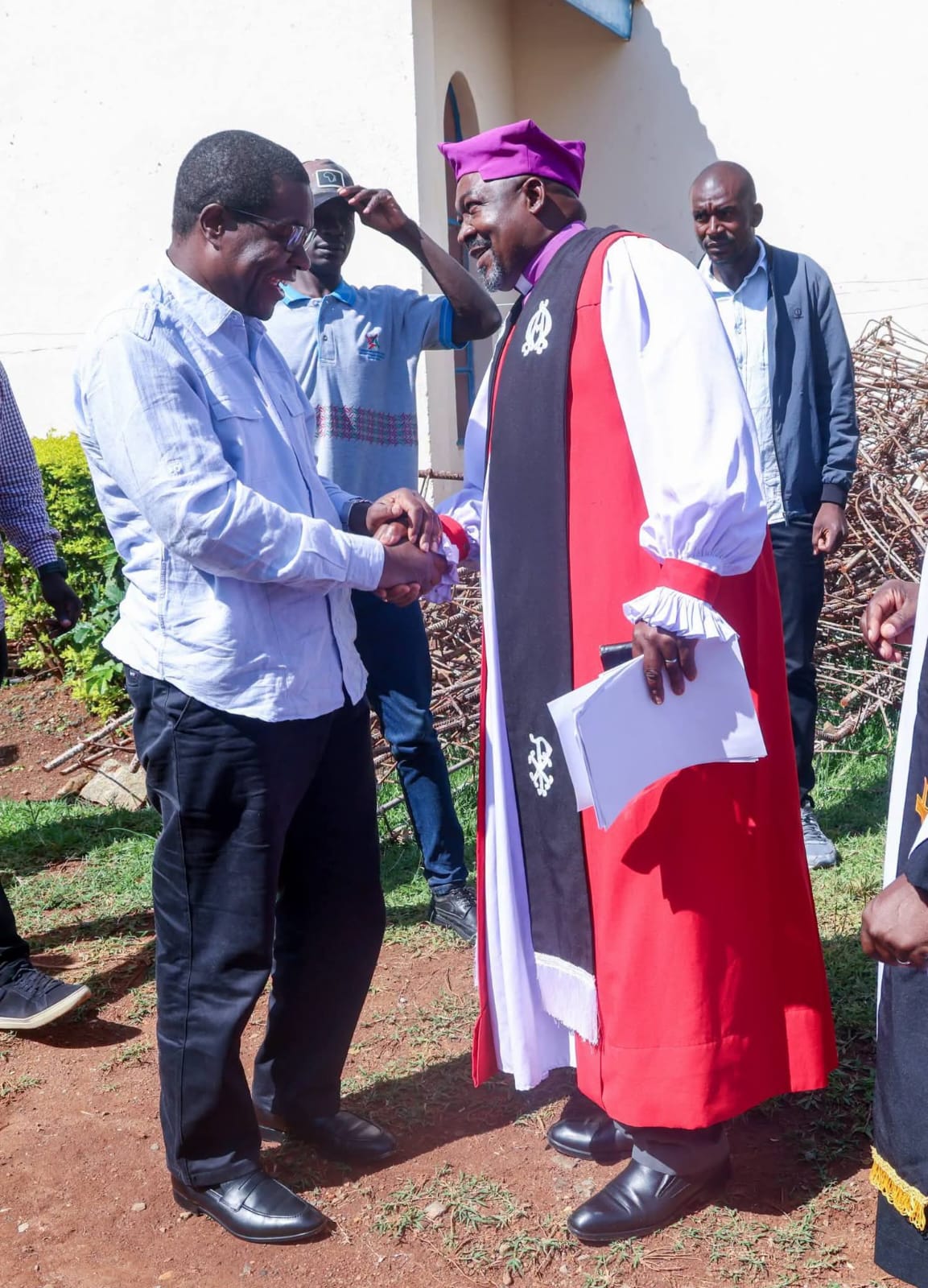
The participation of Cabinet Secretary for Energy and Petroleum Opiyo Wandayi in a fundraising service at ACK St. Peter’s Cathedral, Diocese of Maseno West, on behalf of Deputy President Kithure Kindiki offers an important opportunity to reflect on the Church’s enduring contribution to Kenya’s nation-building agenda.
The fundraising service, organised to support remedial and completion works at the Cathedral, brought together political leaders, clergy and members of the faithful in a shared commitment to strengthening an important religious institution. Beyond the immediate objective of mobilising resources, the occasion underscored a fundamental truth: nation-building is not the exclusive responsibility of government. Religious institutions, communities and individual citizens have equally important roles to play.
Indeed, the Church remains one of the most deeply rooted and widely accessible institutions in Kenyan society. From urban centres to remote villages, schools, hospitals and family homes, its presence extends into the everyday lives of millions of people. Through worship, pastoral care, education, counselling and community outreach, the Church provides spiritual direction, moral guidance and hope, particularly during difficult times.
In a society grappling with economic uncertainty, changing family structures, youth unemployment and growing social pressures, the importance of such institutions cannot be overstated. The Church offers more than a place of worship; it provides a moral and social anchor where individuals are encouraged to reflect on their responsibilities to God, their families and society.
 ADVERT
A Cathedral Is More Than a Building
The ongoing project at ACK St. Peter’s Cathedral represents much more than the construction and completion of a physical structure. A cathedral is a spiritual home, a centre of fellowship, a place of worship and a focal point for community engagement.
Its completion requires considerable sacrifice, patience, organisation and collective determination. Every contribution, whether financial, material or through voluntary service, brings the Diocese of Maseno West closer to achieving its vision.
The fundraising initiative therefore demonstrates the power of collective responsibility. It reminds citizens that meaningful development cannot be left entirely to government. Communities must also mobilise their resources, identify shared priorities and invest in institutions that serve present and future generations.
Cabinet Secretary Wandayi’s commendation of the Bishop, clergy and faithful was therefore significant. It acknowledged the dedication and organisational effort required to sustain a major religious undertaking. It also recognised the contribution of faith-based institutions to the broader wellbeing of society.
The Church as the Conscience of Society
Beyond its spiritual mandate, the Church has an important responsibility to nurture moral values that sustain responsible citizenship and ethical leadership.
Honesty, humility, compassion, discipline, forgiveness, accountability and respect for human dignity are values that remain indispensable to a functioning society. When these principles are embraced, they influence how people conduct themselves in their homes, workplaces, schools and public offices.
Kenya cannot achieve sustainable prosperity through roads, electricity, industries and economic growth alone. Material development must be accompanied by moral development.
A country may build impressive infrastructure and expand its economy, but without integrity, justice and responsible leadership, its progress risks becoming superficial. The Church has an important role in reminding society that leadership is fundamentally an act of service, wealth carries responsibility and public office must be exercised in the interests of the people.
This moral responsibility also demands that religious institutions remain courageous in speaking against corruption, injustice, abuse of power and other social ills, regardless of who occupies positions of authority.
The Church must remain a voice of conscience rather than an echo chamber for political power.
Faith as a Bridge Across Political and Social Divides
Kenya’s diversity is one of its greatest strengths, but differences in ethnicity, political affiliation, economic status and social background can sometimes become sources of division.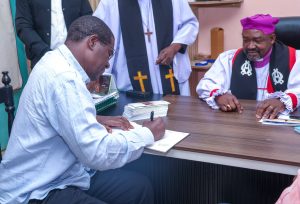
Religious institutions have a unique capacity to bring people together across these differences. A church service creates an environment where people of different political persuasions and social standing can worship together and pursue a common purpose.
The gathering at ACK St. Peter’s Cathedral illustrated this potential. It demonstrated how faith can provide common ground for cooperation, mutual understanding and community solidarity.
At a time when political competition increasingly threatens to undermine national cohesion, the Church must continue to champion reconciliation, tolerance and peaceful coexistence.
Its influence should be directed towards building bridges rather than reinforcing divisions.
Church and Government: A Partnership That Requires Boundaries
The participation of political leaders in religious activities is not inherently problematic. On the contrary, leaders have a responsibility to recognise and support institutions that make meaningful contributions to society.
When Cabinet Secretary Wandayi participated in the fundraising service on behalf of Deputy President Kindiki, the occasion provided an opportunity for public leadership to acknowledge the work of the Diocese of Maseno West and encourage the faithful in their development efforts.
However, the relationship between the Church and political leadership must be guided by mutual respect, sincerity and clearly defined institutional boundaries.
The Church should never become an extension of political campaigns, nor should religious gatherings be reduced to platforms for partisan mobilisation. Equally, political leaders should not exploit the moral authority of religious institutions for personal or electoral advantage.
The primary purpose of the Church remains worship, spiritual formation and service to humanity. Its independence must be protected, including its freedom to question government policies, challenge wrongdoing and speak for the vulnerable.
A healthy partnership allows government and religious institutions to cooperate without compromising their respective responsibilities.
Government provides public services, infrastructure, laws and policies, while the Church contributes moral guidance, pastoral care, education, healthcare support, counselling and community welfare.
When these institutions work constructively while respecting their distinct mandates, citizens stand to benefit.
Investing in Institutions That Serve Generations
The completion of ACK St. Peter’s Cathedral will be a lasting achievement for the Diocese of Maseno West.
Beyond providing a dignified space for worship, prayer, ceremonies and spiritual instruction, the Cathedral will stand as a testament to the commitment and sacrifice of the generations that contributed towards its establishment.
Church projects often take years to complete because they depend heavily on voluntary contributions and the goodwill of members and well-wishers. This makes sustained support particularly important.
The contribution of every believer matters. No contribution should be dismissed as insignificant because collective generosity is often what transforms ambitious community projects into reality.
Moreover, the Church’s contribution to development extends far beyond its physical structures. Across Kenya, religious institutions support schools, healthcare facilities, youth programmes, counselling services, peacebuilding initiatives and vulnerable families.
In many communities, churches are among the first institutions to respond when families experience tragedy, poverty or other emergencies. They offer comfort, guidance and practical assistance where it is most needed.
Such interventions complement government programmes and demonstrate why faith-based organisations remain indispensable partners in national development.
Nation-Building Begins With Shared Responsibility
The fundraising service also carries an important lesson about citizen participation.
Development is strongest when people move beyond waiting for government intervention and take ownership of their collective priorities.
The same spirit demonstrated in mobilising resources for the Cathedral can be replicated in supporting schools, health facilities, water projects, youth initiatives and other community development programmes.
Citizens must recognise that they are not merely beneficiaries of development but active participants in shaping their communities and the country.
Public leaders, in turn, should encourage this spirit by supporting genuine community initiatives, promoting accountability and ensuring that public resources are used responsibly.
Wandayi’s recognition of the Diocese of Maseno West should therefore be seen within this broader context. It is important for political and public leaders to appreciate institutions that contribute to the social, moral and spiritual wellbeing of citizens, not merely when political events provide an opportunity to do so.
The Moral Foundation of a Prosperous Kenya
Ultimately, the relationship between faith and nation-building rests on shared values and a common commitment to human dignity.
The Church has an important responsibility to nurture individuals who understand that personal success must be accompanied by social responsibility, leadership must be guided by integrity and differences should never undermine our common humanity.
As Kenya pursues its development ambitions, it must recognise that national progress is measured not only by economic statistics, infrastructure projects and government programmes, but also by the quality of its citizens, the strength of its institutions and the values that guide public life.
The ACK St. Peter’s Cathedral project in the Diocese of Maseno West is therefore more than a local fundraising initiative. It is a reminder of what communities can accomplish when faith, leadership and collective responsibility converge around a shared objective.
May the Diocese of Maseno West receive the support necessary to complete this important project. May the Bishop, clergy and faithful remain united in their mission, and may all those contributing their resources, time and goodwill be rewarded for their generosity.
The Church must continue to nurture faith, defend moral values, promote social cohesion and strengthen community development.
For a nation aspiring to lasting prosperity, supporting institutions that build both the character of its people and the welfare of its communities is not merely an act of goodwill. It is an investment in the soul and future of Kenya.
Photo: Cabinet Secretary for Energy and Petroleum Opiyo Wandayi during the church service at ACK St. Peter’s Cathedral, Diocese of Maseno West. Photo courtesy of CS Opiyo Wandayi.