 ADVERT
 ADVERT
President calls for organised family settlements to protect agricultural land, warning that unchecked subdivision could threaten food security and household incomes.
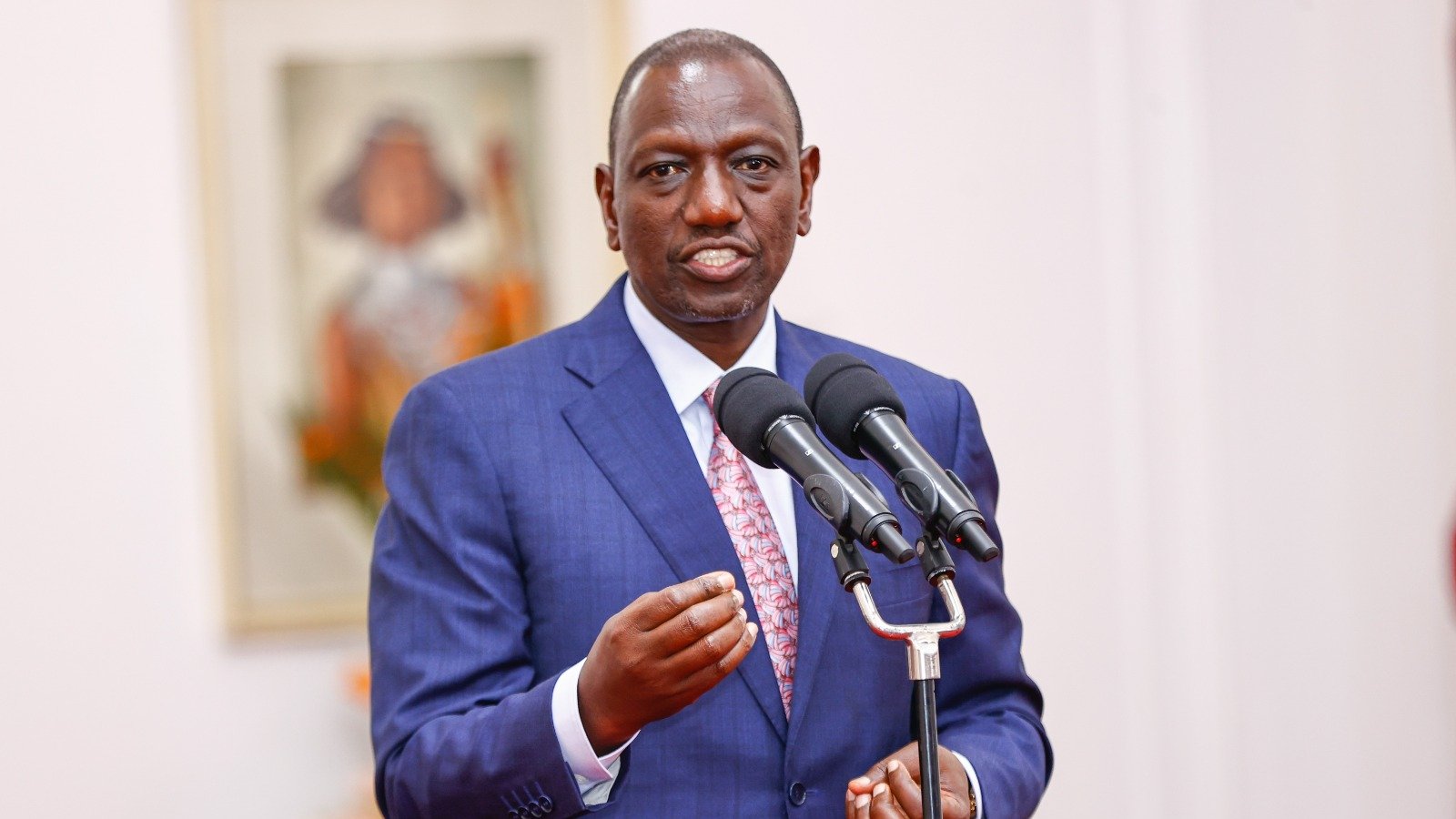
President William Ruto has urged Kenyans to reconsider the growing practice of subdividing ancestral land into smaller parcels, warning that population growth and expanding housing needs could leave future generations with insufficient farmland to sustain themselves.
Speaking during a church service in Kakamega on Sunday, October 11, 2026, the President advocated land consolidation and organised family settlements as a way of accommodating growing households while preserving productive agricultural land.
Ruto argued that families should explore alternative settlement arrangements instead of repeatedly cutting up farms whenever children reach adulthood and need land on which to build homes.
His proposal seeks to address a longstanding challenge in many Kenyan communities, where ancestral land is divided among successive generations, progressively reducing the size of individual holdings.
 ADVERT
Ruto’s Plan: Build Homes Without Destroying Farms
The President warned that continued subdivision could undermine agricultural production by reducing the land available for food crops, vegetables and commercial farming.
He illustrated the problem using a three-acre farm, arguing that parents should consider retaining the entire parcel for cultivation while allowing their children to establish homes within an organised settlement arrangement.
“Instead of you, as a parent, cutting down three acres to plant or build a house, we can continue to plant those three acres so that the children can come and live here,” Ruto said.
He maintained that preserving agricultural land would enable families to continue producing food and growing cash crops that generate income.
The President’s argument is that housing needs and agricultural production should not necessarily compete for the same limited resource.
Under the proposed approach, families could plan residential settlements while maintaining larger, more productive agricultural holdings.
However, the proposal raises important questions about how such arrangements would work in practice, particularly in communities where land ownership, inheritance and the right to establish an independent homestead are deeply rooted in family traditions.
The Growing Problem of Fragmented Land
Land fragmentation is a significant concern in densely populated agricultural areas, where successive generations inherit portions of family property.
As farms are divided among children and grandchildren, some households may end up with parcels too small to support commercially viable agriculture.
Small holdings can limit farmers’ ability to mechanise production, diversify crops or invest in irrigation and other productivity-enhancing technologies.
The pressure is particularly relevant in communities where agriculture remains a major source of food, employment and household income.
For many families, however, subdivision is not simply an agricultural decision. It is also a means of providing children with a place to build homes, establish independent households and secure their inheritance.
Consequently, any move towards land consolidation would need to balance agricultural productivity with legitimate family interests, property rights and the practical realities of rural settlement.
What Kenyan Law Says About Land Consolidation
Kenya already has a legal framework governing land consolidation and the recognition of land rights, including the Land Consolidation Act, Cap. 283.
The legislation provides procedures for consolidating land parcels and establishing ownership interests in areas where the law applies.
Depending on the circumstances, the process can involve recording existing interests, surveying and demarcating land, consolidating parcels and preparing adjudication registers.
The framework also provides mechanisms through which affected parties can challenge entries in the adjudication process within prescribed timelines.
Nevertheless, land consolidation is not the same as simply directing families to stop subdividing their property. Its implementation must follow the applicable law and respect legally recognised interests.
Ruto’s proposal would therefore require practical arrangements that encourage voluntary cooperation among landowners while safeguarding ownership and inheritance rights.
The President’s remarks did not, by themselves, establish a new legal prohibition on family land subdivision.
Affordable Housing and the Search for Space
The President’s proposal also touches on the wider question of how Kenya can accommodate a growing population without placing excessive pressure on agricultural land.
His administration has promoted affordable housing and planned residential developments, including projects involving public land.
Organised settlements could offer an alternative to the traditional practice of establishing separate homesteads on increasingly smaller agricultural parcels, provided suitable land, infrastructure and services are available.
However, the success of such an approach would depend on affordability, access to roads, water and sanitation, community acceptance, and clear arrangements governing ownership and occupation.
For rural families, moving into organised settlements would need to offer practical advantages rather than simply impose a different pattern of living.
A Difficult Balance Between Inheritance and Food Security
Ruto’s intervention highlights a fundamental dilemma facing many Kenyan families: how to preserve land as a productive economic asset while ensuring that children inherit a meaningful stake in their family’s property.
Land consolidation could help maintain viable agricultural holdings in some circumstances, but its effectiveness would depend on the specific land tenure arrangements, local population pressures and willingness of families to participate.
Other measures, including improved agricultural productivity, better land-use planning, alternative housing arrangements and investment in farming technology, could also help address the problem.
Ultimately, the challenge extends beyond the size of individual farms. It concerns how Kenya can secure food production, protect property rights and accommodate future generations without allowing competing land needs to undermine rural livelihoods.
Ruto’s message in Kakamega was clear: families must begin thinking beyond the immediate need to provide each child with a separate plot and consider how the land can continue supporting the entire family economically.
Whether land consolidation becomes a practical solution on a wider scale will depend on how the proposal is translated into workable policies that respect family choices while protecting the country’s agricultural future.



