 ADVERT
 ADVERT
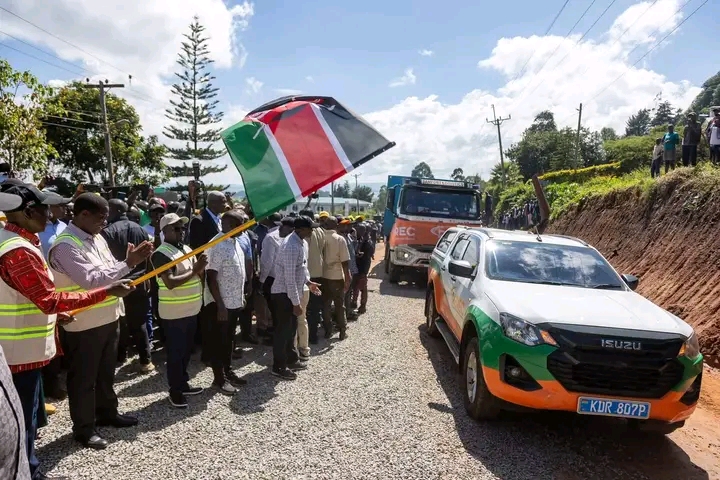
The development tour by President William Ruto accompanied by Cabinet Secretary for Energy and Petroleum Opiyo Wandayi across Nandi and Uasin Gishu counties has placed electricity access at the centre of public discussion on economic transformation. The flagging off of Last Mile Connectivity Programme projects in Mosop Nandi Hills and Pioneer in Eldoret is not merely an announcement of new power lines. It is a statement of intent that communities which have historically remained outside the reach of the national grid must now be brought into the mainstream of national development. Electricity is not an ordinary public service. It is a foundation upon which households learning institutions health facilities farms markets and businesses depend in order to function productively and improve their living standards. The government’s decision to prioritise the extension of the grid to underserved areas therefore deserves serious public attention and support.
The Last Mile Connectivity Programme is one of the most important interventions in Kenya’s effort to achieve universal electricity access. Its central purpose is to connect households public institutions and small businesses that are near existing transformers but have not yet been connected to the grid. This approach recognises that many rural and peri urban communities are not far from electricity infrastructure yet they remain unable to enjoy its benefits because of the cost and technical requirements of final connection. By addressing this gap the programme removes a practical barrier that has kept many families and enterprises in darkness. It also ensures that public investment in generation and transmission infrastructure reaches the people who need it most. The programme has been widely recognised as a major driver of rural electrification and has helped expand access to electricity across the country.
Reliable and affordable electricity changes daily life in ways that are immediate and lasting. In a home it allows families to study after dark preserve food access information communicate more easily and carry out household activities with greater comfort and safety. In schools it supports teaching digital learning laboratory work and administration. In health facilities it enables refrigeration of medicines operation of medical equipment lighting and improved service delivery. In public offices it improves efficiency and allows citizens to access services without unnecessary delay. These benefits may appear ordinary but they are essential to dignified living and effective public service. A community without electricity is often forced to accept lower standards of education health care security and communication simply because the basic infrastructure required to support them is absent.
The economic importance of electricity is equally significant. Small businesses such as salons welding workshops milk cooling centres grain mills shops bakeries tailoring enterprises and agro processing units all require dependable power in order to operate efficiently. When electricity reaches such enterprises owners can reduce reliance on costly alternative sources of energy extend working hours improve production and create employment for others. Farmers can also use electricity for irrigation cold storage poultry production milk cooling and processing of agricultural produce. This supports agricultural value addition reduces post harvest losses and allows farmers to earn more from their produce. Electricity therefore does not only light homes; it supports production trade employment and income growth. The African Development Bank has similarly noted that access to electricity for households and businesses enhances economic growth and enables productive use of energy.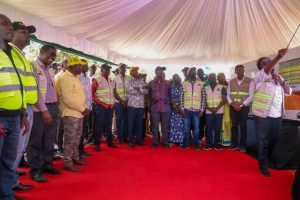
The decision to extend electricity to Mosop Nandi Hills and Pioneer in Eldoret should therefore be understood as an investment in local economic capacity. These areas contain families learning institutions trading centres farms and small enterprises whose potential can be fully realised only when they are connected to reliable power. The expansion of the national grid to these communities closes a development gap that has existed for too long. It also affirms the principle that development should not be concentrated in major towns while rural and peri urban populations are left behind. Every Kenyan regardless of where they live deserves access to the basic infrastructure that makes modern economic life possible. This is the meaning of equitable development.
 ADVERT
The electricity projects in Nandi and Uasin Gishu do not stand alone. They were accompanied by the launch of the Turbo to Kaiboi to Kimondi to Chepterit and Mugundoi to Nandi Hills to Kosiage to Cheptulu roads development of student hostels and university facilities commissioning of affordable housing rehabilitation of Kerita Dam establishment of modern markets and support for women’s enterprises through the Women Enterprise Fund. Taken together these interventions show a coherent understanding of development. Roads allow people goods and services to move. Water supports households farms and institutions. Education facilities prepare young people for productive futures. Markets provide spaces for trade. Affordable housing improves living conditions. Enterprise financing gives women and small traders the ability to grow their businesses. Electricity connects all these sectors by providing the energy needed to make them work effectively.
This integrated approach is important because development cannot be delivered through isolated projects. A road without electricity may improve transport but it cannot fully support cold storage processing plants workshops or digital services. A market without reliable power may provide space for traders but it cannot adequately support refrigeration lighting electronic payments or value addition. A school without electricity may educate learners during the day but it cannot fully support evening study computer learning or modern administration. A farm may produce well but without power for irrigation cooling or processing much of its potential value may be lost. When energy roads water education markets and enterprise financing are delivered together they reinforce one another and produce broader benefits for the community.
The Bottom Up Economic Transformation Agenda is based on the belief that economic growth must begin with ordinary citizens small enterprises farmers traders and workers in local communities. This is why electricity access is so closely linked to the agenda. A nation cannot claim to be transforming its economy from the bottom up while large sections of its population remain unconnected to the national grid. Electrification gives ordinary people the tools to participate in the economy. It allows a small trader to expand a business a farmer to process produce a young person to acquire digital skills and a family to improve its living conditions. The government has consistently presented electricity as a key driver of inclusive economic growth under this agenda.
The involvement of President Ruto and Cabinet Secretary Wandayi in the flagging off of these projects also carries an important message about political leadership and accountability. Development is not only about policy documents and budget allocations. It is about visible action in the areas where people live and work. When national leaders visit counties inspect projects and launch interventions directly they bring government closer to the people. They also create an opportunity for citizens to see what is being done ask questions and hold public institutions accountable for delivery. The presence of the Energy and Petroleum Cabinet Secretary is particularly important because it demonstrates that energy is being treated as a national priority rather than a technical matter left only to sector institutions.
However the value of these projects will depend on implementation. Announcing a project is only the first step. The government must ensure that the promised connections are completed within reasonable time that the work is done to the required standard and that the benefits reach the intended households schools health facilities and businesses. Citizens should also be enabled to connect to the grid without facing unnecessary delays or hidden costs. Maintenance of the network must be prioritised so that communities do not receive electricity only to later suffer frequent outages and poor service. Electricity access must be reliable affordable and sustainable if it is to support long term economic transformation.
It is also necessary to ensure that electricity access leads to productive use. Connection alone does not automatically create jobs or raise incomes. Households and businesses must be supported to use power in ways that generate value. This can be achieved through training access to affordable appliances and equipment support for small enterprises promotion of agro processing and encouragement of digital skills. Women who form a large part of the informal business sector should receive particular attention because they often face additional barriers in accessing capital technology and markets. The issuance of a Women Enterprise Fund county cheque in Eldoret is therefore a welcome complement to the electricity projects since it recognises that enterprise development requires both energy and financial support.
The broader national context makes these interventions even more important. Kenya has set itself the goal of achieving universal electricity access by 2030. This goal is not only about connecting homes; it is about building a modern productive and inclusive economy. The Last Mile Connectivity Programme has already played a major role in expanding access especially in rural areas and continues to be central to the country’s electrification plans. The projects in Nandi and Uasin Gishu are part of this wider national effort. They demonstrate that the pursuit of universal access is not an abstract policy objective but a practical programme being implemented in specific counties villages trading centres and households.
The expansion of electricity also has an important social dimension. Street lighting in markets villages and trading centres improves security allows businesses to operate for longer hours and encourages social and commercial activity after dark. It reduces the risks faced by traders learners and residents who would otherwise move about in poorly lit areas. It also supports public institutions such as police posts administration offices and community facilities that require dependable power to serve citizens effectively. In this way electricity contributes not only to economic production but also to public safety social order and community confidence.
Electricity access also supports the country’s wider development priorities including industrialisation digital transformation and environmental sustainability. A reliable power supply encourages investment in manufacturing agro processing information technology and other sectors that require stable energy to operate. It enables digital services online learning electronic government services and modern communication systems that are increasingly necessary in national life. At the same time the use of clean and renewable sources of energy in the national grid supports Kenya’s commitment to sustainable development and reduces dependence on expensive and polluting sources of energy. Energy has therefore been described by the Ministry of Energy and Petroleum as a strategic enabler of economic transformation industrial growth and social inclusion.
The people of Nandi and Uasin Gishu have every reason to follow the implementation of these projects closely. Electricity is a public good with the potential to improve education health agriculture business security and communication. When it is extended to underserved communities it expands opportunity and reduces inequality. It allows young people to learn entrepreneurs to trade farmers to add value to their produce and families to live with greater dignity. It also strengthens the relationship between citizens and the state by showing that public resources can be used to deliver tangible benefits at the local level.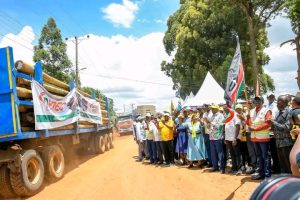
The development tour in Nandi and Uasin Gishu should therefore be seen as more than a political event. It is a practical demonstration of how energy can serve as the foundation of economic and social progress. The Last Mile Connectivity Programme projects in Mosop Nandi Hills and Pioneer represent a commitment to connect communities that have been left behind for too long. When combined with roads water education markets housing and enterprise financing electricity becomes a powerful instrument for inclusive growth. The task ahead is to ensure that these commitments are fulfilled fully and fairly. If that is done the people of the region will not only receive electricity; they will receive a real opportunity to improve their lives build stronger enterprises and participate more fully in the development of the country.
Photo: courtesy Opiyo Wandayi Facebook page