 ADVERT


 ADVERT
From Ugunja’s parliamentary trenches to the Cabinet table, Wandayi’s political journey offers a compelling case study in patience, institutional experience and the evolving search for leadership after Raila Odinga.
In the politics of Nyanza, where history commands reverence, political personalities inspire fierce loyalties and ambition is rarely concealed for long, James Opiyo Wandayi has built a career that increasingly invites a bigger question: could the unassuming politician from Ugunja become one of the defining figures of Luo politics in the post-Raila era?
The question is worth asking, not because the succession is settled, but because Wandayi’s political journey presents a distinctive combination of parliamentary experience, party organisation, professional exposure and executive responsibility at a moment when Luo Nyanza is reconsidering its political future.
Since the death of Raila Amolo Odinga on 15 October 2025, the search for a new centre of political gravity has become unavoidable. Raila’s burial at Kang’o ka Jaramogi in Bondo, Siaya County, on 19 October 2025 marked the end of an extraordinary political chapter. It also opened a new one, in which the community must determine how to preserve its political influence without relying exclusively on the authority of one towering individual.
Among the politicians whose careers deserve closer attention in this transition is Wandayi.
 ADVERT
His appeal lies partly in the breadth of his political experience. Unlike figures whose public identities have been built primarily around mass mobilisation, family lineage or forceful political rhetoric, Wandayi has spent years working within the institutions through which political influence is organised, negotiated and exercised.
He represented Ugunja Constituency in the National Assembly after winning election in 2013, retaining the seat in 2017 and 2022. His three consecutive parliamentary victories gave him a sustained constituency platform from which to develop his national political profile.
Between 2017 and 2022, he chaired the National Assembly’s Public Accounts Committee, an important parliamentary oversight institution responsible for scrutinising public expenditure and examining the use of public resources. He subsequently became Leader of the Minority Party in the National Assembly, having previously served as ODM’s Secretary for Political Affairs.
These positions were not merely titles. They placed him within the demanding machinery of parliamentary scrutiny, party coordination and opposition politics, where influence depends on understanding procedure, building relationships and negotiating competing interests.
On 7 August 2024, Parliament approved Wandayi’s appointment as Cabinet Secretary for Energy and Petroleum. His move from the legislature to the Executive marked another significant stage in a career spanning constituency representation, parliamentary leadership, party organisation and national administration.
His professional background adds another dimension. Before entering elective politics, Wandayi worked in the private sector, including management responsibilities at British American Tobacco. His academic training encompasses agricultural economics, business management and law.
Taken together, these experiences provide the foundations for a leadership profile that combines exposure to commercial management with experience in public institutions.
Such credentials do not automatically confer political supremacy. They do, however, distinguish Wandayi as a politician whose public record can be examined across several arenas of responsibility rather than through campaign rhetoric alone.
His greatest opportunity may lie in the combination of institutional experience and the possibility of a political style that places relationship-building ahead of perpetual confrontation.
A succession conversation that began before Raila’s departure
One of the most intriguing episodes in Wandayi’s political trajectory occurred while Raila was still alive and firmly in command of ODM.
On 21 August 2023, at a function in Ugenya Constituency, Siaya County, Oburu Oginga made remarks that brought Wandayi into the succession conversation. Reports at the time attributed to Oburu the view that Wandayi was among the politicians who could succeed Raila as ODM leader and emerge as a significant figure in Luo politics.
The remarks attracted attention because openly discussing Raila’s succession was politically sensitive. For many supporters, Raila was not simply a party leader whose eventual replacement could be discussed as an ordinary organisational matter. He represented decades of political struggle, sacrifice and communal aspiration.
Yet Oburu’s remarks introduced an important possibility: that the next generation of leadership could emerge from political experience and demonstrated capacity rather than being determined solely by family lineage or established seniority.
The episode requires an important qualification. On 4 September 2023, Oburu clarified that he had not anointed Wandayi as Raila’s successor and said his remarks had been misunderstood. His clarification must be respected.
Nevertheless, the fact that Wandayi’s potential was publicly discussed by a senior figure within the Odinga political establishment placed his name within a conversation that has since acquired much greater significance.
It was not a coronation. It was an indication that his political future was considered worthy of discussion.
In the post-Raila era, that distinction matters. A credible successor cannot simply be declared into existence. But neither must every emerging leader wait for an established political dynasty to determine the boundaries of his ambition.
Wandayi’s political journey gives him a basis on which to make his own case.
The advantage of institutional politics
Kenyan politics has often rewarded the politician who commands attention, dominates the microphone and mobilises supporters through confrontation. Such skills can be effective, particularly in opposition movements and competitive electoral environments.
But sustained political leadership requires a broader repertoire.
It requires the ability to understand institutions, negotiate disagreements, manage complex responsibilities and build relationships that survive beyond a single political contest.
Wandayi’s experience as Public Accounts Committee chairperson, minority leader and Cabinet secretary gives him exposure to precisely these institutional settings.
His parliamentary years placed him within the oversight process, where public expenditure, accountability and the responsibilities of government are matters of direct scrutiny. His party responsibilities required engagement with organisational interests and competing political personalities. His Cabinet appointment transferred him into the arena where national policy is implemented and executive performance becomes a public responsibility.
This progression offers a potentially valuable foundation for broader leadership.
The challenge, and the opportunity, is to convert institutional experience into a public programme that resonates with ordinary citizens. Political sophistication is meaningful when it produces tangible outcomes, and experience is most persuasive when accompanied by accountability.
For Wandayi, the Energy Ministry is therefore more than an executive posting. It is an opportunity to demonstrate that his political experience can translate into practical improvements in a sector central to Kenya’s economic development.
Electricity costs, reliability of supply, access to energy infrastructure and the competitiveness of businesses affect households and enterprises across the country. A demonstrable record of progress in these areas would strengthen his professional standing and provide substance to any wider political ambitions.
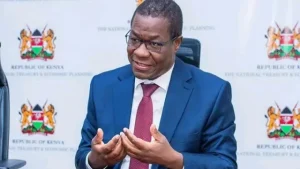
The same standard should apply to all senior officeholders. But for a politician whose career is increasingly discussed in the context of succession, performance is especially important.
Siaya roots, national responsibilities
Wandayi’s political roots in Ugunja place him within Siaya County, a region whose political history is deeply intertwined with the Odinga family and the broader evolution of Luo political identity.
Yet Siaya has never been politically uniform. Its voters and leaders hold differing views on development priorities, party loyalties, national alliances and the direction of regional politics.
Wandayi’s ability to operate within this environment gives him an opportunity to build relationships across a diverse political landscape.
His national responsibilities also distinguish his current position from a purely local political career. Cabinet service requires engagement with national policy, the administrative machinery of government and the competing demands of a country whose interests extend far beyond any one region.
This combination of local roots and national exposure could become a useful asset if he seeks a broader leadership role.
But it must be converted into demonstrable public value. A national appointment does not automatically translate into regional influence, and a constituency base does not automatically become a communal mandate.
The stronger argument for Wandayi is that he has accumulated experience across different levels of public life, giving him an opportunity to make a substantive case for leadership on the basis of what he knows, what he has done and what he proposes to accomplish.
A different conversation about Luo leadership
The post-Raila transition has brought several prominent figures into focus.
Gladys Wanga commands an important position within ODM and Homa Bay County. John Mbadi occupies a central role in national fiscal policy. Professor Peter Anyang’ Nyong’o and James Orengo bring long political histories shaped by scholarship, democratic agitation and public service. Babu Owino represents a younger political current with an established urban constituency. Oburu Oginga occupies a distinctive place because of his political experience and the Odinga family’s historical significance.
Each possesses a different form of political capital.
Wandayi’s opportunity is to build a case that combines some of the strengths associated with these different traditions: the organisational understanding required to work within a party, the institutional discipline required to operate in government, the political relationships required to sustain a coalition and the practical orientation required to deliver results.
He does not need to imitate any of these figures to establish his own identity.
Indeed, the post-Raila era may reward leaders who understand that the future of Luo politics cannot rest entirely on the reproduction of an earlier political personality.
Raila’s authority was built through a unique combination of historical circumstances, political sacrifice, mass mobilisation and national negotiation. His successors cannot reproduce that history. They can, however, learn from its successes and limitations.
The more important question is whether the next generation can transform the community’s political influence into a more consistent programme of economic opportunity, public accountability, infrastructure development and meaningful representation.
Wandayi has an opportunity to contribute to that transition.
Beyond the crown: The burden of proving leadership
The expression Luo kingpin has become a convenient shorthand for the succession debate. Yet it risks reducing a complex political transition to a contest for a symbolic title.
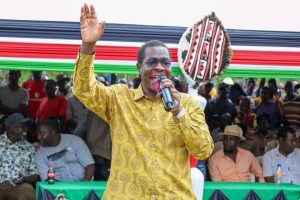
Political leadership is not a hereditary office. Nor can it be secured permanently through endorsements, Cabinet appointments or control of party machinery.
It is built through public trust, sustained engagement and demonstrable performance.
For Wandayi, the task is to show that his experience in Parliament and government equips him to contribute meaningfully to the political and socioeconomic questions facing Luo Nyanza and Kenya as a whole.
Can he help articulate a development agenda that addresses employment, education, healthcare, agricultural productivity and the concerns of young people? Can he build relationships across competing political factions without sacrificing accountability? Can he maintain a clear public identity while serving in an administration whose decisions must be judged on their effects on ordinary Kenyans?
These are the questions that will determine the durability of his political standing.
The advantage of Wandayi’s trajectory is that it gives him a record from which to make his argument. His challenge is to ensure that the record continues to grow in substance.
He must demonstrate that restraint can coexist with conviction, that institutional experience can coexist with public accessibility, and that national responsibility can coexist with a genuine commitment to the interests of the communities he represents.

He must also accept scrutiny. A politician who seeks wider public trust cannot demand that his record be assessed only through favourable interpretations. His decisions, policy outcomes and political alliances must remain open to examination.
That is not a weakness. It is the foundation of credible leadership.
The next chapter belongs to those who can build
The death of Raila Odinga has created a political opening, but it has not predetermined who will occupy it.
The community is entitled to consider different candidates, evaluate competing records and debate the kind of leadership it wants. Such a debate should be based on evidence and public performance rather than assumptions about lineage, age, personality or political entitlement.
Within that debate, James Opiyo Wandayi deserves serious consideration.
His journey from Ugunja MP to parliamentary oversight leadership, minority party leadership and Cabinet service demonstrates a sustained engagement with the institutions of public life. His professional background and political experience give him material with which to construct a wider leadership argument.
The reported succession discussion involving Oburu Oginga in August 2023 adds historical context, although Oburu’s subsequent clarification makes clear that no formal anointing took place.
Wandayi’s future will therefore depend on his own record, the relationships he builds and the public value he demonstrates.
The most compelling case for him is not that he is entitled to inherit Raila’s mantle. It is that he has accumulated experience that could enable him to make a credible contribution to the next phase of Luo politics.
That is a more substantial proposition than a coronation.
As the community navigates this transition, it needs leaders who understand both the history that shaped its political identity and the practical challenges that will determine its future. It needs political actors capable of translating influence into opportunity and public office into measurable service.
James Opiyo Wandayi has an opportunity to position himself among those leaders. Whether he ultimately becomes a central figure in the post-Raila political order will depend on how convincingly he turns that opportunity into a record of delivery, trust and responsible leadership.
The crown remains unclaimed. The opportunity to help shape what comes next is already here.