ADVERT

 ADVERT
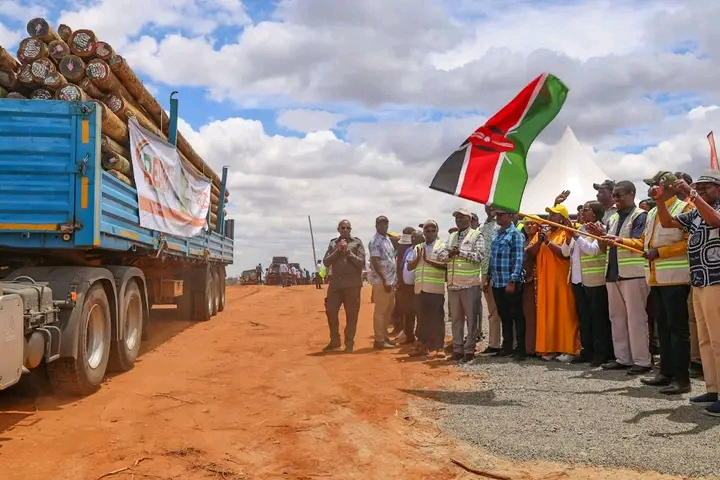
The launch of the 33.13 kilometre Kagonde–Masinga–Kithyoko Road and the flag off of Last Mile Connectivity Programme materials at Kithoko Village in Masinga Constituency, Machakos County, represent more than the beginning of two separate projects. They represent a deliberate effort by the Government under the leadership of President William Ruto to bring infrastructure and essential services closer to communities that have historically remained on the margins of national development. The road will improve movement, trade and access to social services, while the electricity projects will extend power to homes and enable families, businesses and public institutions to participate more fully in economic life. Together, they demonstrate that development is most meaningful when it reaches the village level, where people live, work, farm, trade and raise their children. The two projects were launched during President Ruto’s development tour of Ukambani, which has prioritised roads, electricity connectivity, water supply and other public investments across Machakos, Makueni and Kitui counties.
The Kagonde–Masinga–Kithyoko Road is an important investment because roads determine whether communities can move goods, access services and participate in wider economic activity. A good road reduces the cost and time of transport, allows farmers to take produce to markets in better condition, enables traders to reach customers more easily, and makes it simpler for residents to access schools, health facilities, government offices and employment opportunities. In rural areas such as Masinga, where agriculture and small scale trade remain central to household incomes, the quality of the road network directly affects productivity and livelihoods. When transport is difficult, farmers may be forced to sell produce at low prices near their homes, traders may incur high costs moving goods, and residents may struggle to reach essential services. A properly developed road changes this situation by opening the area to wider markets and making daily economic activity more reliable. The launch of the Kagonde–Masinga–Kithyoko Road therefore responds to a practical need: the need for communities to be physically connected to opportunity.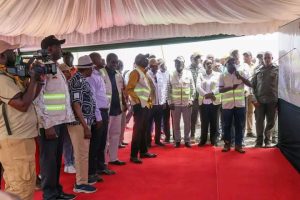
The value of the road also lies in its potential to strengthen local production systems. Improved transport allows farmers to plan their activities with greater confidence because they can move produce to markets without excessive delays. It encourages traders to invest in the area because goods and customers can move more easily. It also makes it easier for service providers, suppliers and skilled workers to reach communities that were previously difficult to serve. In this way, the road is not only a transport facility; it is an economic enabler. It supports the movement of farm inputs, harvested produce, building materials, business supplies and people seeking services. It can also improve emergency response, because ambulances, security officers and other essential service providers can reach residents more quickly. The 33.13 kilometre road therefore has the potential to influence many aspects of daily life in Masinga, from farming and trade to education, health care and public safety.
However, a road alone cannot deliver complete development. Communities also need reliable electricity to power homes, businesses, schools, health facilities and public institutions. This is why the flag off of Last Mile Connectivity Programme materials in Kithoko Village is equally significant. The projects, to be implemented by the Rural Electrification and Renewable Energy Corporation, are valued at KSh 29.89 million and will extend electricity to 200 households in Masaku and Gembeni villages. This investment may appear modest when considered alongside large national infrastructure programmes, but its impact at household level will be substantial. Electricity allows families to improve lighting, preserve food, operate small appliances, support children’s studies and reduce dependence on costly and less reliable sources of energy. It also creates the conditions under which small businesses can grow, whether through shops, welding workshops, salons, milling services, cold storage, mobile phone charging businesses or other income generating activities. The Last Mile Connectivity Programme is specifically designed to connect households to the national grid and support the country’s goal of universal electricity access.
REREC’s role in this project is central because the corporation is established under the Energy Act, 2019, with the responsibility of implementing rural electrification programmes and promoting renewable energy across the country. Its mandate includes overseeing the Rural Electrification Programme, developing rural electrification master plans in consultation with county governments, sourcing additional funding and supporting the use of renewable energy technologies. This means that the projects in Masaku and Gembeni villages are not being implemented in isolation. They are part of a structured national effort to expand electricity access in areas where connection to the grid has remained limited. The corporation’s work is also intended to promote balanced development between rural and urban areas by ensuring that rural households have access to the same basic energy services that support modern economic activity.
 ADVERT
The importance of electricity in rural development lies in its ability to support both household welfare and productive enterprise. A connected home benefits directly through better lighting and access to electrical appliances, but the wider community benefits as well. Schools can operate more effectively, health facilities can preserve vaccines and provide better services, and local traders can extend their working hours. Electricity also supports digital participation, allowing households to charge phones, access information, conduct mobile money transactions and engage with online services. In this way, the extension of power to Masaku and Gembeni villages is not simply a technical achievement; it is an investment in the ability of residents to improve their own economic circumstances. The Government’s decision to prioritise last mile connections recognises that many rural households may live near existing infrastructure but still remain unconnected because of the cost or technical requirements of the final connection. The programme addresses this gap by extending low voltage networks and bringing power closer to homes.
The projects in Masinga should also be understood within the wider expansion of the Last Mile Connectivity Programme across Machakos County. The cumulative investment in the KPLC and REREC programme in the county is approximately KSh 5.54 billion, targeting 52,862 households. This is a major commitment to rural electrification and reflects the Government’s recognition that access to electricity is a foundation for inclusive growth. A programme of this scale will affect thousands of families, businesses and public institutions. It will support local enterprise, improve service delivery and expand the number of households able to use electricity productively. It will also reduce inequality between urban and rural areas by ensuring that residents outside major towns are not excluded from the benefits of modern energy services. The scale of the Machakos programme shows that the Government is not treating electrification as an isolated project but as part of a broader national effort to expand access to essential services.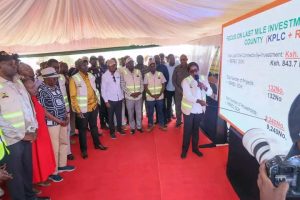
Roads and electricity are complementary drivers of development because they address different but connected needs. Roads provide physical connectivity, while electricity provides energy connectivity. A farmer may be able to reach the market more easily because of an improved road, but electricity enables that farmer to add value to produce, operate equipment or store goods for longer periods. A trader may benefit from better transport links, but electricity allows the trader to operate longer hours, use refrigeration or run machinery. A school may become easier to reach because of a better road, but electricity improves learning conditions through lighting, digital tools and better facilities. A health facility may become more accessible, but electricity enables reliable storage of medicines, operation of medical equipment and provision of safer services. This relationship explains why the simultaneous launch of the Kagonde–Masinga–Kithyoko Road and the Last Mile Connectivity Programme in Kithoko Village is significant. The Government is addressing both movement and energy, two requirements that communities need in order to convert access into real economic progress.
The focus on Masinga Constituency is also important because development must be visible and felt at the local level. National policies, budgets and programmes gain meaning when they result in a new road, an electricity connection, a functioning health facility or an improved learning environment. The people of Kithoko Village, Masaku and Gembeni will experience these projects not as abstract government commitments but as practical changes in their daily lives. A household that receives electricity will experience the benefit directly. A trader who can transport goods more easily will feel the value of the road. A young person who can study under reliable lighting or access digital opportunities will benefit from improved energy access. A farmer who can move produce to market without excessive delays will gain from better road infrastructure. Development becomes credible when it improves these everyday experiences. The launch of these projects in Masinga therefore reflects a practical understanding that inclusive growth begins with investments that people can see, use and benefit from.
The wider development tour in Ukambani reinforces this approach. President Ruto’s engagements across Machakos, Makueni and Kitui counties have included road construction, water supply, electricity connectivity, education facilities and other public investments. This broad approach is necessary because communities do not develop through one service alone. A road without electricity may improve movement but leave households without power. Electricity without roads may support homes and businesses but leave producers unable to reach wider markets. Water, education, health and digital connectivity are equally important. By combining infrastructure investments across sectors, the Government is recognising that development must be integrated. The launch of the Kagonde–Masinga–Kithyoko Road and the flag off of Last Mile Connectivity materials should therefore be seen as part of a wider strategy to strengthen public services and expand opportunity in rural Kenya.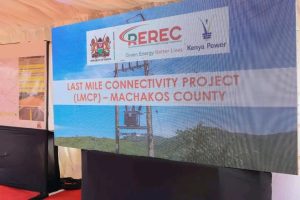
There is also an important equity dimension to these investments. For many years, rural communities have carried a disproportionate share of the burden of poor infrastructure. Long distances to markets, high transport costs, limited electricity access and weak connectivity have restricted economic participation and deepened regional inequality. Investments such as the Kagonde–Masinga–Kithyoko Road and the Last Mile Connectivity Programme seek to correct this imbalance. They bring public infrastructure to areas where it can make the greatest difference to ordinary households. The KSh 29.89 million investment to connect 200 households in Masaku and Gembeni villages, and the wider KSh 5.54 billion programme targeting 52,862 households across Machakos, show that rural electrification is being treated as a serious development priority rather than a secondary concern. This matters because inclusive growth cannot be achieved if large sections of the population remain outside the networks that support trade, education, health care, communication and enterprise.
The expansion of electricity access also has implications for the country’s broader energy and climate agenda. REREC’s mandate extends beyond connecting households to the grid; it includes promoting renewable energy technologies such as solar, wind, small hydropower, biogas and other appropriate energy solutions. As more households gain access to electricity, there is an opportunity to encourage efficient energy use, support clean cooking alternatives and promote productive uses of energy in agriculture and small scale manufacturing. This can reduce pressure on traditional biomass energy sources, improve indoor air quality and support more sustainable patterns of energy consumption. Rural electrification is therefore not only a social service; it is also part of the country’s effort to build a modern, reliable and increasingly clean energy system.
The success of these projects will depend on timely implementation, quality workmanship, community participation and proper maintenance. A road must be completed to a standard that withstands weather conditions and regular use. Electricity connections must be delivered efficiently, safely and affordably. Residents must be informed about the requirements for connection and supported through the process. Local leaders, technical teams, implementing agencies and community members all have a role to play in ensuring that the benefits announced at launch are realised on the ground. The Last Mile Connectivity Programme has established mechanisms through which households within designated distances of transformers can be connected, with the connection cost structured to reduce the immediate burden on beneficiaries. Proper follow through will determine whether the promise of these projects becomes a lasting improvement in the lives of residents.
It is equally important for county governments, Members of Parliament, local administrators and community organisations to remain engaged after the launch ceremonies. Roads require continued attention to drainage, maintenance and protection from encroachment. Electricity networks require safety awareness, timely fault response and continued expansion where demand grows. Communities should also be encouraged to use electricity productively by establishing businesses, improving farm operations and supporting local services. When residents, leaders and implementing agencies work together, infrastructure becomes more than a completed project; it becomes a lasting platform for local development. The investment in Masinga will therefore deliver the greatest value when it is protected, maintained and used to create opportunities for present and future generations.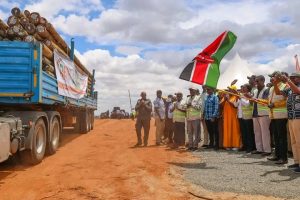
The broader message from Kithoko Village is that the Government’s development agenda is most convincing when it connects villages to opportunity. The Kagonde–Masinga–Kithyoko Road will connect communities physically. The Last Mile Connectivity Programme will connect households to the national grid. Both will help residents access markets, services, information and economic opportunities that were previously difficult to reach. The KSh 29.89 million investment in electricity for Masaku and Gembeni villages, and the KSh 5.54 billion county wide programme targeting 52,862 households, demonstrate a commitment to expanding access at scale. The 33.13 kilometre road will strengthen mobility and trade across Masinga. Together, these investments show that development is not only about large national projects; it is also about ensuring that ordinary families, farmers, traders, students and small business owners can participate in the economy.
This is how the broad based Government is laying the foundation for inclusive growth. By investing in roads and electricity, it is connecting villages to markets, services and opportunity. By extending power to households, it is enabling families and businesses to improve productivity and income. By improving roads, it is reducing isolation and expanding access to essential services. The launch of these projects in Masinga Constituency is therefore a practical demonstration of a development philosophy centred on delivery, access and shared progress. It affirms that national transformation must be measured not only in policy documents and budgets, but in the ability of communities to move freely, access power, build enterprises and improve their living standards. The people of Kithoko Village, Masaku, Gembeni and the wider Masinga area are being connected to a future in which development reaches the people, supports enterprise and expands opportunity for all.
Photos courtesy: Opiyo Wandayi Facebook page.