ADVERT

 ADVERThttps://youtu.be/Sny2O4mVqxU?feature=shared
Three-day stakeholder workshop identifies critical policy gaps, proposes stronger climate governance structures, dedicated funding mechanisms and grassroots participation to strengthen Siaya County’s climate resilience.
The County Government of Siaya and Jaramogi Oginga Odinga University of Science and Technology (JOOUST) have made significant progress towards the development of a comprehensive Siaya County Climate Change Policy 2026, following the successful conclusion of a three-day stakeholder workshop reviewing the existing 2020 policy framework.
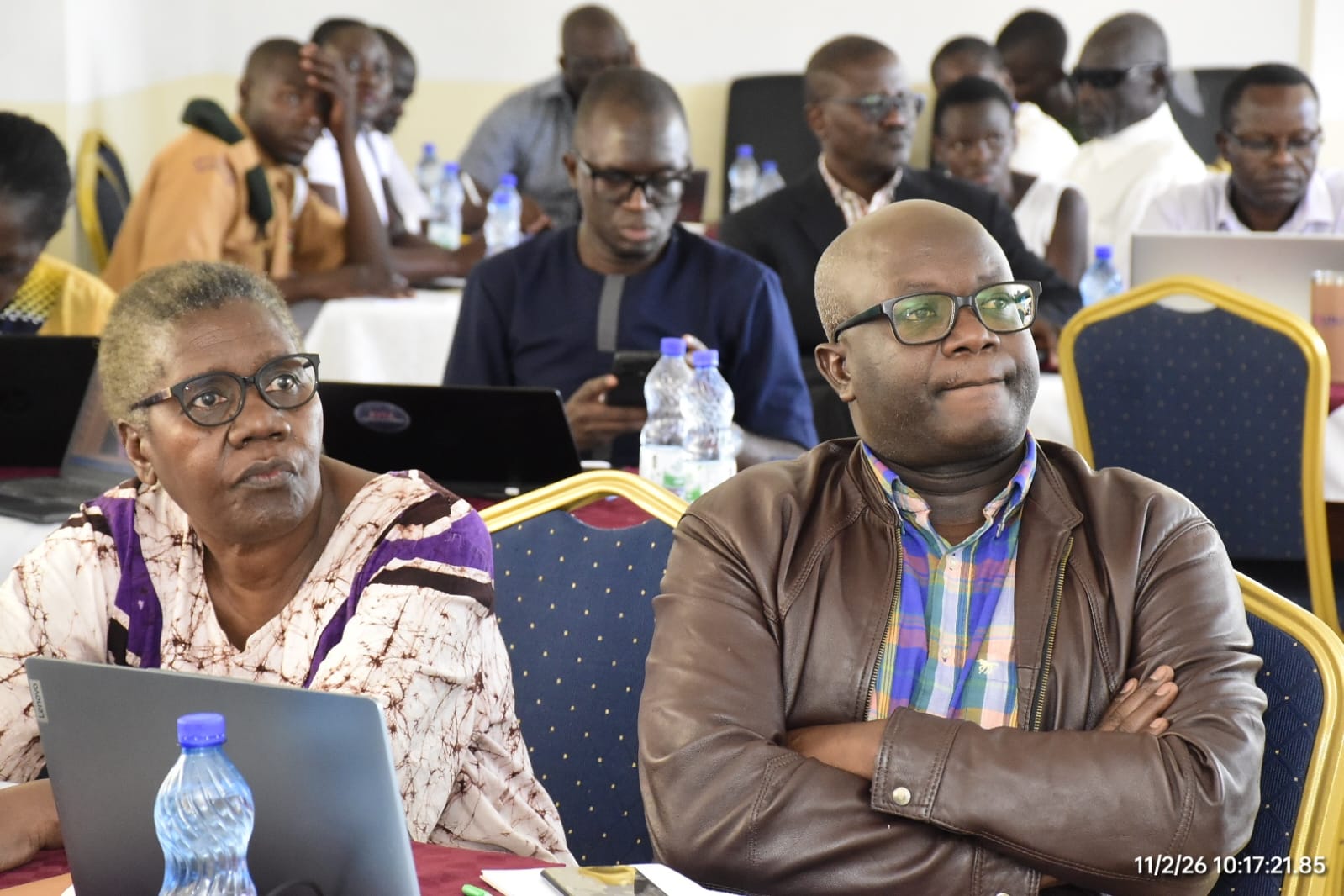
The workshop, which brought together climate change experts, environmental actors, county government officials, civil society organisations, development partners, youth representatives and persons with disabilities, sought to identify policy gaps and recommend practical interventions to strengthen climate change governance, financing and resilience across the county.
Among the notable participants was Dr. David Oremo of ACACIA Community Development, a climate change expert and environmental development practitioner who participated fully in the deliberations, contributing his expertise to discussions on strengthening the county’s climate resilience framework.
The review comes against the backdrop of the Siaya County Climate Change Act, 2021, which was enacted without a comprehensive policy framework to guide its implementation. Stakeholders observed that the absence of an operational policy had created institutional, governance and implementation challenges that now need to be addressed through a more comprehensive 2026 framework.
 ADVERT
The proposed policy is expected to provide a clear roadmap for translating climate change legislation into practical interventions, sustainable financing mechanisms and community-driven environmental programmes.
Funding, governance and accountability emerge as key policy gaps
During the second day of deliberations, stakeholders participated in intensive group discussions facilitated by the JOOUST technical team, including Dr. Richard Magwanga and Dr. Pamela Were.
The discussions identified several critical gaps requiring urgent attention, particularly the absence of clear guidelines governing the utilisation and management of climate change funds, including carbon financing and donor resources channelled towards environmental conservation and climate resilience initiatives.
Participants called for a transparent funding framework that would establish clear procedures for accessing, allocating, utilising and accounting for climate-related resources.
Another major concern was the lack of clearly defined climate change governance structures linking the county administration with ward and village-level institutions.
Stakeholders proposed the establishment and operationalisation of climate change committees throughout the county’s administrative structures, ensuring that climate resilience initiatives are coordinated from the county level down to the grassroots.
They further recommended integrating climate change interventions into the County Integrated Development Plan (CIDP) and Annual Development Plan (ADP), with specific budgetary allocations to ensure that proposed programmes move beyond policy declarations into tangible community projects.
The proposed framework is expected to strengthen institutional coordination while ensuring that villages become active participants in identifying, prioritising and implementing climate adaptation initiatives.
JOOUST experts propose dedicated climate change department
Dr. Pamela Were of JOOUST made a strong case for the establishment of a standalone Climate Change Department within the County Government.
She argued that a dedicated department would provide the institutional capacity necessary to coordinate climate change programmes, safeguard funding streams and ensure effective implementation of the proposed policy.
Dr. Were also called for a more comprehensive approach to waste management, describing it as an increasingly significant challenge requiring stronger policy direction and practical interventions.
Public participation was equally identified as a critical pillar of the proposed policy, with stakeholders recommending clear guidelines to ensure that communities are meaningfully involved in climate change planning, decision-making and resource allocation.
The recommendations are intended to strengthen governance, transparency and accountability while improving Siaya’s capacity to attract and manage climate financing.
Dr. Oremo highlights five pillars for effective climate resilience
Climate change expert Dr. David Oremo of ACACIA Community Development was among the key environmental actors who contributed to the workshop’s deliberations.
In his contribution, Dr. Oremo highlighted five important considerations that should underpin an effective climate change policy framework: locally led interventions, bankable projects, scalability, geographical relevance and a strong foundation for sustainable implementation.
He emphasised the importance of developing climate interventions that respond to the realities and priorities of local communities while remaining attractive to development partners and potential financiers.
His contribution underscored the need to move beyond viewing climate change exclusively as an environmental concern.
Climate change, he observed, has far-reaching implications for human welfare and development, affecting livelihoods, economic productivity and other aspects of everyday life when inadequately addressed.
His emphasis on locally driven and financially viable interventions reinforced the need for a policy that connects environmental protection with sustainable development and tangible community benefits.
Climate financing and data management take centre stage
The workshop also examined the practical requirements for accessing climate change financing.
Dr. Jack Abibo of JOOUST took participants through different funding models, outlining the procedures, requirements and institutional capacities that climate change actors need to develop to qualify for donor support.
The discussions highlighted the importance of developing credible, well-structured and bankable projects capable of attracting financing from development partners.
Prof. Solomon Ogara, meanwhile, presented on data management, emphasising the importance of proper information storage, documentation and digital systems in supporting climate research, project implementation and institutional knowledge management.
His presentation demonstrated how effective data management can strengthen evidence-based planning, preserve research outputs and provide an accessible information repository for climate resilience programmes.
Prof. Beatrice Anyango and Ms. Elizabeth Sunguti were also part of the JOOUST technical team that provided expertise on climate resilience governance and financing mechanisms.
Prof. Lucy Onditi and Mr. Joseph Ndaga served as workshop rapporteurs, coordinating proceedings and documenting the deliberations throughout the three-day engagement.
They emphasised the importance of taking the workshop’s recommendations beyond the conference room and translating them into practical interventions at village level.
Siaya County Government commits to a stronger policy framework
The County Government delegation was led by Acting CECM for Water, Irrigation, Environment, Climate Change and Natural Resources, Mr. Augustine Netou, who officiated during the opening day.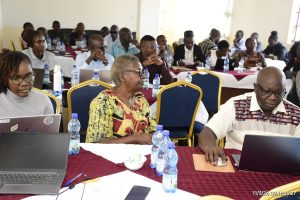
Other county officials included Chief Officer for Environment, Climate Change and Natural Resources, Mr. Jared Abayo, Director of Environment Mr. Gabriel Oduong, County Meteorological Department representative Domnick Arodi and other environmental officers.
Their participation provided an opportunity for the county administration to engage directly with technical experts and stakeholders on the institutional and operational changes required to make the proposed policy effective.
The workshop also recognised the contributions of participants through awards presented to stakeholders who took part in the group discussions, presentations and project-related exercises.
The inclusion of young people and persons with disabilities was particularly significant, reflecting the need for an inclusive climate change framework that recognises the different vulnerabilities and capacities of communities across Siaya County.
From policy review to public participation and legislative approval
With the three-day workshop concluded, the JOOUST technical team will consolidate the stakeholders’ recommendations and work with the County Government to prepare the draft Siaya County Climate Change Policy 2026.
Once finalised, the draft will be subjected to public participation in accordance with Articles 1 and 10 of the Constitution of Kenya, 2010, which provide for popular sovereignty and public participation in governance.
The policy will subsequently be presented to the County Executive Committee, chaired by Governor James Orengo, for consideration and deliberation.
Following the executive review, it is expected to proceed to the Siaya County Assembly for debate and approval before the necessary legislative and assent processes are completed to give the framework legal effect.
The anticipated outcome is a strengthened climate governance system supported by clear institutional responsibilities, sustainable financing, effective waste management, reliable data systems and meaningful community participation.
For Siaya, the development of the 2026 Climate Change Policy represents an important opportunity to move from fragmented climate interventions towards a coordinated, adequately funded and locally driven resilience agenda.
Ultimately, the success of the proposed framework will not be measured by the quality of its provisions alone, but by its ability to mobilise resources, strengthen institutions and deliver measurable improvements in the lives and livelihoods of Siaya residents.