 ADVERT

 ADVERThttps://youtu.be/Sny2O4mVqxU?feature=shared
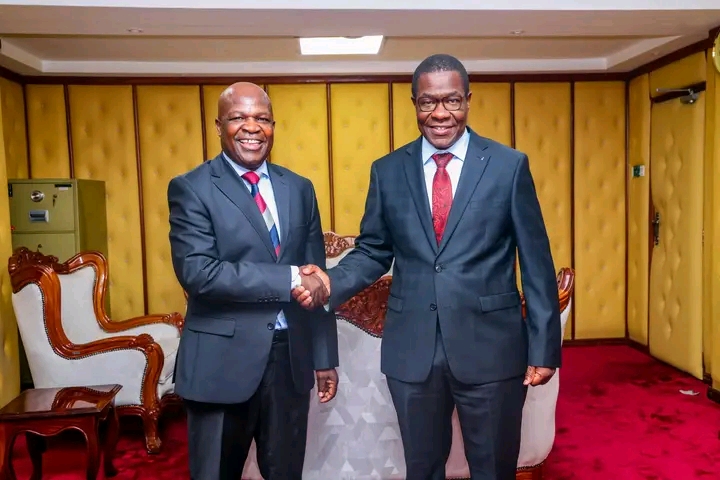
The courtesy call by Mathew Owili the Deputy Governor of Kisumu County on Cabinet Secretary for Energy and Petroleum Opiyo Wandayi is an important reminder that electricity is not merely an infrastructure issue but a foundation for dignity, opportunity and inclusive development. Their discussion on electricity connectivity projects across Kisumu County the need to reach more homes and institutions and the continuation of the Last Mile Connectivity Programme should be understood as part of a larger national commitment to universal access to reliable and affordable electricity. The meeting reflects a shared recognition that development cannot be complete where households schools health facilities markets and small enterprises remain outside the power grid. It also demonstrates the value of cooperation between the national government and county leadership in identifying local needs resolving outstanding challenges and ensuring that public programmes respond to the realities of the people they are intended to serve.
Electricity has become one of the most decisive indicators of modern development. A home connected to power is able to preserve food study after dark communicate more easily operate small appliances and enjoy a safer and more comfortable living environment. A school with electricity can support digital learning administration lighting and access to educational materials. A health facility with a dependable power supply can store vaccines operate essential equipment support maternity services and respond more effectively to emergencies. A market workshop salon welding business milling enterprise or small retail shop with electricity can extend its working hours improve productivity and create employment. In this sense electricity is not simply a service delivered through poles transformers and cables. It is a practical condition for improved livelihoods and stronger local economies. The Last Mile Connectivity Programme is therefore significant because it focuses directly on extending the benefits of the national grid to households and businesses that have historically remained underserved.
The central idea behind last mile connectivity is that access to electricity should not stop at the nearest transformer or along the main road. Many communities may live close to existing infrastructure yet remain unconnected because the final distribution lines service connections or local reticulation systems have not reached them. The programme addresses this gap by making better use of existing distribution transformers while also expanding medium voltage and low voltage lines in rural and peri urban areas. Kenya Power focuses on maximising the use of existing transformers while the Rural Electrification and Renewable Energy Corporation concentrates on expanding distribution lines to improve coverage in rural areas. This approach is practical because it seeks to connect people who are already near the grid thereby improving coverage in a targeted and efficient manner. It also recognises that the greatest challenge in electrification is often not the absence of electricity somewhere in the country but the failure to carry that electricity the final distance to the people who need it.
For Kisumu County the importance of this programme is especially clear. The county has both urban and rural areas and its development needs are therefore diverse. While Kisumu city and its surrounding towns require reliable power for commerce industry institutions and expanding residential neighbourhoods rural communities require connections that can transform household welfare and open up local economic activity. The recent commissioning of electrification projects in Nyando and Kadibo sub counties which sought to connect homes in Kaganda and Mudho villages shows that the programme is not only a national policy statement but also a practical intervention reaching specific communities. The allocation of resources to accelerate electrification in Kisumu further indicates that the county has been identified as an important area for expanded investment in power connectivity. Kisumu is also among the counties that have embraced the Last Mile Connectivity Programme which is being implemented across the country to bring electricity closer to underserved households.
The meeting between the Cabinet Secretary and the Deputy Governor should therefore be welcomed as an example of constructive intergovernmental engagement. National government ministries and agencies have the mandate technical capacity financing structures and national policy direction required to implement large scale electrification programmes. County governments on the other hand have closer knowledge of local conditions community priorities land related concerns institutional needs and the practical barriers that may delay projects. When these two levels of government work together projects are more likely to be properly planned efficiently implemented and sustained after completion. The courtesy call by Mathew Owili is valuable because it places Kisumu’s connectivity needs directly before the national ministry and creates an avenue for follow up on projects that matter to residents. It also signals that county leadership is prepared to work closely with national institutions to ensure that residents receive tangible services rather than promises that remain on paper.
 ADVERT
One of the strongest arguments for expanding electricity access in Kisumu is its potential to support education. Learning should not end when the sun sets. Students in homes without electricity often face difficulty studying in the evening completing assignments using computers or preparing adequately for examinations. Schools without power may be unable to fully embrace digital learning even where devices and internet connectivity are available. Electricity allows schools to operate lighting computers printers laboratory equipment and communication systems. It also improves safety and creates a more conducive learning environment. As Kenya continues to emphasise competency based education digital literacy and preparation for a technology driven economy no school should be left behind simply because it lacks a dependable power connection. Expanding electricity to learning institutions should therefore be treated as an investment in the future of Kisumu’s children and young people.
Health is another area where electricity connectivity has immediate and life changing importance. Health facilities depend on power for refrigeration of medicines and vaccines lighting during night emergencies sterilisation diagnostic equipment laboratory services and maternal care. A clinic that loses power at a critical moment can face serious consequences for patients. Reliable electricity therefore strengthens the quality and safety of healthcare delivery particularly in rural facilities where referral distances may be long and alternative sources of power may be limited. Connecting health centres to the grid is not simply an administrative achievement. It is a direct contribution to public health patient safety and the wellbeing of families across the county. The focus on institutions in the discussions between the national ministry and the county leadership is therefore appropriate and necessary. A powered dispensary health centre or hospital becomes a stronger point of care for the community it serves.
Electricity also has a major role to play in economic empowerment. Kisumu has a strong base of traders farmers artisans transport operators fish traders food vendors and small scale manufacturers. Many of these livelihoods can become more productive when power is available. A welder can operate more efficiently a tailor can use modern machines a miller can serve more customers a salon can expand its services and a food vendor can preserve products for longer. Farmers can adopt irrigation cold storage processing and value addition activities that improve incomes and reduce losses. Electricity also supports the growth of digital services mobile money operations internet based businesses and small enterprises that depend on charging devices and operating equipment. When more homes and businesses are connected the local economy becomes more active more diverse and more capable of creating jobs for young people.
The Last Mile Connectivity Programme also carries an important equity dimension. Development should not be concentrated only in towns along major highways or in wealthier neighbourhoods. Rural households low income families and remote communities deserve the same opportunity to access basic services that improve their quality of life. Universal electricity access is a matter of fairness because energy poverty limits participation in education health communication business and modern public life. The government’s stated commitment to universal access by 2030 gives the programme a clear national purpose but that purpose will only have meaning if counties such as Kisumu continue to receive attention resources and consistent implementation. The partnership between Kenya Power and the Rural Electrification and Renewable Energy Corporation is central to this effort with each institution playing a role in expanding and maximising the reach of the grid.
However connectivity must be accompanied by reliability. Connecting a household to the grid is only the first step. Residents also need a stable supply timely maintenance responsive customer service fair billing and a system that can support growing demand. Frequent outages damaged lines delayed repairs or poor communication from service providers can reduce public confidence in electrification programmes. It is therefore important for the Ministry of Energy and Petroleum Kenya Power REREC and county leadership to pay attention not only to new connections but also to the quality of service after connection. A household that receives electricity but cannot rely on it has not fully benefited from the programme. Reliability should be treated as part of access not as a separate concern to be addressed later.
Affordability is equally important. A connection may exist but families may still struggle to meet the cost of wiring appliances meters or monthly bills. For electricity to improve lives it must be accessible not only physically but also economically. This requires clear communication about connection requirements support for low income households where appropriate protection against exploitative practices and continued efforts to keep electricity affordable for ordinary families. It also requires public education so that residents understand safe usage billing processes energy efficiency and the steps to take when they experience service problems. A successful electrification programme is one that brings people into the grid and enables them to remain connected without undue financial strain.
The involvement of county leadership in following up on connectivity projects is also important for accountability. Residents deserve clear information about which areas are scheduled for connection the progress of ongoing projects the institutions targeted for electrification and the measures being taken to resolve outstanding challenges. Transparent communication reduces speculation builds public trust and allows communities to participate meaningfully in the process. It also helps leaders identify gaps early whether those gaps involve wayleaves delayed materials technical constraints security concerns or the need to prioritise particular public facilities. The meeting between the Cabinet Secretary and the Deputy Governor should therefore lead to practical follow up mechanisms that keep Kisumu’s electrification agenda active and visible.
Kisumu County also stands to benefit from the wider national shift toward renewable energy and sustainable power solutions. As the country expands electricity access it must do so in a manner that supports environmental protection climate resilience and long term energy security. Kenya has made notable progress in developing renewable energy and the integration of clean energy into rural electrification can reduce dependence on costly alternatives while supporting national climate goals. For counties such as Kisumu this creates an opportunity to combine grid expansion with energy efficient practices responsible use of electricity and support for productive uses of power in agriculture business and public services. Energy access and environmental responsibility should advance together rather than compete with each other.
The broader lesson from the courtesy call is that development is strongest when it is coordinated. A ministry cannot fully understand every local need without the input of county leaders and county leaders cannot deliver large scale power infrastructure without national support. The discussion between Opiyo Wandayi and Mathew Owili represents the kind of cooperation that should be encouraged across all counties. It shows that leaders can move beyond general statements and focus on specific service delivery issues that affect ordinary people. Electricity connectivity is particularly suited to this kind of cooperation because its impact is visible in homes schools hospitals markets farms and businesses throughout the county.
The people of Kisumu should expect more than announcements. They should expect completed lines functioning transformers connected households powered institutions and dependable service. They should expect that rural villages are not forgotten that public facilities are prioritised and that small businesses are given the opportunity to grow. They should also expect leaders at both levels of government to remain engaged until projects are completed and benefits are felt on the ground. The Last Mile Connectivity Programme provides a strong framework for achieving these expectations but its success will depend on planning funding implementation maintenance and accountability.
Ultimately the pursuit of electricity connectivity in Kisumu is a pursuit of opportunity. It is about ensuring that a child can study at night a mother can deliver safely in a well equipped facility a trader can extend business hours a farmer can preserve produce and a young person can build a livelihood without being limited by darkness. It is about ensuring that development reaches the final home the final school the final clinic and the final business that has waited too long for connection. The meeting between the Cabinet Secretary and the Deputy Governor is therefore more than a routine courtesy call. It is a call to action for continued investment stronger cooperation and consistent follow through in bringing electricity to every part of Kisumu County. If that commitment is sustained electricity will continue to serve as a practical foundation for education health enterprise and improved living standards across the county.
Photo courtesy: Cabinet Secretary for Energy and Petroleum Opiyo Wandayi together with Kisumu Deputy Governor Mathews Owili.