 ADVERT

 ADVERThttps://youtu.be/Sny2O4mVqxU?feature=shared
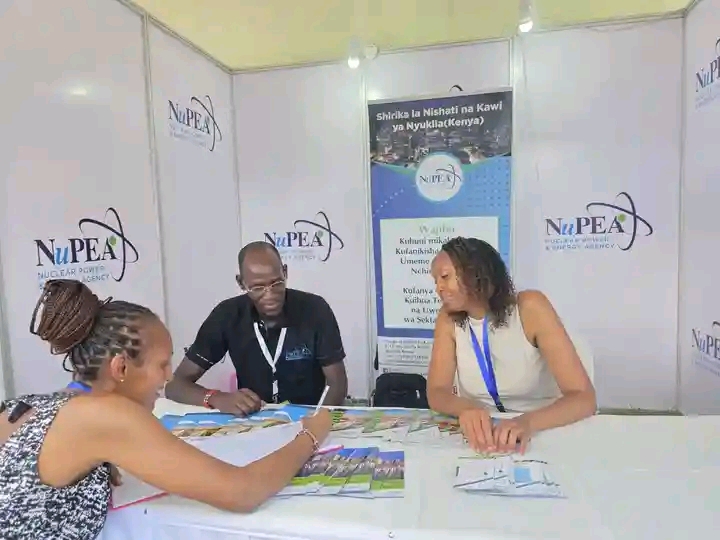
Kenya’s participation in the East African Power and Renewables Week 2026 Summit in Malindi, Kilifi County, is more than a public relations moment for the Nuclear Power and Energy Agency. It is an opportunity for the country to explain, defend and deepen its case for nuclear energy at a time when energy security, industrialisation, climate responsibility and public trust have become inseparable national concerns. The summit brings together stakeholders, experts and industry players whose decisions will shape how the region produces, distributes and consumes energy in the years ahead. NuPEA’s presence at the event therefore signals that Kenya intends to be an active participant in regional conversations rather than a distant observer waiting for others to define the continent’s energy future.
The central argument for nuclear energy in Kenya rests on the need for dependable electricity that can support economic transformation. A modern economy requires power that is available consistently, not only when weather conditions are favourable. Kenya has made commendable progress in expanding renewable energy, but industrial growth, manufacturing, digital infrastructure, irrigation, transport electrification and urban expansion all require a stable supply of electricity. Nuclear power is attractive precisely because it can provide continuous baseload electricity, supporting industries that cannot tolerate frequent interruptions. Reports on Kenya’s nuclear programme describe the proposed plant as intended to provide reliable, round the clock power for industry, which is the practical reason the technology deserves serious national attention.
At the same time, Kenya must not present nuclear energy as a replacement for its renewable energy achievements. The country’s energy future should be understood as a diversified system in which solar, wind, geothermal, hydroelectricity, storage and nuclear power each perform a distinct role. Renewables remain essential for reducing emissions and expanding access, while nuclear energy can strengthen the reliability of the grid and reduce dependence on any single source. This balanced approach is more credible than framing the debate as a contest between clean energy and nuclear power. Kenya’s task is to integrate technologies intelligently, ensuring that the national grid remains resilient, affordable and capable of meeting demand as the economy grows.
Public confidence is the most important foundation upon which Kenya’s nuclear ambition must stand. Nuclear energy carries a unique burden of public concern because accidents, waste, cost overruns and safety failures in other countries have shaped global perceptions for decades. These concerns cannot be dismissed as ignorance or opposition to progress. They must be addressed through honest communication, independent regulation, transparent procurement, clear environmental safeguards and meaningful participation by affected communities. NuPEA may coordinate the programme, but public legitimacy must be earned through sustained engagement, not achieved merely through exhibitions, slogans or official announcements. The Senate’s attention to safety, environmental safeguards, community participation, financing, regulatory preparedness and socio economic benefits shows that these questions are not peripheral; they are central to whether the programme can succeed.
Kenya’s institutional arrangements will determine whether public trust grows or collapses. NuPEA has the mandate to coordinate the nuclear power programme, conduct research and development, and build capacity in the energy sector, while the Kenya Nuclear Regulatory Authority is responsible for independent licensing and oversight. This separation of responsibilities is necessary because the body promoting a project should not be the same body judging whether it is safe, environmentally sound and properly prepared. KenGen’s expected role in developing and operating the plant, together with environmental oversight institutions, further shows that nuclear energy is not a single agency project. It is a national undertaking that requires coordination, accountability and competence across government, industry, regulators, universities and communities.
 ADVERT
The choice of location also carries profound ethical and political weight. Earlier planning documents identified Kilifi and Kwale as possible host areas, while more recent reporting identifies Lenya Village in Siaya County as the preferred site for Kenya’s first nuclear power plant. Whatever the final decision, the communities closest to the project must not be treated as passive recipients of a decision made elsewhere. They must receive clear information about land, water, safety, emergency planning, employment, compensation, environmental monitoring and long term benefits. A project that is presented as nationally important but experienced locally as imposed will create resistance that no amount of technical explanation can easily overcome. Public backing may exist, but it must be continuously renewed through respect, consultation and visible accountability.
Financing is another subject that Kenya must confront with candour. Nuclear power plants are complex, capital intensive and long term undertakings. The country cannot afford vague promises, unclear cost estimates or financing arrangements that place excessive risk on taxpayers without corresponding public benefit. Parliament, civil society, the media and independent experts should scrutinise the financial model, contractual terms, debt obligations, technology choices and contingency plans. The reported government allocation for nuclear plant siting and the broader estimated cost of the project demonstrate that this is already a matter of significant public expenditure and national planning. Transparency at this stage is not an obstacle to progress; it is the condition for responsible progress.
Human capacity is equally decisive. Kenya cannot build a credible nuclear programme if it depends entirely on foreign expertise for every technical, regulatory and operational decision. Universities, technical institutions and research bodies must be integrated into the programme from the beginning. The reported plans by universities in the Lake Region to introduce nuclear engineering programmes, together with the proposed nuclear research reactor at Konza, suggest that Kenya recognises the importance of developing local specialists. Training engineers, physicists, technicians, regulators, emergency planners, environmental scientists and safety professionals will determine whether nuclear energy becomes a durable national capability or merely an imported project operated under foreign dependence.
A research reactor can play an important role in preparing the country for this responsibility. Beyond supporting training and research, nuclear technology has applications in medicine, agriculture, industry and scientific innovation. The proposed research reactor at Konza is expected to support cancer diagnosis and treatment, agricultural research, industrial testing and the training of specialists for the nuclear power programme. This broader value should be communicated clearly, because it helps the public understand that nuclear technology is not only about electricity generation. However, Kenya must avoid exaggerating these benefits or using them to distract from the harder questions surrounding a commercial power plant. Every proposed benefit should be matched by a realistic plan, competent institutions and measurable public accountability.
The regional dimension of the Malindi summit is especially important. Energy decisions in East Africa are increasingly interconnected through trade, infrastructure, climate commitments and industrial ambitions. Kenya’s nuclear programme should therefore be discussed not only as a domestic project but as part of a regional effort to build reliable and sustainable energy systems. Collaboration can help countries share knowledge, strengthen regulatory standards, develop professional expertise and avoid repeating avoidable mistakes. The East African Power and Renewables Week Summit provides a platform for this kind of engagement, allowing governments, experts and industry players to examine how nuclear power can fit within a wider regional energy transition.
Kenya must also be careful about the pace of its nuclear ambitions. Ambition is necessary, but unrealistic deadlines can undermine quality, safety and public confidence. Reports indicate a target of groundbreaking for the proposed Siaya plant in March 2027, while earlier NuPEA planning material referred to construction and commissioning of the first plant by 2034. These timelines may be achievable only if financing, regulation, site preparation, workforce development, community engagement and international cooperation advance responsibly. A delayed but well prepared project is far better than a rushed project that creates technical, financial or social problems for future generations. The measure of success should not be the speed of announcements but the strength of the institutions and safeguards built before concrete is poured.
The country’s nuclear conversation should therefore move beyond simple slogans. Phrases such as nuclear energy for development, energy security or industrialisation are useful only when they are supported by detailed plans and honest public engagement. Kenyans deserve to know what nuclear energy will cost, who will pay, how safety will be guaranteed, how waste will be managed, how emergencies will be handled, how local communities will benefit and how the project will be governed. These are not hostile questions. They are the questions of citizens who understand that energy policy affects their homes, jobs, environment, health and future. NuPEA’s call for meaningful conversations is appropriate, but those conversations must be genuine, inclusive and capable of influencing decisions.
Ultimately, Kenya’s nuclear energy journey should be judged by whether it strengthens the country without weakening public trust, environmental responsibility or democratic accountability. Nuclear power can contribute to energy security, support industrial growth and complement renewable energy, but it can also become a source of debt, division and distrust if handled carelessly. The summit in Malindi is therefore an important moment to insist that Kenya pursues nuclear energy with seriousness, humility and transparency. The future of the programme will not be decided only in laboratories, boardrooms or international conferences. It will be decided in the quality of public engagement, the independence of regulation, the readiness of institutions and the willingness of government to place safety, honesty and national interest above political convenience.
Photo courtesy: NuPEA Facebook page.