ADVERT

 ADVERThttps://youtu.be/Sny2O4mVqxU?feature=shared
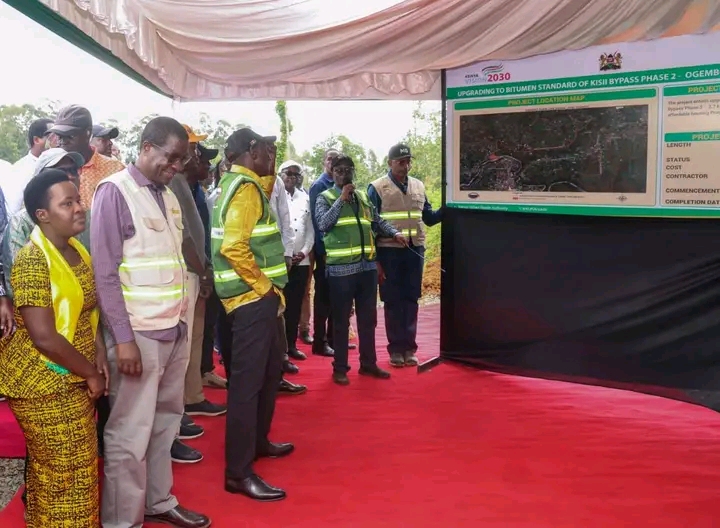
The development tour of Kisii County by President William Samoei Ruto, accompanied by Cabinet Secretary for Energy and Petroleum Opiyo Wandayi, has brought into sharp focus an important pillar of Kenya’s economic transformation: connecting ordinary citizens to the infrastructure and opportunities that make economic progress possible.
The flagging off of the Last Mile Electricity Connectivity Project at Nyangori Centre in Bomachoge Chache Constituency, alongside the inspection of the Ogembo Affordable Housing Project and Ogembo Modern Market, underscores a development approach built around three essential pillars: electricity, decent housing and access to organised markets.
These are not isolated infrastructure projects. Properly implemented, they form an interconnected foundation for enterprise development, job creation, improved public services and better household incomes.
At the heart of this investment is a KSh1.662 billion electricity connectivity programme targeting 24,991 households across 191 project sites in Kisii County. Within Bomachoge Chache alone, KSh139.4 million has been allocated across 15 sites to connect 1,769 households. At Itibonge Village, a further KSh31.2 million investment is expected to benefit 293 households.
These figures represent more than government expenditure or impressive development statistics. They translate into thousands of families gaining access to an essential service that can fundamentally change how they live, learn and conduct business.
 ADVERT
Electricity: The engine of grassroots enterprise
Reliable electricity is among the most powerful enablers of economic opportunity. For households, it means better lighting, safer living conditions and an improved environment for children to study after dark. For schools, it creates opportunities to embrace digital learning and modern administrative systems. For health facilities, it supports refrigeration of vaccines and medicines, laboratory operations and essential medical equipment.
Its economic significance, however, extends much further.
Small businesses such as barbershops, salons, welding workshops, tailoring enterprises, maize mills, retail shops and food-processing ventures depend on electricity to operate efficiently. Farmers and agricultural entrepreneurs can use power to support irrigation, refrigeration, milling, drying and other value-addition activities.
A household connected to electricity is therefore not simply receiving a domestic convenience. It is acquiring access to opportunities that can improve productivity, expand income-generating activities and strengthen its participation in the local economy.
The Last Mile Connectivity Project is particularly significant because it addresses the challenge of households that live relatively close to existing electricity infrastructure but remain unconnected. By extending low-voltage networks to homes and businesses near transformers, the programme seeks to bridge the final gap between national grid infrastructure and ordinary consumers.
Implemented through Kenya Power and the Rural Electrification and Renewable Energy Corporation, the initiative forms part of the wider national ambition to expand electricity access and ensure that rural communities are not excluded from Kenya’s development agenda.
Yet connectivity must be accompanied by affordability and reliability. Having a meter installed means little if a household cannot afford monthly bills or if interruptions make productive use of electricity difficult. The long-term success of the programme must therefore be measured not merely by the number of connections installed but by the extent to which beneficiaries can sustainably use electricity to improve their lives.
Affordable housing: More than providing shelter
The inspection of the Ogembo Affordable Housing Project introduces another important dimension of development: the relationship between decent shelter, human dignity and economic stability.
Housing is a fundamental social need, but it is also an important economic sector with considerable potential to generate employment and stimulate local enterprise.
The Affordable Housing Programme, a central component of the Bottom-Up Economic Transformation Agenda, seeks to expand access to decent and reasonably priced homes while stimulating activity across the construction and manufacturing sectors.
Every housing development creates opportunities for masons, carpenters, plumbers, electricians, painters, welders, transporters and other skilled and unskilled workers. It also generates demand for cement, steel, timber, roofing materials, doors, windows, tiles and other construction inputs.
Where local suppliers and artisans participate in these supply chains, the economic benefits extend beyond the construction site into surrounding communities.
The Ogembo project consequently presents an opportunity to stimulate employment, support local businesses and expand the economic value generated within Kisii County.
However, affordable housing must genuinely remain affordable to its intended beneficiaries. Its success should be judged by the quality of construction, accessibility, supporting infrastructure and the ability of ordinary working families to secure decent accommodation without excessive financial strain.
Ogembo Modern Market: Creating space for commerce
The Ogembo Modern Market is equally important because markets remain the lifeblood of local economies.
For farmers, traders, artisans, transport operators and small-scale entrepreneurs, markets provide the essential meeting point between production and consumption. They create opportunities to sell goods, access customers, generate income and participate in wider commercial networks.
A properly designed modern market offers more than trading stalls. It can provide improved sanitation, secure storage, better lighting, organised trading spaces and a safer environment for both traders and consumers.
With reliable electricity, such facilities can accommodate refrigeration, food processing, digital payment systems, security installations and extended trading hours.
This is particularly important for agricultural communities where farmers often struggle with post-harvest losses, inadequate storage and limited access to reliable markets.
An organised market can strengthen the relationship between producers and buyers, improve the distribution of agricultural products and create opportunities for small businesses to expand.
It can also provide an important platform for women and young people, who constitute a significant proportion of participants in informal trade and small-scale enterprise.
But modernity should not be measured by the appearance of buildings alone. The real test of Ogembo Modern Market will be whether traders can afford to operate there, whether customers can access it conveniently and whether its management can maintain acceptable standards of cleanliness, security and efficiency.
The power of integrating development
Perhaps the most important lesson from President Ruto’s Kisii development tour is the need to appreciate infrastructure as an interconnected system rather than a collection of unrelated government projects.
Electricity makes businesses more productive. Affordable housing provides families with stability and decent living conditions. Modern markets create spaces where goods and services can be exchanged efficiently.
Together, these investments can create a stronger foundation for local economic transformation.
Consider a farmer who previously depended on immediate sales of perishable produce. With electricity, access to processing equipment and better storage facilities, that farmer may be able to preserve produce, undertake value addition and negotiate better prices.
Similarly, a young entrepreneur operating a small food-processing business can benefit from electricity, an organised marketplace and improved access to customers.
This is how infrastructure begins to translate into meaningful economic opportunity.
For an agricultural county such as Kisii, the potential benefits are particularly significant. Improved electricity connectivity can support agro-processing, irrigation, dairy operations, cold-chain facilities and small manufacturing enterprises. These activities can help move communities beyond the traditional sale of raw agricultural produce towards higher-value economic activities.
The ultimate objective should be to ensure that more wealth is generated, retained and circulated within local communities.
Development must be inclusive and accountable
The scale of the Kisii investment also raises an important question about equitable distribution of national resources.
Development cannot be measured exclusively by the number of projects launched in major towns or the visibility of government delegations. It must also be assessed by whether ordinary households in rural and peri-urban communities are gaining access to opportunities that improve their economic circumstances.
The targeting of 24,991 households across Kisii County is an important step in this direction. However, special attention must be given to low-income families, women, young people, persons with disabilities and other groups that may encounter additional barriers to accessing public infrastructure.
A modern market that excludes small-scale traders through prohibitive charges, a housing project beyond the financial reach of ordinary families or an electricity connection that beneficiaries cannot afford to use would fall short of the broader development objectives.
Public participation, transparency and accountability must therefore remain central to implementation.
Residents should know project timelines, costs, intended beneficiaries and the institutions responsible for delivery. Contractors must meet acceptable standards, while government agencies should provide regular updates on progress and address legitimate public concerns.
Equally important is maintenance. Electricity infrastructure must remain functional, housing facilities must be properly managed and market facilities must be maintained long after their official commissioning.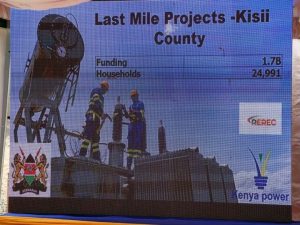
Too often, public enthusiasm surrounding project launches is not matched by an equally strong commitment to maintenance and operational efficiency. This is a weakness that must be avoided.
From infrastructure announcements to measurable transformation
The Kisii development programme provides an opportunity to demonstrate how public investment can connect national economic policy with the everyday needs of ordinary Kenyans.
Its success will ultimately be reflected in practical outcomes: a child studying comfortably at home, a health facility operating essential equipment, a young entrepreneur expanding a business, a farmer accessing better markets and a family securing decent and affordable housing.
The KSh1.662 billion allocated to electricity connectivity across Kisii County is therefore more than an investment in power infrastructure. Together with the Ogembo Affordable Housing Project and the Ogembo Modern Market, it represents an opportunity to strengthen the productive capacity of communities and broaden access to economic opportunity.
President Ruto’s development tour, with Energy Cabinet Secretary Opiyo Wandayi accompanying him, has brought attention to the importance of connecting infrastructure investments with the aspirations of ordinary citizens.
The challenge now is delivery.
Ultimately, governments are not judged by the number of project launches they organise, the speeches they make or the budgets they announce. They are judged by the tangible improvements citizens experience in their daily lives.
If the electricity connectivity programme, affordable housing development and modern market are completed efficiently, managed transparently and sustained through proper maintenance, Ogembo and the wider Kisii County can become important examples of how coordinated infrastructure investment can stimulate local economies.
Development is most meaningful when it moves beyond statistics and becomes visible in the dignity of households, the productivity of businesses and the prosperity of communities.
Photo: Courtesy of Cabinet Secretary for Energy and Petroleum Opiyo Wandayi’s Facebook page.