ADVERT

 ADVERThttps://youtu.be/Sny2O4mVqxU?feature=shared
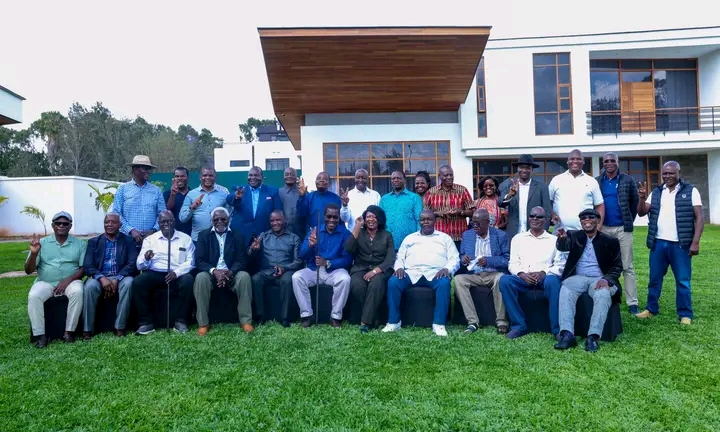
The meeting between Cabinet Secretary for Energy and Petroleum Opiyo Wandayi and former Members of Parliament from across the country represents more than a political gathering. It is an effort to bring together leaders who have served the nation in different capacities understand its political realities and possess the experience needed to guide the country through a demanding period. The central message from the consultations is clear: Kenya needs unity of purpose stability inclusive development and a shared national vision. The decision to support President William Samoei Ruto’s re election in 2027 should therefore be understood not merely as a campaign strategy but as a commitment to consolidate national progress and protect the gains already made.
Kenya stands at a point where political leadership must rise above narrow interests and focus on the needs of ordinary citizens. The country has faced economic pressures social expectations regional concerns and the constant challenge of ensuring that development reaches every community. In such circumstances leaders cannot afford to be divided by personal ambition regional rivalry or short term political calculations. The consultations among former Members of Parliament acknowledge this reality. They recognise that experience networks and political influence are valuable only when they are used to serve the people and strengthen the institutions that hold the country together.
The call for a broad based national coalition is important because Kenya’s future cannot be secured by one region one party or one group of leaders alone. A broad coalition brings together different voices experiences and constituencies under a common agenda. It allows leaders to place national interest above sectional interest and to pursue policies that benefit all Kenyans. This approach is especially necessary at a time when political competition is intensifying ahead of the 2027 General Election. The country needs leadership that promotes dialogue cooperation and stability rather than division and confrontation.
President Ruto’s re election bid must be presented to Kenyans as a continuation of a national project not as an ordinary electoral contest. The President has emphasised themes of equality fairness and moving forward together through the message “Usawa ni Sawa Mbele Pamoja.” These ideas speak to the need for a country in which every citizen feels represented every region has an opportunity to develop and every community can participate in national progress. A political coalition built around these values can give Kenyans confidence that their leaders are working towards a common future rather than pursuing separate political agendas.
The involvement of former Members of Parliament adds practical value to this effort. Former legislators understand the workings of government the needs of their former constituents and the importance of strong representation at the grassroots level. Their experience can help identify local priorities explain government programmes to citizens and encourage communities to participate in development initiatives. Their networks can also help connect national leadership with ordinary people in villages towns counties and regions across the country. This connection between national leadership and local communities is essential for any government that seeks to deliver meaningful change.
 ADVERT
Political influence must however be exercised responsibly. Leaders who seek to mobilise support for the President should do so through honest engagement respect for citizens and a clear explanation of the government’s agenda. Kenyans deserve leadership that listens to their concerns answers their questions and offers practical solutions to the challenges they face. A campaign built on unity must therefore avoid arrogance exclusion and empty promises. It must demonstrate through action that every Kenyan matters regardless of political affiliation ethnic background religion gender age or economic status.
The emphasis on inclusive development is central to the vision being advanced. Development is not complete when roads electricity water projects schools hospitals or markets exist in only a few areas. True development must reach rural and urban communities alike. It must create opportunities for young people support farmers and small businesses improve access to health services strengthen education and expand economic participation for all citizens. A government that seeks re election must show that its policies are improving lives in a visible and lasting manner. This is the strongest foundation upon which political support can be built.
Stability is another essential pillar of Kenya’s future. Political stability allows businesses to plan investors to commit resources public institutions to function effectively and citizens to pursue their daily lives without fear or uncertainty. It also creates the conditions necessary for long term development. Leaders must therefore resist actions that weaken national cohesion or create unnecessary tension among communities. The broad based government arrangement has been presented by its supporters as a platform for stability and development and those who support it must work to preserve that spirit through responsible political conduct.
The consultations among former Members of Parliament also highlight the importance of continuity in leadership. A country cannot achieve lasting progress if every election leads to the abandonment of ongoing programmes and the destruction of institutions simply because political power has changed hands. Continuity allows government to complete important projects improve public services and build on previous achievements. Supporting President Ruto’s re election should therefore be framed as a decision to sustain a national development agenda and give the government an opportunity to deepen the reforms and programmes it has begun.
At the same time unity of purpose does not mean silence or blind loyalty. A healthy political coalition must remain open to criticism internal debate and honest advice. Leaders should be free to express concerns and propose better solutions without being treated as enemies of the government. This openness strengthens leadership rather than weakening it. It also assures citizens that their leaders are not seeking power for its own sake but are committed to improving governance and delivering results. A coalition that welcomes constructive engagement will be more credible than one that demands unquestioning support.
The 2027 election will undoubtedly be competitive. Different political forces are already organising forming alliances and seeking support across the country. This competition is normal in a democratic society. However competition should not become an excuse for division hostility or the neglect of national priorities. Leaders must compete on ideas records and visions for the future. They must convince Kenyans that they understand the country’s challenges and have practical plans to address them. The consultations described in the statement show that supporters of the President are preparing early organising widely and seeking to build a strong national political base.
The role of regions such as Western Kenya Nyanza the Coast North Eastern Eastern Central and the Rift Valley remains important in shaping the country’s political direction. No single region should be treated as more important than another. A national coalition must respect the diversity of Kenya and ensure that all communities feel valued within the political process. Leaders from different regions must work together with sincerity knowing that the strength of the country lies in its unity. The effort to bring former legislators from across the country into one political conversation is a recognition of this national diversity.
The message that “Unity of Purpose is taking shape” should therefore be measured by actions rather than words alone. It must be seen in the way leaders treat one another the way they engage citizens and the way they respond to national challenges. It must be reflected in development projects that are implemented fairly in public resources that are used responsibly and in political decisions that place Kenya above personal or partisan interests. Citizens will judge unity not by slogans or meetings but by whether their lives improve and whether they feel included in the decisions that affect them.
Ultimately the task before Kenya’s leaders is to transform political consultation into national service. Former Members of Parliament have a responsibility to use their experience to guide the country wisely to promote peace and to encourage citizens to participate constructively in democratic life. Cabinet Secretary for Energy and Petroleum Opiyo Wandayi and other leaders involved in these consultations must ensure that the commitment to President Ruto’s re election is linked to a genuine programme of national renewal. If unity stability inclusive development and shared vision remain at the centre of this effort then the country can move forward with confidence. Kenya’s future depends on leaders who choose cooperation over conflict service over self interest and nationhood over division.
Photo courtesy: Cabinet secretary for energy and Petroleum Opiyo Wandayi with former member of parliament.