 ADVERT

 ADVERThttps://youtu.be/Sny2O4mVqxU?feature=shared
NuPEA’s engagement with accountants in Mombasa presents an opportunity to deepen national debate on nuclear energy, financial transparency, safety and environmental responsibility.
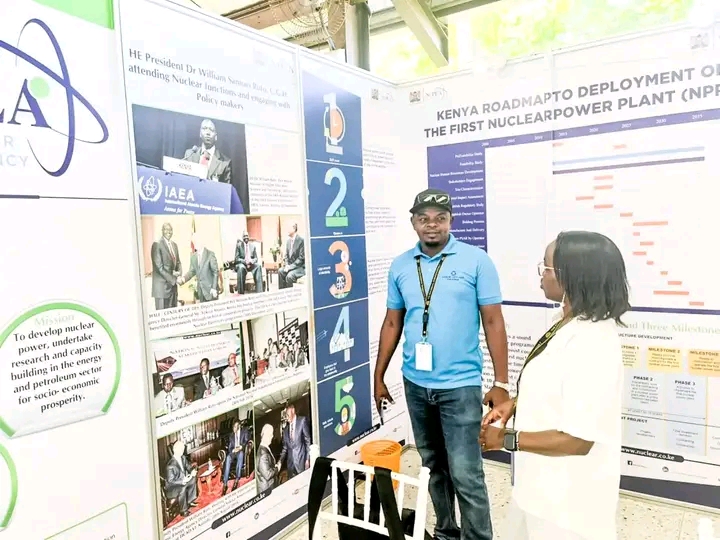
Kenya’s journey towards nuclear energy must be guided by more than technological ambition. It requires public confidence, financial accountability, transparent decision-making and meaningful participation by citizens. This is the central message emerging from the Nuclear Power and Energy Agency’s (NuPEA) sponsorship and stakeholder engagement at the annual seminar of the Institute of Certified Public Accountants of Kenya (ICPAK) in Mombasa.
NuPEA’s exhibition at the professional gathering provides an important platform for explaining Kenya’s nuclear power programme, addressing concerns and demonstrating the peaceful applications of nuclear science and technology. However, the significance of such engagement should extend beyond institutional visibility and public relations. It should help Kenyans understand the opportunities, obligations and potential risks associated with introducing nuclear power into the country’s energy mix.
The involvement of ICPAK is particularly significant because the accounting profession brings a critical perspective to major national investments. The seminar’s emphasis on trust, credibility and professional accountability resonates with the standards that must underpin Kenya’s nuclear energy ambitions.
A national programme of this magnitude cannot depend on official assurances alone. It must earn public confidence through credible information, clearly defined institutional responsibilities and decisions that can withstand independent scrutiny. NuPEA should therefore welcome critical questions rather than simply seek endorsement of its plans. The ultimate measure of successful engagement should be whether participants leave better informed and whether their concerns receive substantive responses.
 ADVERT
Financial accountability must come first
NuPEA has responsibilities that extend beyond promoting nuclear power. These include public education, research, capacity development and supporting the implementation of Kenya’s nuclear energy programme. Engagement with professional organisations such as ICPAK should consequently be part of a sustained public education strategy rather than an occasional promotional exercise.
Kenya must distinguish between a national aspiration, an approved policy decision and an operational capability. Explaining what nuclear power could contribute is important, but equally necessary is demonstrating what the country must put in place before safely and responsibly operating a nuclear power plant.
Accountants have a particularly important role in this conversation. Their expertise can help interrogate financial assumptions, procurement arrangements, investment decisions and the long-term obligations associated with nuclear energy development.
Nuclear power should not be assessed exclusively through technical presentations or projections of future electricity generation. Its economic viability must also be examined through affordability, institutional preparedness, financing arrangements and the allocation of financial risks.
Financial accountability should begin at the planning stage, not after public money has been spent. Institutions involved in the programme should explain how preparatory activities are funded, how consultants and service providers are selected and how expenditure relates to approved objectives.
There must also be clear distinctions between estimated project costs, existing contractual obligations and uncertain future expenditure. Such transparency would help prevent preliminary projections from being presented as settled financial commitments.
Importantly, the financial assessment must cover the entire lifecycle of a nuclear power programme, including construction, operation, maintenance, specialised workforce development, radioactive waste management and eventual decommissioning.
Decision-makers must explain who will bear these responsibilities and how the necessary resources will be secured. They should also consider possible construction delays, changing borrowing conditions, cost escalation and variations in future electricity demand.
A credible nuclear programme must confront financial uncertainty honestly rather than rely exclusively on optimistic projections.
Nuclear power must serve Kenya’s energy security
Energy security remains one of the principal arguments for exploring additional electricity generation options. However, Kenya must define energy security in practical terms: reliable electricity supply, affordable tariffs, adequate transmission infrastructure and the ability to maintain dependable services under changing economic and environmental conditions.
Nuclear power should be evaluated against these objectives rather than treated as an achievement in itself.
The central question is whether the proposed investment would strengthen Kenya’s electricity system in a technically feasible, financially sustainable and economically justified manner.
This assessment must also consider alternative and complementary investments. Nuclear power should be examined alongside geothermal, hydroelectricity, wind, solar, energy storage, transmission improvements and energy-efficiency measures.
Kenya’s energy future should not be framed as a contest between supporters and opponents of a particular technology. Instead, national planners should demonstrate how different energy sources can complement one another while delivering reliable and affordable electricity.
The ultimate beneficiary must be the Kenyan consumer.
Businesses require dependable electricity to remain competitive, industries need predictable energy costs and households deserve access to electricity without unreasonable financial pressure. Any major energy investment must therefore demonstrate how it will improve the quality, reliability and affordability of electricity services.
Local employment requires deliberate preparation
The economic benefits of nuclear energy also deserve careful examination, particularly regarding employment, technology transfer and local industrial participation.
NuPEA should clearly distinguish between temporary construction jobs, specialised operational positions and opportunities for Kenyan suppliers and service providers.
Potential employment opportunities should not be presented as automatic benefits. Many specialised positions will require advanced technical qualifications, professional experience and rigorous safety training.
Universities, technical institutions and professional bodies should therefore be involved early in workforce planning.
The preparation should extend beyond scientists and engineers to include accountants, procurement specialists, lawyers, environmental managers, project administrators and other professionals whose expertise would be required throughout the programme.
Kenya must invest in developing the human capital necessary to participate meaningfully in the nuclear industry rather than depend excessively on external expertise.
Transparent recruitment, structured training and deliberate opportunities for local enterprises would help ensure that the anticipated economic benefits extend beyond a limited group of specialised contractors.
Safety and environmental protection cannot be compromised
Another important responsibility of public engagement is correcting misconceptions about nuclear science while providing honest information about its risks and safeguards.
NuPEA’s participation at ICPAK offers an opportunity to distinguish nuclear electricity generation from other peaceful applications of nuclear science and technology, including applications in medicine, agriculture, research and industry.
Each application has its own purpose, regulatory requirements, safeguards and potential benefits. Public communication should explain these distinctions rather than treat all nuclear activities as identical.
Safety communication must be equally transparent. The public deserves to understand how nuclear risks would be assessed, what protective arrangements would be required and which independent institutions would authorise and oversee the different stages of development.
No complex technology should be presented as entirely risk-free. Public confidence is strengthened when institutions acknowledge potential challenges and explain how they intend to prevent, detect and respond to problems.
Environmental responsibility must also remain central to the conversation.
Issues such as land requirements, water consumption, radioactive waste management, environmental impact assessments and the interests of potentially affected communities must be addressed before major commitments are made.
Communities deserve accessible information and meaningful opportunities to examine proposals, raise concerns and understand how their contributions influence decisions.
Environmental protection should be a fundamental condition of responsible nuclear planning, not an administrative formality undertaken after important decisions have already been made.
Public participation must go beyond professional seminars
While NuPEA’s engagement with accountants and other professionals is commendable, participation at ICPAK cannot substitute for broader public involvement.
Accountants, business leaders and technical experts bring valuable perspectives, but they cannot be presumed to represent the interests of every Kenyan community.
NuPEA should expand its engagement to include ordinary residents, young people, workers, civil society organisations, educational institutions and communities that could be directly affected by future project decisions.
Public participation must provide opportunities for citizens to question the rationale for nuclear power, examine alternative energy options and challenge institutional assumptions without being dismissed as uninformed or opposed to development.
The agency should also document recurring concerns and explain how they are being addressed. Where questions remain unresolved, it should acknowledge this openly rather than offer convenient assurances.
Meaningful public participation is not simply about holding meetings, displaying information or recording attendance. It is about listening, responding and demonstrating that public contributions can influence planning and decision-making.
The sponsorship of professional engagements should also meet the same accountability standards that NuPEA is expected to promote in the wider nuclear programme. The agency should be able to explain the public purpose of its participation, the audiences it seeks to reach and the outcomes expected from such expenditure.
Success should be measured not merely by visibility or attendance but by improved public understanding, the quality of discussions and meaningful follow-up engagement.
Building public trust is Kenya’s greatest nuclear investment
Ultimately, NuPEA’s participation at the ICPAK annual seminar in Mombasa should contribute to a more informed, inclusive and demanding national conversation about Kenya’s nuclear energy future.
Professional stakeholders should emerge better equipped to examine financial projections, interrogate procurement arrangements and contribute constructively to public policy discussions. Equally, NuPEA should gain a clearer understanding of the concerns that must be addressed as the country considers its nuclear ambitions.
Kenya needs reliable and affordable energy to power industrialisation, stimulate economic growth and improve living standards. Nuclear power may have a role in achieving these objectives, but its suitability must be established through rigorous technical, financial, environmental and institutional assessment.
The country should neither embrace nuclear energy unquestioningly nor dismiss it without proper examination.
What Kenya needs is transparent leadership, credible independent oversight, responsible financial planning and sustained public participation.
The success of Kenya’s nuclear future will ultimately depend not only on its ability to generate electricity but also on its ability to earn and sustain the confidence of the people whose resources, environment and future are at stake.
Photo: Courtesy of the NuPEA team — NuPEA representatives engage stakeholders during the ICPAK annual seminar in Mombasa.