 ADVERT


 ADVERThttps://youtu.be/Sny2O4mVqxU?feature=shared
Kenya’s move to advance the Kenya Nuclear Research Reactor (KNRR) project at Konza Technopolis marks a significant milestone in the country’s quest to build indigenous scientific capacity and prepare for a future powered by advanced nuclear technology.
Far beyond the construction of a scientific facility, the project represents a strategic national investment in healthcare, agriculture, industrial development, education, research and the technical expertise needed to sustain a credible Nuclear Power Programme.
The recent meeting between the Nuclear Power and Energy Agency (NuPEA) Board, led by Chairperson Lawrence Gumbe, and its Management team, represented by Eric Ohaga on behalf of the Chief Executive Officer, alongside the Konza Technopolis Development Authority (KoTDA) team, signals growing institutional alignment behind this ambition.
The subsequent site visit to the identified location at Konza is particularly significant. It suggests that Kenya’s nuclear research ambitions are steadily moving beyond policy conversations towards practical implementation.
The Kenya Nuclear Research Reactor should be viewed not simply as another infrastructure project, but as a foundation for building a new generation of Kenyan scientists, engineers, researchers and nuclear technology professionals.
 ADVERT
Unlike a commercial nuclear power plant, a research reactor is primarily designed to facilitate scientific investigations, professional training and specialised applications of nuclear technology. Its potential benefits cut across several sectors, making it an important building block in Kenya’s long-term development strategy.
BUILDING KENYA’S NUCLEAR SCIENTIFIC CAPACITY
One of the most compelling arguments for establishing the research reactor is the opportunity to develop indigenous expertise.
Kenya cannot sustainably pursue nuclear energy without investing in the people, institutions and technical systems that make the technology safe and productive. Nuclear engineers, physicists, radiation protection specialists, technicians, regulators and other professionals will be indispensable to the country’s nuclear ambitions.
A research reactor provides an important practical training environment where students and professionals can acquire experience in reactor operations, radiation protection, nuclear safety and scientific research.
The proposed collaboration with universities to introduce nuclear engineering and postgraduate programmes is therefore a critical component of the project.
Without deliberate investment in local training and research, Kenya risks becoming excessively dependent on foreign expertise, even as it pursues increasingly sophisticated technological ambitions.
KONZA: A STRATEGIC HOME FOR NUCLEAR INNOVATION
The decision to locate the facility at Konza Technopolis is strategically compelling.
Konza is envisioned as a leading hub for science, technology, innovation and knowledge-based enterprise. Integrating nuclear research into this ecosystem creates opportunities for collaboration between government agencies, universities, research institutions, technology companies and private sector innovators.
The partnership between NuPEA and KoTDA brings together two institutions whose mandates can reinforce each other.
While NuPEA is tasked with advancing Kenya’s nuclear energy agenda, Konza offers an environment in which scientific research can interact with technological innovation and enterprise development.
This relationship should ensure that the reactor does not become an isolated scientific installation, but rather an integral component of a wider national research and innovation ecosystem.
With proper investment and institutional coordination, Konza could eventually emerge as a regional centre for nuclear education, scientific research and specialised technical services.
TRANSFORMING HEALTHCARE THROUGH NUCLEAR MEDICINE
The potential contribution of the research reactor to healthcare deserves particular attention.
Nuclear science already plays an important role in modern medicine, especially in diagnostic imaging and cancer treatment through the application of radioisotopes.
A research reactor can support the production and study of certain medical radioisotopes, subject to its technical specifications and appropriate regulatory approvals. This could strengthen Kenya’s capacity in nuclear medicine and contribute to improved access to specialised diagnostic and therapeutic services.
For a country grappling with the growing burden of cancer and other non-communicable diseases, developing local expertise and infrastructure in nuclear medicine is a worthwhile national objective.
Reducing dependence on external suppliers, strengthening research capacity and improving access to essential medical technologies could deliver lasting benefits to patients and healthcare institutions.
A NEW FRONTIER FOR AGRICULTURE AND FOOD SECURITY
Agriculture, which remains central to Kenya’s economy and livelihoods, also stands to benefit from nuclear research.
Nuclear techniques have applications in plant breeding, pest management, soil and water studies, food irradiation, preservation and agricultural research.
These technologies can help researchers develop improved crop varieties, investigate agricultural challenges and strengthen food safety systems.
For Kenyan farmers facing climate variability, declining soil productivity, pests and diseases, scientific innovation is increasingly essential.
The research reactor could provide a platform for local scientists to investigate solutions tailored to Kenyan conditions rather than relying exclusively on research and technologies developed elsewhere.
The ultimate objective should be to translate scientific discoveries into practical interventions that improve agricultural productivity, strengthen food security and enhance farmers’ incomes.
INDUSTRY, MANUFACTURING AND TECHNOLOGICAL COMPETITIVENESS
Kenya’s industrial sector could also benefit from the specialised services associated with research reactor facilities.
Depending on the reactor’s design and capabilities, these may include neutron activation analysis, material testing, radiation processing, instrument calibration and other specialised research applications.
Such services can support manufacturing, engineering, mining, construction and quality assurance.
Developing these capabilities locally would strengthen Kenya’s scientific and industrial infrastructure while reducing the need to outsource certain specialised services.
It could also stimulate demand for highly skilled professionals, create research opportunities and encourage private sector investment in technology-driven enterprises.
The broader opportunity is to make nuclear science a productive contributor to Kenya’s industrial transformation rather than confining it to the energy sector.
SAFETY, SECURITY AND PUBLIC CONFIDENCE MUST COME FIRST
For all its promise, nuclear technology demands the highest standards of safety, security, environmental responsibility and institutional accountability.
Public concerns about radiation exposure, radioactive waste, emergency preparedness and environmental protection are legitimate and must be addressed openly.
Kenya must resist the temptation to treat public participation as a procedural formality. Communities deserve clear, accessible and credible information about the proposed facility, its operations, safety arrangements and potential environmental implications.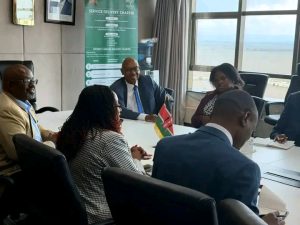
Independent regulatory oversight, transparent environmental assessments, robust security arrangements and effective emergency response systems must be established before the facility becomes operational.
Public education should also be sustained throughout the project lifecycle.
Kenyans need to understand what the research reactor will do, what it will not do, how its safety will be maintained and which institutions will be held accountable.
Trust cannot be demanded; it must be earned through transparency, competence and consistent adherence to safety standards.
INSTITUTIONAL CAPACITY AND FINANCIAL DISCIPLINE
NuPEA’s designated responsibility as the operating organisation for the planned reactor carries enormous obligations.
The agency will be expected to oversee critical stages of the facility’s development, including construction, commissioning, operation, maintenance, utilisation and eventual decommissioning.
This requires a highly qualified workforce, effective management systems, financial discipline and close cooperation with the independent nuclear regulatory authority.
Equally important is the need for realistic long-term financial planning.
A research reactor is not a one-off construction investment. Its successful operation requires sustained resources for maintenance, security, personnel, research, safety systems and eventual decommissioning.
Kenya must therefore adopt a lifecycle financing approach that accounts for the full cost of developing and operating the facility.
Transparent procurement, realistic implementation schedules and rigorous financial oversight will be essential in protecting public resources and preventing costly delays.
Ambition must be matched by accountability.
A NATIONAL PARTNERSHIP, NOT AN AGENCY PROJECT
The success of the KNRR will depend on the strength of collaboration across government, academia, industry and society.
Universities should participate in curriculum development, research programmes and specialist training. Healthcare institutions should help identify medical isotope requirements and opportunities for nuclear medicine. Agricultural research organisations should contribute to programmes addressing crop improvement, pest management and food safety.
Manufacturers and other industrial players should also be consulted on potential technical services and applications.
Regulators, security agencies, county governments and communities must have clearly defined roles in the planning and implementation process.
Such collaboration would ensure that the facility responds to genuine national needs and that its benefits are widely distributed.
PREPARING THE GROUND FOR KENYA’S NUCLEAR POWER AMBITIONS
Perhaps the greatest strategic importance of the Kenya Nuclear Research Reactor lies in its relationship with the country’s broader Nuclear Power Programme.
Developing a commercial nuclear power plant requires much more than acquiring technology and identifying a construction site. It demands a mature institutional framework, trained personnel, a strong safety culture, technical competence and credible regulatory systems.
A research reactor can help Kenya develop some of this essential experience through practical training, scientific research and exposure to nuclear operations.
It should not, however, be mistaken for a commercial electricity-generating facility or a substitute for the extensive preparations required before a nuclear power plant can be safely commissioned.
Rather, it represents an important stepping stone towards developing the human and institutional capacity required for that ambition.
The recent engagement between NuPEA and Konza Technopolis is therefore an encouraging development. The next priority should be translating institutional goodwill into clearly defined responsibilities, implementation timelines, measurable milestones and sustained cooperation.
Kenya must approach this project with confidence, but also with caution, realism and a firm commitment to public accountability.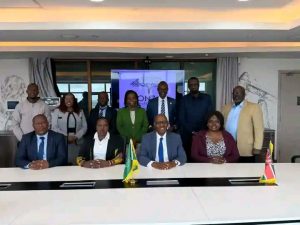
The opportunities in healthcare, agriculture, industry, education and scientific research are substantial. Yet their realisation will depend on competent institutions, adequate financing, qualified Kenyan professionals, rigorous safety standards and meaningful public participation.
If these conditions are met, the Kenya Nuclear Research Reactor at Konza could become much more than a scientific facility. It could be a lasting national asset, strengthening Kenya’s technological independence and preparing future generations to participate confidently in the global nuclear science and energy landscape.
The future of Kenya’s nuclear ambitions will not be measured merely by the facilities it builds, but by the knowledge it creates, the people it trains and the public trust it earns.
Photo courtesy of NuPEA Facebook page.