 ADVERT

 ADVERT
The leafy trails of Karura Forest may still be teeming with joggers, cyclists, and birdwatchers, but beneath the calm canopy lies a storm with deep political roots. What began as a management fallout between the Kenya Forest Service (KFS) and Friends of Karura Forest (FKF) is now unraveling into something bigger: a fight over money, power, and prime real estate in one of Nairobi’s last surviving urban green spaces.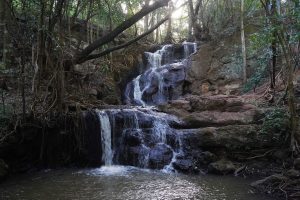
Investigations by SIAYA TODAY point to powerful operators with ties to the Kenya Kwanza regime who have quietly entrenched themselves around Karura. One such well-connected businessman, said to enjoy the ear of State House, is alleged to have fenced off a sizeable chunk of the forest to set up a luxury eco-lodge marketed as a “green getaway.” Conservationists warn this is a textbook case of “greenwashing”—where private profiteers exploit conservation branding to justify land grabs.
The Official Smokescreen
KFS, in public, insists all is well. Chief Conservator of Forests Alex Lemarkoko reassured FKF that “no jobs will be lost” and that budgetary allocations for the 2025/2026 plan remain intact. But insiders say the agency’s sudden cancellation of FKF’s partnership with its sister arm, KFEET, was less about accountability and more about clearing the field for new players—players with political cover and commercial ambitions.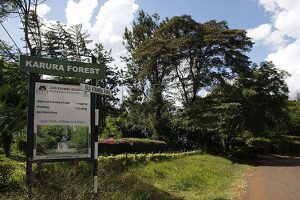
FKF paints the fallout as devastating: 300 schoolchildren cut off from weekly environmental classes, bursary-funded bike shops collapsed, and community contract work worth KSh 2 million a month suspended. “When elephants fight, it is the grass that suffers,” FKF lamented. Yet to seasoned conservationists, the metaphor is painfully literal: the elephants are political elites, and the grass is Karura itself.
 ADVERT
Whispers of a Takeover
Multiple civil society voices have warned that the row fits into a broader pattern across Kenya, where urban forests, wetlands, and public land become soft targets for politically-connected entrepreneurs. “This is not about joggers or tree planting anymore,” one environmental lobbyist said on condition of anonymity. “It’s about who gets to control the gate, the contracts, and the land beneath the canopy.”
The Forest Conservation and Management Act 2016 envisioned partnerships between the state and local communities, but conservationists fear that loopholes are now being weaponized to sanitize elite encroachment.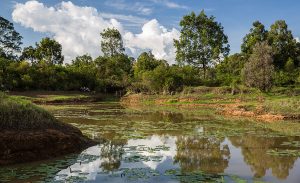
The Bigger Stakes
Karura is more than a patch of trees—it is Nairobi’s ecological lifeline, soaking up carbon emissions, providing affordable leisure, and serving as a symbol of environmental triumph after Nobel Laureate Wangari Maathai and allies fought to protect it in the 1990s. The new wave of encroachment, masked as “development,” threatens to undo that legacy.
Civil society figure Fiu Nifiu has called for immediate mediation, warning that unchecked elite interests could turn Karura into “just another real estate project with trees for decoration.”
For now, Nairobians continue to stream into the forest, unaware that while they jog past waterfalls and butterflies, forces far more powerful are plotting to redraw the map of their green haven.



