 ADVERT

 ADVERT
Kenya is entering a defining chapter—one where development is no longer a political reward but a national right. Under the stewardship of President Dr William Samoei Ruto, the government has doubled down on a powerful, unifying message: every Kenyan matters, regardless of where they come from or how they voted. It is a shift that cuts through decades of ethnic-driven politics and sets the stage for a new era of equal opportunity and shared prosperity.
At the heart of this renewed commitment is a bold reimagining of what inclusive governance should look like. For years, development has too often been filtered through tribal alliances and political loyalties, fostering inequality and deepening social rifts. Today, the administration’s approach represents a decisive break from that past—anchoring governance on fairness, service delivery, and national cohesion.
Nowhere is this vision more visible than in Kitui County, where two transformative infrastructure projects are reshaping livelihoods and restoring faith in government.
Lighting Up Kitui: The Last Mile Project That Sparks Opportunity
The KSh2.3 billion Kitui County Last Mile Electricity Project is more than an engineering undertaking—it is a statement of intent. With the goal of connecting 20,000 households to electricity, it is a lifeline for communities that have long navigated the hardships of energy poverty.
 ADVERT
For rural families, access to reliable power opens a world previously out of reach. Children can study after dark. Clinics can store life-saving vaccines. Entrepreneurs can run machinery and tools that power cottage industries. Farmers can invest in irrigation systems and food processing technologies that increase production and income.
In short, electricity becomes the bridge between survival and prosperity.
By channeling such massive investment into historically underserved regions, the government is proving that national development is for all—not just for political strongholds or urban centers.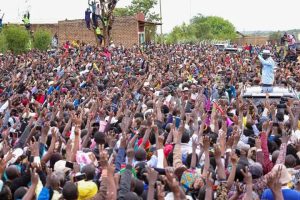
Road to Progress: Tulia–Migwani–Mbondono Corridor Comes Alive
President Ruto’s development push also extends to critical transport infrastructure. The ongoing inspection and enhancement of the 33-kilometer Tulia-Migwani-Mbondono road signifies the administration’s resolve to ensure that no region remains isolated.
In counties like Kitui, roads are the arteries of economic life. This particular corridor will unlock market access for farmers, reduce travel time to hospitals and schools, lower transportation costs for traders, and attract new investment into the region.
When a road becomes passable, livelihoods change. When a region becomes accessible, investors take notice. And when the private sector sees opportunity, families benefit through jobs, growing incomes, and improved living standards.
This is the multiplier effect of infrastructure—one that the government is keenly pursuing to promote balanced development across the country.
A Nation Above Tribal Lines
Beyond the concrete pillars, power poles, and asphalt, there is a deeper narrative emerging—one of unity. President Ruto’s message is clear: Kenya must rise above the politics of division and embrace a future where development binds rather than separates.
Equal service delivery reduces political tensions, heals long-standing grievances, and cultivates a sense of shared identity. It aligns squarely with Kenya’s constitutional vision and long-term development blueprints that champion inclusivity, equity, and social justice.
This is how nations build resilience—by ensuring every citizen feels valued, seen, and included.
Driving Vision 2030 Through Equity
The government’s focus on Kitui reflects a broader strategy to close regional development gaps that have slowed national cohesion for decades. Electrification, transport upgrades, and targeted investments in marginalized counties are essential to realizing Vision 2030: a Kenya where prosperity is distributed, not concentrated.
These projects are not isolated interventions but part of a meticulously aligned national agenda to expand social services, improve infrastructure, and elevate livelihoods—everywhere.
A Future Built Together
Kenya is experiencing a governance awakening—one rooted in the belief that development should not discriminate. As the Last Mile Electricity Project illuminates households and the Tulia-Migwani-Mbondono road opens new horizons, the message resonates loudly: the government is committed to every Kenyan.
If sustained, this inclusive development model could become the cornerstone of national unity, steering the country away from the fractures of the past toward a shared—and brighter—future.
The journey may be long, but the direction is right. Kenya is moving forward, not as a collection of competing tribes, but as one nation bound by the promise of equal opportunity and collective progress.


