 ADVERT
 ADVERT
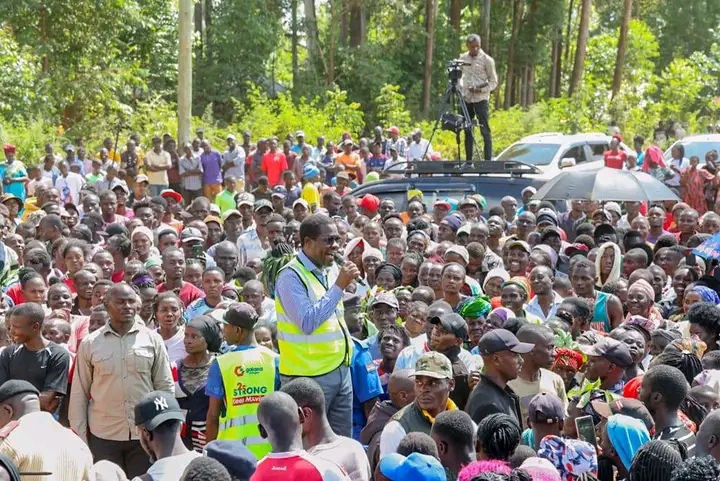
Cabinet Secretary James Wandayi’s visit to Bungoma County marks a pivotal moment in Kenya’s quest for equitable energy access, as he commissioned key Last Mile Connectivity Projects (LMCP) in Webuye East and Kimilili constituencies. This hands-on leadership underscores the Energy and Petroleum Ministry’s accelerated push to fulfill President William Ruto’s directive to electrify rural households and bridge the glaring urban–rural divide that has long stifled national progress. In a country where over 40 percent of rural Kenyans still live without reliable electricity, Wandayi’s actions in Ndivisi Ward—through the commissioning of the REREC Namatore Project and the KPLC Wabukhonyi Project—represent more than infrastructure rollout. They embody a deliberate commitment to the Bottom-Up Economic Transformation Agenda (BETA).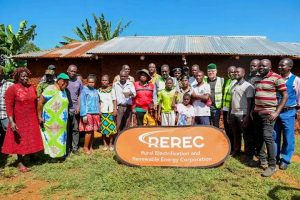
Accompanied by local leaders including Webuye East MP Hon. Martin Wanyonyi Pepela, Kimilili MP Didmus Wekesa Barasa, County Woman Representative Hon. Catherine Wambilianga, and Nominated Senator Hon. Consolata Nabwire, Wandayi did more than preside over ceremonial launches. His presence reinforced confidence in communities long accustomed to delayed promises from past administrations. By connecting hundreds of households to the national grid, these projects will power homes, schools, and small enterprises, fostering self-reliance in areas like Ndivisi where prolonged darkness has historically translated into economic stagnation.
The commissioning of the REREC Musembe Project in Kamukuywa Ward and the KPLC Nasianda Project in Kibingei Ward further highlights the ministry’s resolve to light up rural Kenya. Far from symbolic gestures, these interventions reflect a coordinated response to the president’s vision, with LMCP implementation being scaled nationwide to support the goal of universal electricity access by 2030, in line with Sustainable Development Goal 7. In Bungoma—an agricultural stronghold in Western Kenya—this timing is especially critical.
Farmers in Webuye East and Kimilili, long dependent on rain-fed subsistence amid climate uncertainty, now stand to benefit from electrified irrigation systems, cold storage facilities, and digital tools that expand market access. These advancements transform perishable maize and sugarcane harvests into sustainable economic drivers. Wandayi’s engagement alongside constituency leaders illustrates a maturing model of devolved governance, where national policy aligns with grassroots advocacy, replacing the centralized inefficiencies of earlier eras.
Wandayi’s Bungoma tour also reflects the broader governance philosophy of the Ruto administration—action-oriented, people-centered, and anchored in the realities of the hustler economy. While critics may dismiss such tours as political theater, measurable outcomes tell a different story. REREC and KPLC projects under the LMCP have already connected over 500,000 households recently, with Bungoma’s latest additions pushing the county’s electrification rate toward 80 percent. This momentum reframes infrastructure as a foundation for inclusive growth rather than a budgetary burden.
 ADVERT
The social and economic ripple effects are substantial. Electrified homes reduce dependence on kerosene, lowering health risks while freeing household income for food, education, and healthcare. Politically, visible service delivery reshapes engagement with grassroots voters, particularly women and youth represented by leaders such as Hon. Wambilianga and Senator Nabwire. Still, these gains invite scrutiny. Long-term success will depend on robust maintenance systems, affordable tariffs for low-income households, and integration with renewable energy sources to prevent grid strain.
Beyond commissioning ceremonies, Wandayi’s approach reflects a broader confrontation with the structural energy poverty that has marginalized rural Kenya for decades. Past attempts at rural electrification faltered under mismanagement and inconsistency, making the current pace—over 100 LMCP sites activated in 2025 alone—particularly notable. In Webuye East, households now refrigerate farm produce and power mobile transactions, injecting liquidity into local economies. In Kimilili, new connections lay the groundwork for agro-processing hubs aligned with BETA’s agriculture and MSME pillars.
The collaboration between the ministry and local MPs signals a more integrated development framework, where constituency development funds complement national investments rather than duplicating them. For women and youth long excluded from energy policy conversations, electrification translates into agency—students studying under electric light and households scaling home-based enterprises. According to World Bank estimates, such productivity gains could lift national GDP growth by 2–3 percent annually, positioning Kenya as a regional leader in energy equity.
Wandayi’s Bungoma initiatives ultimately invite reflection on accountability in public service. While progress is evident, the road ahead demands sustained focus on affordability, off-grid solutions for remote areas, and skills training that enables communities to own and maintain the infrastructure. President Ruto’s directive is more than political rhetoric; it is a test of execution, and Wandayi’s field-driven leadership demonstrates how vision can be translated into tangible outcomes.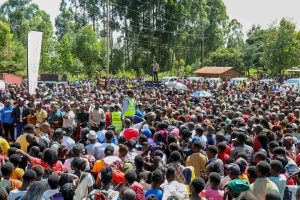
From Namatore to Nasianda, these projects reaffirm energy as the lifeblood of Kenya’s development renaissance. Rural Kenya is no longer peripheral to national ambition—it is central to it. With leaders at both national and local levels reinforcing the push, Bungoma’s illuminated wards stand as proof that when policy meets purpose, electricity becomes more than power; it becomes possibility.
James’ Kilonzo Bwire is a Media and Communication Practitioner.


