 ADVERT

 ADVERT
A mysterious late-night fire at Chianda High School in Siaya County has cast a harsh spotlight on Kenya’s escalating wave of school unrest, raising urgent questions about student safety, institutional preparedness, and the forces driving a troubling surge in dormitory blazes.
The blaze tore through a Form Four dormitory on the night of June 5, catching the school off guard while students were in evening prep sessions. By the time staff and responders contained the flames, the dorm—home to over a hundred national exam candidates—had been severely damaged.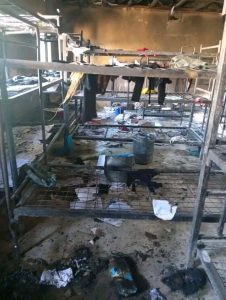
Personal belongings were reduced to ash, mattresses soaked, and the structure left partially gutted. Though no injuries were reported, the psychological toll on students preparing for critical exams is expected to be significant.
Authorities have since launched investigations, with early indications pointing toward possible arson—an all-too-familiar trigger in recent school incidents.
The timing of the fire has deepened suspicion.
 ADVERT
Just hours earlier, the government had issued a stern warning against rising cases of student unrest, vowing tough action against perpetrators and any external actors suspected of fueling instability in schools.
The near-immediate outbreak of fire has sparked a raft of unsettling questions: Was it an act of defiance? A coordinated signal? Or evidence of a broader, organised pattern of disruption spreading across learning institutions?
Security and education officials are increasingly leaning toward the possibility that some incidents may not be purely spontaneous or student-driven.
The Chianda incident is not isolated—it fits into a widening pattern that has seen dozens of schools across the country affected by unrest, arson, and abrupt closures in recent weeks.
Dormitory fires, student strikes, and destruction of property are becoming alarmingly frequent, pointing to a systemic crisis rather than sporadic indiscipline.
In many cases, schools have been forced to send students home prematurely, disrupting academic calendars and heightening anxiety among parents and educators alike.
Even more concerning are reports suggesting that students may be leveraging digital platforms and peer networks to coordinate unrest, indicating a new level of organisation and reach.
Kenya’s past is scarred by devastating school fires, some of which resulted in tragic loss of life. Each incident has come with promises of reform—yet many of the same risk factors persist.
Overcrowded dormitories, inadequate emergency exits, poor enforcement of safety standards, and delayed response mechanisms continue to plague institutions.
In some schools, basic fire safety infrastructure remains either outdated or non-existent, effectively turning dormitories into high-risk zones.
The Chianda fire, while not fatal, serves as a chilling reminder of how quickly such incidents can escalate into national tragedies.
Experts point to a convergence of factors driving the current unrest:
– Mounting academic pressure, especially among examination candidates
– Student grievances over school conditions and governance
– Weak enforcement of discipline and safety regulations
– Possible infiltration or influence from external actors
While authorities maintain that the incidents are isolated, the frequency and similarity of cases suggest deeper, unresolved tensions within the education system.
As investigations continue, several key questions linger:
– Was the fire deliberately set, or caused by negligence or faulty infrastructure?
– Were there warning signs that went unnoticed or ignored?
– Are schools adequately equipped to prevent and respond to fire emergencies?
Past incidents have shown that warning signals often exist—but are either dismissed or acted upon too late.
The Chianda Boys dormitory fire is more than a single event—it is a warning signal flashing across Kenya’s education landscape.
It underscores a fragile system where discipline challenges, safety gaps, and student welfare concerns are converging dangerously.
Without decisive, systemic intervention—from stricter enforcement of safety standards to deeper engagement with student welfare—the country risks edging closer to another avoidable catastrophe.
For now, the ashes of Chianda stand as both evidence and warning: Kenya’s school fire crisis is far from over.


