 ADVERT
 ADVERT
A High Court ruling on the impeachment of former Deputy President Rigathi Gachagua has triggered a storm of criticism from senior lawyers and opposition leaders, who are now questioning both the logic and constitutional consistency of the judgment.
In a decision already shaping into one of Kenya’s most contentious legal moments, a three-judge bench upheld Gachagua’s 2024 ouster while simultaneously finding that the Senate violated his right to a fair hearing. The court awarded him Sh50 million in damages — a remedy critics have widely dismissed as inadequate and legally incoherent.
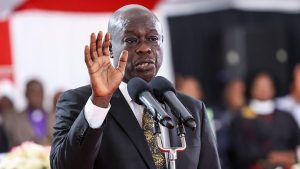
Legal heavyweights have sharply challenged the court’s reasoning, arguing that the judgment undermines established constitutional principles.
Senior Counsel Martha Karua led the criticism, asserting that once a violation of the right to a fair hearing is established, nullification of the process is not optional but mandatory. She argued that financial compensation cannot replace a foundational constitutional safeguard.
Echoing that position, Law Society of Kenya President Charles Kanjama described the ruling as unprecedented. He noted that in standard legal practice, a flawed process — especially one violating fair trial rights — cannot produce a valid outcome, making the court’s decision to uphold the impeachment highly irregular.
 ADVERT
Former LSK President Faith Odhiambo reinforced the argument by drawing parallels with Kenya’s landmark 2017 presidential election ruling, where the Supreme Court nullified the results due to procedural irregularities. According to her, the same constitutional logic should apply: a defective process cannot yield a legitimate decision.
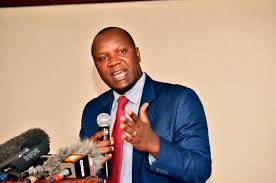
Other prominent legal voices, including Ekuru Aukot, Ahmednasir Abdullahi, Evans Ndong’, and Senator Dan Maanzo — a member of Gachagua’s legal team — joined in condemning the verdict. Maanzo emphasized a fundamental legal principle: no individual should be condemned without a fair opportunity to be heard.
Gachagua himself has dismissed the ruling as both contradictory and dismissive of constitutional protections. He rejected the damages award, insisting that justice — not monetary compensation — was the ultimate objective.
His legal team has already initiated plans to challenge the decision at the Court of Appeal, with the possibility of escalating the matter to the Supreme Court.
In a swift political pivot, the former Deputy President also used the moment to reassert his influence ahead of the 2027 elections. Positioning himself as a central figure in opposition politics, he pledged to spearhead efforts to unify anti-government forces under a single presidential candidate.
Citing constitutional provisions, Gachagua maintained that he remains eligible to contest for office until all appellate avenues are exhausted, effectively keeping his political ambitions alive.
The Senate has pushed back against the criticism, defending its handling of the impeachment proceedings. Senate Majority Leader Aaron Cheruiyot argued that Gachagua was given sufficient opportunity to present his case and attributed the controversy to procedural delays rather than denial of justice.
The Senate is now preparing its own appeal, targeting the court’s finding on the violation of fair hearing rights as well as the damages awarded.
The ruling has ignited a broader debate on the appropriate remedies for constitutional violations in politically sensitive processes like impeachment.
Legal analyst Willis Evans Otieno offered a more nuanced perspective, arguing that while impeachment remains subject to judicial scrutiny, courts are not bound to automatically nullify outcomes upon identifying procedural flaws. He explained that under Article 23 of the Constitution, courts retain discretion to issue remedies that are proportionate, practical, and consistent with the doctrine of separation of powers.
According to this view, remedies such as compensation or declaratory relief may be preferred where reversing an already concluded constitutional process would be disruptive or impractical.
The implications of the ruling are far-reaching. If upheld on appeal, Gachagua could face a permanent bar from public office, significantly altering the political calculus ahead of the 2027 general election.
At the same time, critics warn that the judgment risks setting a troubling precedent — one that could weaken public confidence in the judiciary’s role as the ultimate defender of constitutional rights.
As the legal battle shifts to higher courts and political temperatures continue to rise, the Gachagua impeachment saga is emerging as a defining test of Kenya’s constitutional order — one that will shape both jurisprudence and the country’s political future.
For now, the nation watches closely as the courtroom drama spills into the political arena, with profound consequences for justice, governance, and democracy in Kenya.


