 ADVERT
 ADVERT
By Editorial Desk
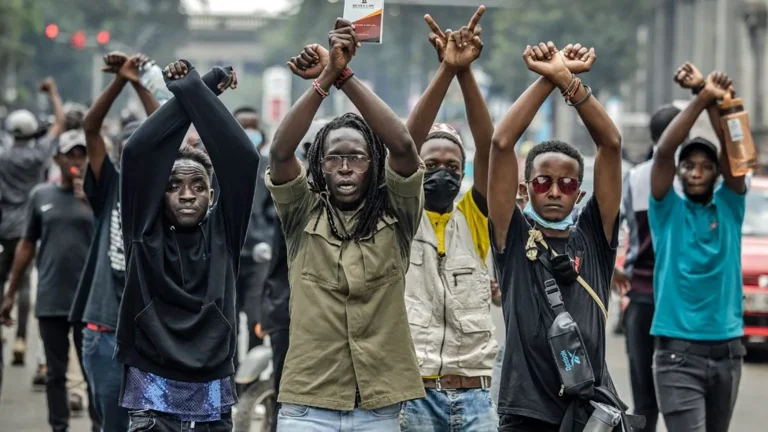
As Kenya marks the second anniversary of the June 25, 2024 Gen Z protests, a solemn national moment risks sliding into a familiar trap—political appropriation. What should remain a dignified remembrance of youthful courage is increasingly being recast as a stage-managed spectacle by sections of the political class.
At the heart of this debate lies a critical distinction: picketing, as a constitutional right, preserves order and dignity—while politicized mass demonstrations often distort purpose, inflame tensions, and erode the authenticity of citizen-led movements.
Lawful Expression vs Political Theatre
Kenya’s Constitution guarantees the right to peaceful assembly. Picketing, by its nature, is focused, restrained, and issue-driven. It allows citizens to honour memory, express dissent, and demand accountability without plunging cities into uncertainty.
 ADVERT
But demonstrations—particularly those driven by political actors—have historically evolved into something else: theatre. They attract opportunistic mobilization, invite infiltration, and frequently spiral beyond their stated intent.
When remembrance becomes performance, meaning is lost.
June 25 Was Never a Political Project
The Gen Z protests of 2024 were unlike anything Kenya had witnessed. They were not commanded from podiums or choreographed in boardrooms. They were born online—organic, decentralized, and fiercely independent.
Armed with smartphones, data, and digital tools, young Kenyans forced a national reckoning on governance, taxation, and accountability. No political patronage. No tribal arithmetic. No career politicians at the helm.
And yet, the cost was profound.
Lives were lost under circumstances that remain painful and, in some cases, unresolved. These young men and women became more than victims—they became symbols of a generation unwilling to be silenced.

That is why June 25 must remain sacred.
The Question of Moral Authority
Today, some political figures seek to position themselves at the forefront of commemorative demonstrations. But legitimacy is not claimed—it is earned.
Where were these voices when the streets were dangerous?
Where were they when young people were dragged from their homes?
What risks did they shoulder when the cost was highest?
To step forward now, draped in the language of solidarity, raises a difficult but necessary truth: this risks becoming an attempt to reap where they did not sow.
A Quiet Country, A Loud Narrative
Perhaps even more telling is the emerging geographical pattern around these commemorations.
Regions such as Nyanza, Rift Valley, Western, and the Coast have, by and large, approached the anniversary with caution, restraint, and reflection rather than mass mobilization. This measured posture suggests a deeper national awareness—that remembrance need not always take the form of street demonstrations.
Yet, in contrast, there appears to be heightened agitation concentrated within specific urban and political corridors, creating the impression that what is being projected as a “national movement” may, in reality, be driven by narrower regional or political interests.
This uneven enthusiasm raises critical questions:
– Is this truly a unified national remembrance?
– Or is it being reframed to serve localized political momentum?
– Why are some regions choosing dignity and restraint while others push for mass action?
These are not divisions to exploit—but signals to understand.
The Digital DNA of Gen Z Resistance
If there is one lesson the political class must internalize, it is this: the Gen Z movement did not derive its strength from the streets alone—it drew its power from the digital sphere.
Social media coordination, AI-assisted messaging, real-time documentation, and decentralized organization made the protests effective in ways traditional politics has rarely achieved.
The true tribute, therefore, is not performative marching—but transformation:
– Learning and embracing digital civic engagement
– Promoting transparency through technology
– Respecting leaderless, citizen-driven participation
– Building issue-based—not personality-based—movements
Anything less reduces a generational shift into a recycled political script.
Leadership, Contradictions, and Public Confusion
Within the political landscape, particularly in regions like Luo Nyanza, a visible divergence has emerged. Some leaders advocate for principled engagement—anchored in accountability, clarity, and structured agreements. Others appear more aligned with prevailing power arrangements, often justifying their stance through political pragmatism.
This duality has not gone unnoticed.
For citizens, it presents a troubling picture of inconsistency—where principles seem negotiable and positions fluid. Yet, Kenya’s democratic strength has always rested on leaders who stand firm, even when inconvenient.
The Gen Z movement itself was a rejection of ambiguity. It demanded clarity.
Let Memory Remain Untouched
The young Kenyans who lost their lives do not require political validation. Their place in history is secure.
What they deserve is protection—from distortion, from exploitation, from being repackaged into slogans and soundbites.
Dignity means allowing remembrance without control.
Dignity means silence where noise seeks attention.
Dignity means understanding that not every moment demands a microphone.
A Time for Restraint
Kenya must resist the urge to turn June 25 into a contest of political visibility.
Let picketing remain the lawful, peaceful avenue for honouring memory.
Let digital platforms carry forward the spirit of Gen Z innovation.
Let leaders show maturity—not by leading crowds, but by stepping aside.
Because in moments of national reflection, restraint is leadership.
The Gen Z movement reshaped Kenya’s civic consciousness.
Its legacy must not be reshaped to fit political convenience.
—End—


