 ADVERT
 ADVERT
President William Ruto has launched a high-impact diplomatic and economic offensive in Europe, a carefully calibrated tour aimed at unlocking billions in investment, widening export markets, and accelerating job creation at home.
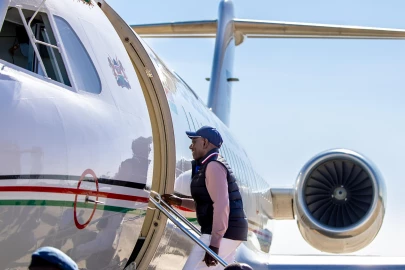
The President left Nairobi on Sunday for an official circuit spanning Belgium, Norway, and Finland—three influential European economies central to Kenya’s evolving trade and investment ambitions.
At the core of the visit is an aggressive drive to secure market access for Kenyan goods and position the country as a premier destination for global capital.
In Belgium, President Ruto is set for high-level engagements with European Union leadership, focusing on fast-tracking the Kenya-European Union Economic Partnership Agreement (EPA). The deal guarantees Kenyan exports duty-free and quota-free entry into the EU, presenting a major opportunity for growth.
Key sectors expected to benefit include tea, coffee, horticulture, and cut flowers, alongside a renewed emphasis on value addition to boost export earnings.
 ADVERT
Beyond policy, the President will directly court investors, pitching opportunities in manufacturing, agro-processing, logistics, and industrial expansion—pillars of his administration’s economic transformation agenda.
The Norway leg signals Kenya’s pivot toward sustainable development and future-facing industries.
President Ruto will engage Norwegian leaders and headline the Kenya-Norway Business Forum, where discussions will center on renewable energy, electric mobility, the blue economy, and climate-smart agriculture.
These sectors are not just environmentally strategic—they are seen as engines for large-scale job creation and long-term economic resilience.
In Finland, the agenda shifts to innovation-led growth, with talks expected to deepen cooperation in education, digitisation, clean energy, healthcare, and emerging technologies.
The visit builds on growing bilateral ties and is expected to unlock partnerships in innovation ecosystems, research, and skills development—critical ingredients for Kenya’s competitiveness in a digital global economy.
President Ruto will also participate in the prestigious Kultaranta Talks, elevating Kenya’s voice in global foreign policy and security discourse.
The tour underscores President Ruto’s broader strategy of economic diplomacy—leveraging international engagements to deliver tangible domestic outcomes.
With Kenya facing pressure from unemployment, a high cost of living, and fiscal constraints, the stakes could not be higher. The success of this mission will be measured not in communiqués, but in signed deals, capital inflows, and jobs created.
This is not a routine state visit—it is a defining economic mission.
If the engagements yield results, Kenya stands to gain expanded export corridors, fresh investment pipelines, and renewed momentum for economic recovery.
As President Ruto engages global powerhouses and boardroom giants, the country now waits for one thing: deals that deliver.


