 ADVERT
 ADVERT
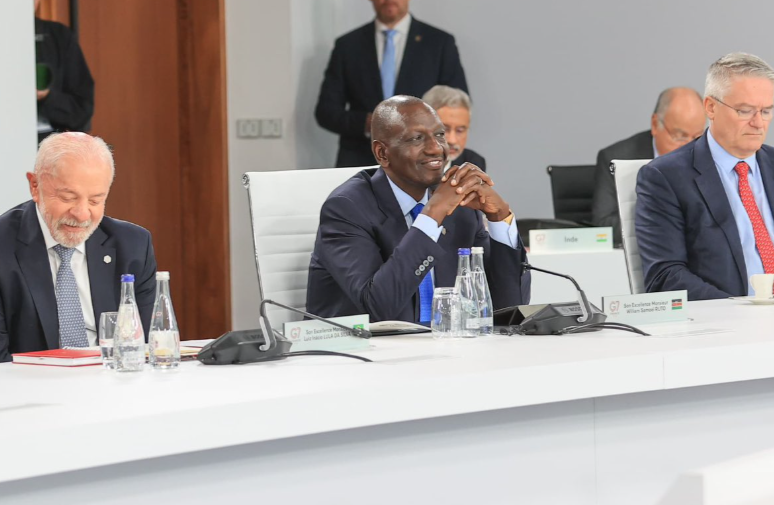
President William Ruto has issued a bold call for a reset in global economic relations, urging world powers to abandon extractive engagements with Africa and embrace partnerships built on equality, respect, and shared prosperity.
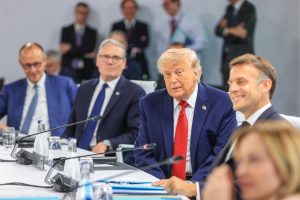
Addressing leaders of the Group of Seven on Wednesday, June 17, Ruto told counterparts including U.S. President Donald Trump that Africa is no longer a passive supplier of raw materials—but the engine of future global growth.
“Africa is central to the future of global growth and prosperity,” Ruto declared. “Yet for too long, engagement with the continent has been defined by extraction with minimal value addition. That model is no longer acceptable.”
In a compelling pitch to global investors, Ruto highlighted Africa’s unmatched potential, revealing that within the next 25 years, the continent will account for 40 percent of the global workforce and host a population of 2.4 billion people—making it one of the largest consumer markets in the world.
He further emphasized Africa’s vast reserves of critical minerals essential for powering emerging technologies and the global green transition.
 ADVERT
“The future of global supply chains, innovation, and resilience will be shaped in Africa,” Ruto said, warning that the world risks missing out if it fails to engage the continent meaningfully.
The President’s message was unequivocal: Africa will no longer tolerate economic relationships that strip its resources while exporting jobs and value elsewhere.
“Our proposition is simple,” he stated. “Let us process our minerals in Africa. Let us manufacture in Africa. Let us build industries and create jobs in Africa.”
He urged global powers to support industrialization on the continent through investment, technology transfer, and fair trade frameworks.
Ruto framed Africa’s rise not as a regional opportunity, but as a global necessity. Stronger African economies, he argued, would translate into more resilient global supply chains, expanded markets, and sustainable economic growth worldwide.
“This is not only good for Africa—it is good for the world,” he added.
The President’s remarks come amid a series of high-level bilateral engagements, including talks with global leaders and investors aimed at positioning Kenya—and Africa more broadly—as a hub for innovation, manufacturing, and green energy.
Observers say the address signals a growing confidence among African leaders to redefine the continent’s place in the global order.
With demographics on its side, abundant natural resources, and a rising innovation ecosystem, Africa is stepping forward not as a beneficiary—but as a partner. Ruto’s message to the G7 was clear: the era of extraction is over, and the age of equitable collaboration has begun.
As the global economy searches for its next frontier, all eyes may soon turn to Africa—not as a question, but as the answer.


