 ADVERT
 ADVERT
Siaya Governor James Orengo’s alarm following the violent ambush on the Homa Bay–Rodi Kopany highway should not be dismissed as political theatre. If anything, history suggests his fears are not only valid—they are familiar.
Kenya has, time and again, perfected a quiet but effective strategy: deploying members of a community to neutralize perceived threats within that very community. Nowhere is this pattern more evident than in Luo Nyanza.

From the bitter political contests between William Odongo Omamo and Oginga Odinga’s ally Peter Castro Oloo Aringo, to the administrative friction of Hezekiah Oyugi-era state operatives like Joseph Anguka in the shadow of Dr. Robert Ouko’s murder, to the localized rivalries of Ambala versus Owiti, a pattern emerges—one where the State rarely confronts dissent head-on. Instead, it fragments it from within.
It is this historical undercurrent that gives weight to Orengo’s chilling invocation of Dr. Robert Ouko, JM Kariuki, and Tom Mboya—men whose political isolation preceded their tragic deaths. His warning is less about personal fear and more about a system that has long thrived on internal division as a tool of control.
Today, that system appears to be mutating rather than disappearing.
 ADVERT
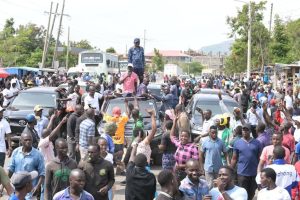
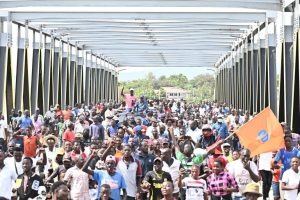
Luo Nyanza, once the epicentre of ideological resistance, is increasingly acquiring a troubling reputation as a theatre of organized political thuggery—where goons, not ideas, are deployed to settle scores. This degeneration raises uncomfortable questions: who benefits when a region historically united by dissent becomes fractured by violence?
A comparison may be instructive. The Kikuyu political establishment—long at the centre of state power—appears to have grown wary of similar divide-and-rule scripts. The recent attempts to pit Rigathi Gachagua against Uhuru Kenyatta did not fully achieve the intended fracture. There is, arguably, a growing resistance to being used as instruments of internal destabilization.
Luo leaders would do well to take note.
The emerging danger is not merely political rivalry within ODM or between factions such as Linda Mwananchi and Linda Ground. It is the willingness—whether by ambition, coercion, or miscalculation—of Luo elites in positions of influence to be deployed against their own.
History is unequivocal about where such roads lead.
If those within government continue to participate, actively or passively, in undermining fellow Luos, they risk entrenching a cycle that has previously ended in blood, betrayal, and national trauma. The lesson from Ouko, Kariuki, and Mboya is not simply that the State can be mischievous—it is that isolation, once engineered, becomes fatal.
Orengo’s warning, therefore, should be read not as paranoia, but as a call to political consciousness.
The question is whether it will be heeded.
Because if history is anything to go by, a community that allows itself to be turned against itself does not just lose its leaders—it loses its voice.



