 ADVERT
 ADVERT
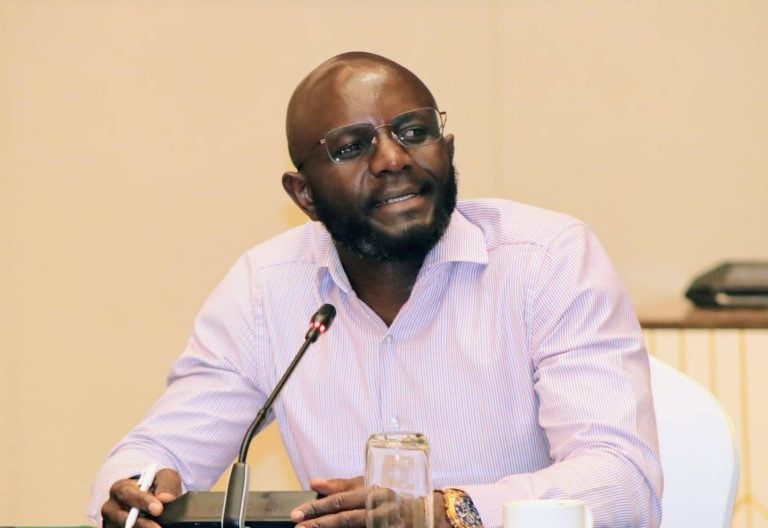
Alego-Usonga Member of Parliament Samuel Onunga Atandi has once again ignited controversy after issuing a hardline directive targeting youth attendance at his political rallies—remarks that have triggered fierce debate across Siaya County.
Speaking at a recent engagement, Atandi criticized the growing trend of young people from neighboring constituencies—Gem Constituency, Ugenya Constituency, and Ugunja Constituency—attending rallies meant for Alego-Usonga residents. He described the practice as “shameful” and linked it to what he termed the normalization of “goonism” in local politics.
The MP was categorical that he would no longer feel obligated to issue handouts to youth who are not his constituents or who attend rallies uninvited.
“I will not be compelled to give money to people who do not belong here,” Atandi stated, drawing a sharp line on what has long been viewed as a politically sensitive culture of mobilized crowds and informal facilitation.
In an attempt to illustrate his point, Atandi referenced a recent church service he attended in Nandi County, where he said he arrived and departed without being mobbed by youth—an experience he contrasted with what he described as chaotic scenes back home.
 ADVERT
However, it was his stark warning to young people that sent shockwaves through the county.
“You will be shot, the way another youth was recently shot in Nairobi. I don’t want to see many youth dying,” he cautioned, condemning the dangerous practice of youths clinging to politicians’ vehicles and engaging in unruly behavior.
The remarks have since triggered a storm of reactions both online and offline, particularly within the influential Siaya Today WhatsApp forum. Critics did not mince their words.
“The MP is drunk with power,” wrote Chuor Momo, while another contributor, Rozzy, warned that “one day reality will dawn on the MP when youth descend on him and spank him like a baby.”
On Facebook, similar sentiments flooded comment sections, with one user describing Atandi’s remarks as “signs of a leader on his way out.”
Yet beneath the outrage lies a more complex conversation.
Was Atandi merely exposing an uncomfortable truth about youth mobilization in politics?
His reference to “goonism” touches on a long-standing issue within Kenya’s political landscape, where unemployed youth are often mobilized to swell crowds, chant slogans, and at times disrupt rival events. As a seasoned politician within Siaya, Atandi is arguably well-placed to understand—and call out—this dynamic.
Equally valid is his concern about safety. The practice of youths hanging onto moving vehicles, especially those carrying high-profile leaders, poses significant security risks not only to the individuals involved but also to the leaders themselves.
The same youth are misused online as local bloggers to politically tarnish opponent’s credibility.
In that sense, Atandi’s message may have contained a kernel of truth.
However, critics argue that the delivery—and tone—of that message undermined its legitimacy.
The MP’s remarks carried an air of detachment and perceived arrogance, culminating in a statement that has since become the focal point of public backlash:
“Alego-Usonga has over one hundred thousand voters. The youth in question only make up around five thousand. What does it matter if five thousand people don’t vote for me?”
For many, this was not just politically tone-deaf—it was a stark reminder of the fragile relationship between leaders and the electorate.
In a democratic system where every vote counts, dismissing a key voting bloc—particularly the youth—may prove to be a costly miscalculation.
As the debate rages on, one thing is clear: Atandi’s remarks have reopened critical questions about youth engagement, political culture, and leadership style in Siaya.
Whether this moment marks a turning point for more honest conversations—or a deepening rift between leaders and the young electorate—remains to be seen.




