 ADVERT
 ADVERT
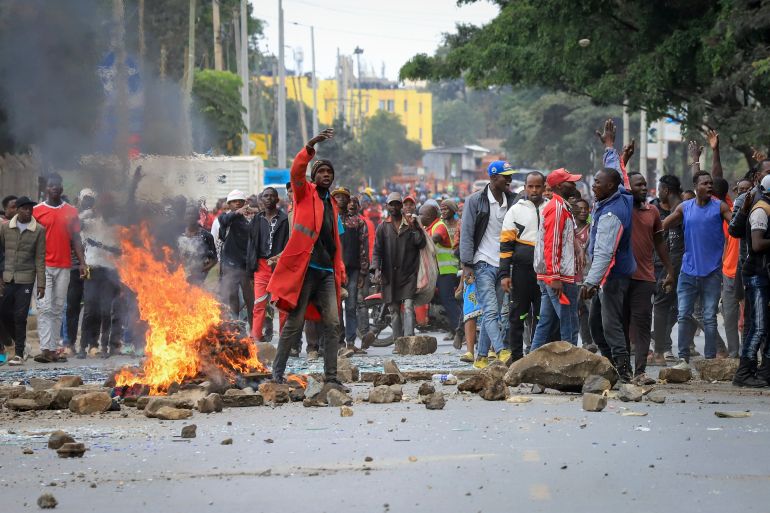
Kenya’s protest movement has exacted a devastating human cost, with 138 people killed, 1,227 injured and 2,128 arrested between 2020 and 2025, according to the Kenya Freedom Index compiled by Odipo Dev and Amnesty International Kenya.
The figures, reported on Thursday, paint a disturbing picture of a country where the constitutional right to peaceful assembly has increasingly collided with aggressive policing, economic frustration, political discontent and, in some instances, violence and destruction.
More worrying is the trajectory.
2025 was the deadliest year covered by the index, accounting for 70 protest-related deaths—more than the 54 deaths recorded during June and July 2024, when the Gen Z-led demonstrations against the Finance Bill dominated the national conversation.
The statistics therefore go beyond a simple story of protesters confronting police. They expose a broader national crisis in which demonstrators, security officers, bystanders, business owners and ordinary residents have increasingly found themselves caught in violent confrontations.
 ADVERT
The human cost of dissent
According to the index, young people and ordinary residents each accounted for about 40 per cent of recorded fatalities.
Some of the victims were not protesters at all.
The report cites the death of Boniface Mwangi Kariuki, a 22-year-old mask vendor who was shot in the head in Nairobi’s Central Business District on June 17, 2025. He was declared brain-dead at Kenyatta National Hospital before succumbing to his injuries on June 30.
There was also the heartbreaking case of 12-year-old Bridgit Njoki, who was inside her home during the July 7, 2025 Saba Saba demonstrations when a bullet reportedly penetrated the roof and ceiling before striking her.
Security guard Fred Wamale Wanyonyi, who was on duty at a Nairobi shopping mall during the June 25 demonstrations, was another fatality recorded by the index.
These cases underscore one of the most disturbing dimensions of Kenya’s protest crisis: violence does not always distinguish between those demonstrating and those simply trying to earn a living or get through an ordinary day.
2026 is showing another worrying trend
The crisis has not disappeared.
The Kenya Freedom Index indicates that 453 protests were recorded during the first six months of 2026, representing a 29 per cent increase compared with the corresponding period in 2025.
Overall, the index documented 1,292 protest events between January 2025 and June 2026, with 839 occurring in 2025 and 453 during the first half of 2026.
The nature of the grievances has also evolved.
While labour disputes, wages and working conditions featured prominently in 2025, rising prices and fuel costs became major triggers in the first half of 2026. Food, housing and education were also identified among the issues driving Kenyans onto the streets.
The national government was the leading target, with 183 protests recorded against it in the first six months of 2026—almost matching the 184 such protests documented throughout the whole of 2025.
That should be a warning to policymakers.
A protest movement driven increasingly by the cost of living cannot be addressed solely through policing. It requires serious engagement with the economic and governance grievances fuelling public anger.
Police response under scrutiny
The index also raises difficult questions about the manner in which security agencies respond to demonstrations.
Tear gas was the most frequently documented weapon used during protest dispersals, followed by live ammunition, water cannons, rubber bullets, batons and stones. Amnesty International Kenya and its partners have warned against the use of excessive and unlawful force, particularly live ammunition, against protesters.
The figures from 2026 are particularly significant.
During protests linked to fuel prices and other economic grievances, hundreds of people were arrested. By the end of June, arrests had already reached 73 per cent of the previous year’s total, while police dispersals had reached 77 per cent of the 2025 figure.
Such numbers suggest that Kenya is not merely experiencing occasional demonstrations.
The country is confronting a persistent cycle:
economic pressure → public protest → police confrontation → arrests and injuries → deeper public anger → further protest.
Breaking that cycle will require more than deploying additional officers.
The Constitution protects protest
Kenya’s Constitution recognises the right of every person to assemble, demonstrate, picket and present petitions peacefully and unarmed under Article 37.
That right, however, does not give demonstrators licence to destroy property, attack people, loot businesses or obstruct the rights of other citizens.
Equally, the existence of disorder or criminal conduct by some protesters cannot provide a blanket justification for indiscriminate repression of peaceful demonstrators.
This is where the responsibility of the State becomes particularly important.
Security agencies must distinguish between peaceful protesters, criminal elements exploiting demonstrations and innocent members of the public caught in the middle.
The same principle applies to protesters: legitimate grievances lose moral force when demonstrations degenerate into looting, arson, destruction of businesses or attacks on other citizens.
Community grievances cannot simply be policed away
One of the most revealing findings from the index is who is actually organizing protests.
Community residents accounted for the largest number of protest organisers, followed by workers, young people, students and civil society organisations. Economic freedom concerns were identified as the leading motivation, accounting for more than any other category of grievance.
That finding challenges the convenient narrative that Kenya’s demonstrations are primarily orchestrated by political activists or civil society organisations.
Many protesters are ordinary citizens expressing dissatisfaction with issues that directly affect their lives.
When fuel becomes unaffordable, food prices rise, housing becomes increasingly difficult and young people struggle to find meaningful employment, the political temperature inevitably rises.
A warning ahead of 2027
The timing of the report is significant.
Kenya is already moving towards the 2027 General Election, a period traditionally associated with heightened political competition and social tensions.
The experience of 2024 and 2025 demonstrates how quickly legitimate grievances can evolve into nationwide unrest when citizens lose confidence in political institutions or believe that peaceful avenues for expressing dissatisfaction are ineffective.
The Freedom Index therefore arrives as more than a statistical document.
It is a warning.
138 deaths should not become a statistic that Kenya simply files away.
Each death represents a family disrupted, children deprived of parents, livelihoods destroyed and communities left with unanswered questions.
Similarly, 1,227 injuries and more than 2,000 arrests represent thousands of individual encounters with a political and security system that is struggling to manage dissent without escalating conflict.
Kenya must choose a different path
The country does not have to choose between public order and democratic freedoms.
It can—and must—have both.
The government has a legitimate duty to protect lives and property. Protesters have an equally legitimate right to demand accountability and challenge government policies peacefully.
The answer lies in enforcing the law fairly, proportionately and without discrimination.
It also lies in confronting the grievances that repeatedly send Kenyans into the streets.
If economic hardship, governance concerns and distrust in public institutions continue to fuel demonstrations, deploying more police will only treat the symptom.
Kenya needs a deeper national conversation about economic justice, police accountability, political responsibility and the constitutional right to dissent.
The grim tally of 138 dead, 1,227 injured and 2,128 arrested should be understood not merely as a record of past protests, but as a warning about what happens when citizens feel unheard and the State responds to dissent primarily through force.
For a country approaching another fiercely contested election, the lesson is unmistakable:
Peaceful protest must be protected. Criminality must be prosecuted. Police excesses must be punished. And the grievances driving Kenyans onto the streets must finally be taken seriously.
That is not weakness.
It is what a confident democracy looks like.



