 ADVERT
 ADVERT
The violence that greeted the Linda Mwananchi caravan in Homa Bay on Sunday, August 16, 2026, should trouble every Kenyan who still believes that political competition can be conducted without turning roads into battlefields.
But beyond the stones, barricades, burning tyres and running battles lies a much bigger political story.
Homa Bay has exposed the uncomfortable reality of post-Raila Luo politics: the old political centre has disappeared, ODM is fractured, and competing factions are now fighting over the political inheritance of a community that no longer speaks with one voice.
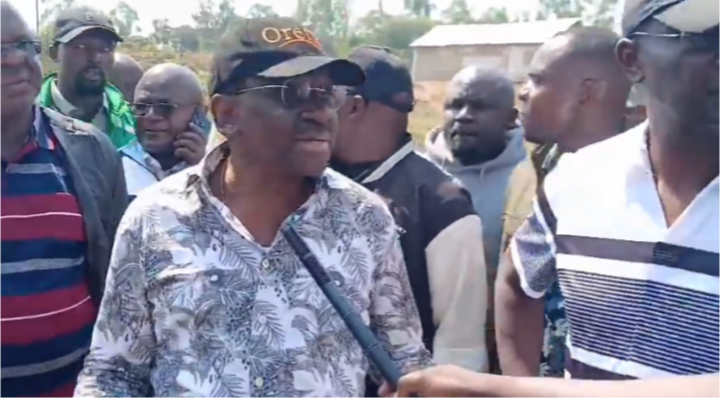
Siaya Governor James Orengo’s convoy came under attack as the Linda Mwananchi delegation made its way through the county. Roads were barricaded, businesses were disrupted and police were forced to use teargas to disperse groups accused of confronting the convoy. The Standard reported that Orengo’s convoy was attacked at Nyandiwa and that police later escorted the delegation.
Orengo himself claimed the police were absent giving a free hand to goons to molest them.
 ADVERT
The situation became so tense that journalists covering the confrontation were also attacked. An AFP correspondent was reportedly assaulted and robbed, while two journalists were separately reported injured in Homa Bay Town.
That is not politics.
That is political intolerance sliding dangerously towards anarchy.
Speaking after the confrontation, Orengo insisted that the people were with Linda Mwananchi.
His message was unmistakable: everywhere the caravan had passed, he said, people were shouting “Wantam”—the one-term slogan—and therefore the movement enjoyed popular support.
He went further, accusing organized goons of attempting to stop the movement.
“The people are with us,” Orengo said, arguing that organized groups were attacking their vehicles and interfering with the convoy.
Perhaps they were.
Indeed, the National Police Service’s own account makes the allegations of organized disruption considerably more serious. Police said they intercepted 15 suspects on the Kisumu-Kericho Road on August 15 and recovered crude weapons, with preliminary investigations indicating that the suspects were allegedly hired to disrupt political activities.
But even that does not establish who hired them.
And that distinction matters.
The temptation to immediately attach the alleged goons to particular politicians is precisely what the public should now resist.
There have been allegations and counter-allegations involving figures within Homa Bay’s competing political camps. But allegations are not evidence.
Governor Gladys Wanga cannot be held responsible merely because she belongs to the rival political camp.
Neither can Interior PS Raymond Omollo.
Neither can any other named politician.
If investigators establish that political actors sponsored violence, they should be named and prosecuted. Until then, the public deserves facts rather than politically convenient conclusions.
The police were there—and that changes the argument
There is another important difference between the Homa Bay confrontation and the May episode that previously coloured this debate.
This time, the police were visibly involved.
Officers mounted roadblocks, searched vehicles and later fired teargas when groups attempted to disrupt the convoy. The Linda Mwananchi motorcade was subsequently escorted through the affected areas.
That makes it considerably harder to sustain a blanket argument that the State simply stood aside and surrendered the streets to goons.
In fact, the NPS went public before and during the confrontation.
Its spokesperson, Muchiri Nyaga, warned politicians, organisers and supporters against incitement and ordered officers deployed to political gatherings to remain professional, impartial and restrained.
That is precisely what a democratic police service should be doing.
The real test now is whether those who violated the law will actually be identified and prosecuted.
And then there is Sifuna
One detail from the earlier political narrative also needs correcting.
Edwin Sifuna was not absent from the Homa Bay mobilisation.
He was there.
Millionaire Mike Mbuvi Sonko was also present as were several other key figures in Linda Mwananchi.
The Nairobi senator, one of the central figures behind Linda Mwananchi, received a reported warm reception at Nyandiwa, where the movement held a rally.
That matters politically.
The presence of Sifuna demonstrates that Homa Bay was not merely an Orengo protest tour that went wrong. It was a deliberate Linda Mwananchi test of political strength in one of the most important battlegrounds in Nyanza.
And the movement did not simply retreat.
Despite the roadblocks and violence, the Sifuna-led faction pressed ahead.
That, in itself, is a political message.
But crowds do not automatically equal a mandate
This is where Orengo’s “the people are with us” argument needs to be interrogated.
Crowds matter.
Political rallies matter.
A large turnout can demonstrate enthusiasm.
A warm reception can demonstrate popularity.
A one-finger salute can become a powerful political image.
But none of these is equivalent to an election result.
Kenyan politics has repeatedly demonstrated that rally crowds can be spectacularly misleading.
A politician can attract tens of thousands of cheering supporters on Sunday and still lose an election on Tuesday.
Therefore, the sight of residents chanting “Wantam” should be treated as evidence of political energy—not conclusive evidence that the entire Homa Bay electorate has chosen Linda Mwananchi.
The ballot box remains the only credible poll.
The deeper story is not Linda Mwananchi versus the ODM faction in government.
It is what happens to Luo politics after Raila Amollo Odinga.
For decades, Raila provided something that no successor has yet demonstrated the ability to replicate: political centrality.
He could absorb competing interests, discipline factions, mobilize enormous crowds and provide a single national political address for a region whose political preferences were otherwise diverse.
That era ended with his death.
The consequences are now visible.
ODM is divided and Nyanza’s political clout fractured.
Linda Mwananchi has emerged as a competing and viable opposition political vehicle.
Linda Ground faction or the main ODM has chosen cooperation with the Kenya Kwanza administration.
Leaders who once occupied the same political tent now accuse each other of betrayal.
And voters are increasingly being asked to choose between competing claims to Raila’s political legacy.
That is not a temporary disagreement.
It is a succession struggle.
Homa Bay is the warning light
Homa Bay was always going to be a difficult test for Linda Mwananchi.
It is one of ODM’s historic strongholds.
It is also home to Governor Gladys Wanga, who has maintained the pro-broad-based-government position of the faction controlling ODM. Wanga has, importantly, publicly said that political formations have a constitutional right to campaign anywhere in the country and urged political tolerance.
That statement should not be forgotten amid the accusations flying around.
Political competition does not automatically make political enemies criminals.
And belonging to an opposing faction does not establish complicity in violence.
The responsibility now falls on the security agencies to investigate every allegation impartially.
NPS has put everyone on notice
The National Police Service’s warning may ultimately be the most important statement to emerge from the Homa Bay fiasco.
The service has explicitly warned politicians and organisers against incitement and said anyone facilitating violence or disorder will face the law.
It has simultaneously instructed officers to protect peaceful assembly while maintaining impartiality.
That is the correct standard.
Linda Mwananchi must be allowed to campaign.
ODM must be allowed to campaign.
Kenya Kwanza must be allowed to campaign.
Any other political formation must enjoy the same constitutional space.
But nobody has a licence to turn political mobilisation into street warfare.
The Wandayi question
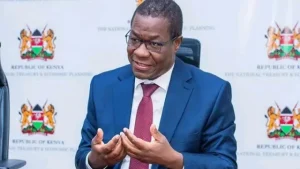
And this brings us back to the increasingly consequential political choice represented by Energy Cabinet Secretary James Opiyo Wandayi.
While some Nyanza politicians are still fighting yesterday’s ideological battles, Wandayi appears to have embraced a more pragmatic calculation: political influence must eventually translate into access to power.
That strategy will inevitably attract criticism.
Some will call it betrayal.
Others will call it political opportunism.
But there is another way of looking at it.
Perhaps it is political realism.
A community cannot permanently negotiate with the national government from outside the room and then complain when decisions are made without it.
There is nothing inherently noble about permanent opposition if the ultimate consequence is political irrelevance.
The question Nyanza leaders should be asking is not simply:
Who is the loudest defender of Raila’s legacy?
It should be:
Who can negotiate effectively enough to ensure that Nyanza has influence in the government that emerges in 2027?
That is a much harder question.
It is also the question that voters—not political rally crowds—will ultimately answer.
The old freedom rhetoric is running out of fuel
Orengo has an impeccable historical pedigree as a champion of constitutionalism and democratic freedoms.
But history cannot become a substitute for present-day political strategy.
Nyanza has heard the language of liberation for decades.
It has heard speeches about democracy.
It has heard promises about political freedom.
It has marched.
It has protested.
It has voted.
And yet, large sections of the region remain economically disadvantaged.
The young want jobs.
Farmers want reliable markets.
Fishermen want the Lake Victoria economy opened up.
Businesses want infrastructure and credit.
Professionals want opportunities.
Counties want development.
The next generation of Nyanza voters may therefore be less impressed by political nostalgia than their parents were.
They will increasingly ask what political loyalty produces.
The most dangerous thing in Homa Bay is not the stone
The stone thrown at a politician’s vehicle is visible.
The political fracture underneath it is not.
That fracture is the real danger.
If rival Luo factions begin treating each other’s supporters as enemies, Nyanza could enter a period of political violence that would benefit nobody except those who thrive on disorder.
The Homa Bay events should therefore be a wake-up call.
Let the police investigate the alleged hired goons.
Let them establish who organized them, who financed them and who gave the orders.
Let those responsible face the law.
But let us also stop pretending that every political confrontation has a convenient mastermind in State House, the Interior Ministry or the office of a county governor.
Sometimes political movements create their own combustible environment.
Sometimes rival factions deliberately provoke each other.
Sometimes crowds become mobs.
And sometimes politicians discover, too late, that the anger they mobilized against their opponents can no longer be controlled.
That is perhaps the most uncomfortable conclusion from Homa Bay.
There is no longer one Luo political vote.
There is no single automatic political command.
There is no Raila to settle every argument.
There is no guarantee that ODM owns Nyanza indefinitely.
There is no guarantee that Linda Mwananchi will inherit Raila’s political constituency.
And there is no guarantee that cooperation with the government will automatically translate into electoral support.
Everyone is now competing for the same voters.
That competition is legitimate.
Violence is not.
Linda Mwananchi may celebrate Homa Bay as evidence that it can penetrate the old ODM heartland.
Its opponents may interpret the violence as evidence that the movement has become divisive.
Both sides will produce photographs of crowds to prove their point.
Both sides will claim victory.
But the real political test comes later.
Can Linda Mwananchi transform crowds into an organisation?
Can Sifuna build a coalition beyond Luo-speaking Nyanza?
Can Orengo convert his experience into a national political proposition?
Can ODM survive its internal divisions?
Can the pro-government faction persuade Nyanza voters that cooperation is more profitable than opposition?
And can leaders like Wandayi convince voters that political bargaining—not permanent confrontation—is the surest route to influence?
Those are the questions that will determine 2027.
Not the stones at Nyandiwa.
Not the barricades.
Not the slogans.
Not even the size of Sunday’s crowds.
Homa Bay has shown us that the Luo political succession battle is real. What remains uncertain is who, if anyone, can win it without tearing the house apart.



