 ADVERT
 ADVERT
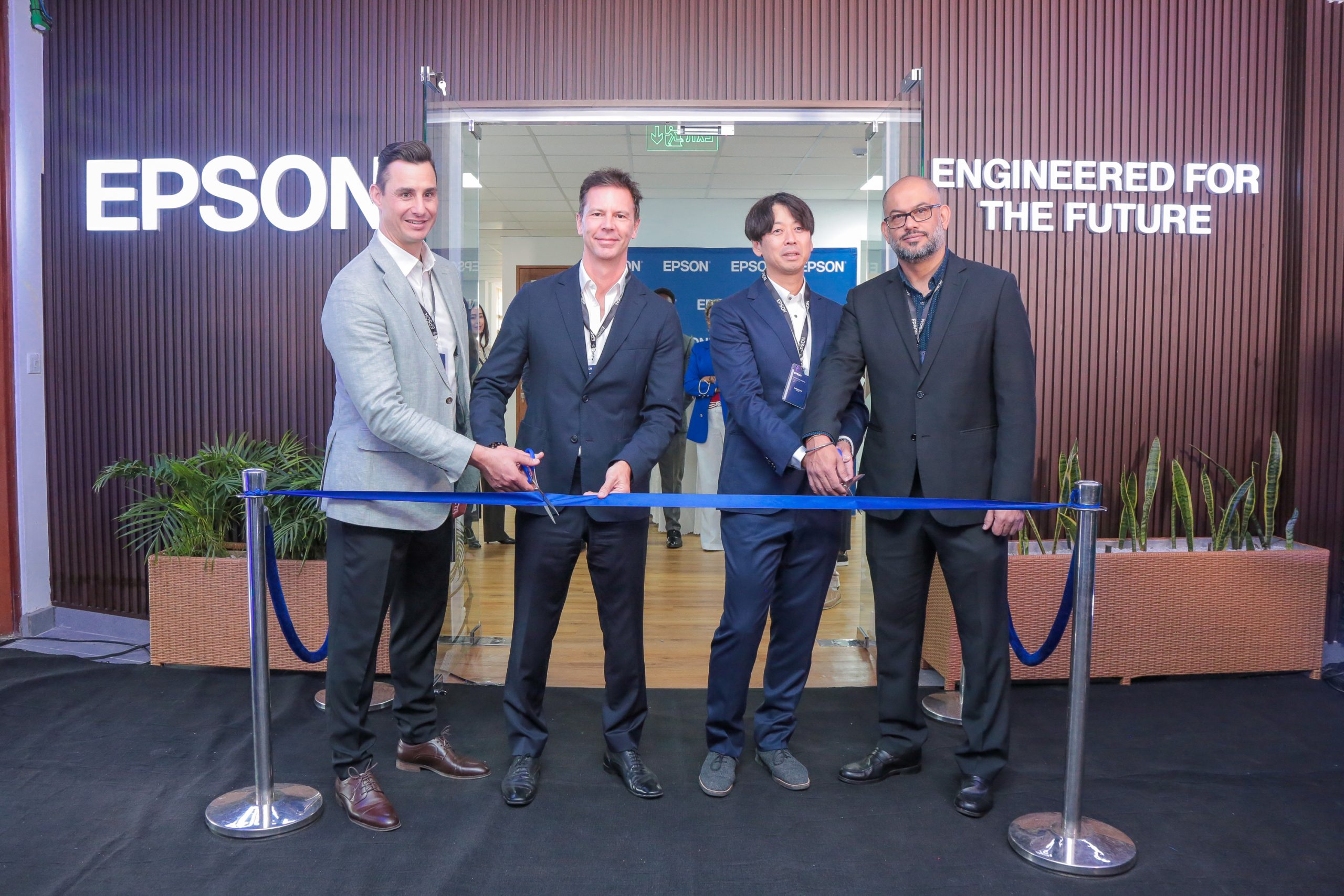
Global technology company Epson has strengthened its commitment to Kenya and the wider East African market with a KSh19.4 million investment to expand its Nairobi operations by 50 per cent.
The enlarged facility is set to serve as a key regional hub for Epson’s growing East African business, providing increased capacity for customer support, technology demonstrations, partner training and technical services.
The expansion comes at a time when demand for business printing, projection and visual solutions is rising across emerging markets, with organisations increasingly looking for reliable technology backed by strong local support.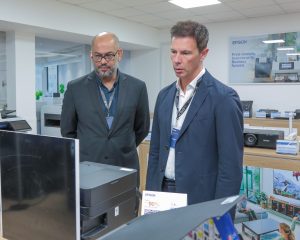
Epson has invested KSh19,417,500 in the Nairobi expansion, significantly increasing its office footprint from its previous premises and giving the company greater room to support customers and partners in Kenya and across the region.
The investment is part of a broader strategy by Epson to strengthen its presence in high-potential markets within its Middle East, Turkey, Africa and Central & West Asia (META-CWA) region.
 ADVERT
Nairobi takes centre stage in regional strategy
The expanded Nairobi office includes a dedicated showroom and demonstration area where customers and business partners can experience Epson’s latest printing, projection and visual technologies first-hand.
The facility will also provide additional space for training, partner enablement and in-market technical support, further positioning Nairobi as an important centre for Epson’s East African operations.
Epson META-CWA President Neil Colquhoun said the company’s expansion reflects its broader philosophy of combining business growth with efficient and responsible technology.
“Sustainability is central to our growth strategy,” Colquhoun said, noting that Epson’s focus on efficient, compact and precise engineering allows its environmental commitments and commercial ambitions to move in the same direction.
For Epson’s Regional Head for East and West Africa, Mukesh Bector, the expanded Nairobi facility represents a practical expression of the company’s commitment to customers.
The new office, he said, creates a hub where partners and customers can interact directly with Epson’s technology, access training and work closely with the company’s local team.
Epson deepens its green agenda
The Nairobi investment is being accompanied by an expanded sustainability programme across Epson’s regional operations.
The company has extended its use of renewable energy certificates to cover 10 sites across the region, including facilities in Kenya, Johannesburg, Cape Town, Dubai, Saudi Arabia, Morocco, Türkiye, Israel, Ukraine and the UAE Experience Centre.
Between March 2025 and April 2026, Epson purchased 416 MWh of renewable energy certificates to match the combined electricity consumption of the sites.
The initiative forms part of the company’s global Environmental Vision 2050, which targets carbon negativity and zero underground resource consumption by 2050.
Epson says sustainability is also being built into the products it brings to the market, with energy efficiency, reduced waste and compact design increasingly central to its technology portfolio.
New EcoTank printers target cost-conscious consumers
Among the company’s latest offerings is a new generation of EcoTank printers, Epson’s flagship ink-tank range.
The company says the latest models can deliver up to 90 per cent savings on ink costs, provide up to three years of printing without requiring a refill and offer up to 20 per cent faster colour printing.
The printers feature Epson’s Micro Piezo Heat-Free technology, which the company says can use up to 96 per cent less energy than conventional thermal inkjet technology.
The combination of lower running costs, energy efficiency and compact design is expected to appeal to businesses, institutions and households looking for more economical printing solutions.
Epson Africa Regional Sales Director Gareth Jay said the company wants sustainability to translate into tangible benefits for customers.
“When we talk about sustainability, we want it to be something customers can feel directly – through lower energy use, less ink waste and efficient performance,” Jay said.
LifeStudio brings Epson into lifestyle entertainment
Epson is also expanding beyond traditional office and business applications with its new LifeStudio projector range.
The LifeStudio POP is designed as a compact and adaptable projector aimed at young adults and gaming enthusiasts, offering flexible entertainment for users on the move.
The LifeStudio Flex, meanwhile, is positioned as a premium portable projector for couples and families. It combines immersive projection with Sound by Bose audio and a design intended to make home entertainment easier to set up and enjoy.
The move reflects the changing projector market, where manufacturers are increasingly targeting home entertainment, gaming and lifestyle consumers alongside traditional corporate, education and professional users.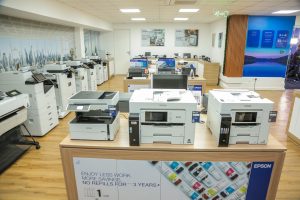
A strategic investment in East Africa
While the KSh19.4 million investment represents a relatively modest capital outlay compared with some multinational projects in Kenya, its strategic significance lies in the expanded role Epson is assigning to Nairobi.
The company is not merely increasing office space. It is building a stronger regional platform for technology demonstrations, customer engagement, training, technical support and partner development.
For Kenya’s technology ecosystem, that could create new opportunities for distributors, resellers, technicians and other local partners as Epson deepens its regional footprint.
The expansion also underlines Nairobi’s continuing importance as a commercial and technology hub for multinational companies seeking to serve the wider East African market.
With a larger facility, expanded customer support capacity and a growing portfolio of energy-efficient products, Epson is sending a clear signal that it sees East Africa not simply as a market for its products, but as a region worthy of deeper and sustained investment.


