 ADVERT
 ADVERT
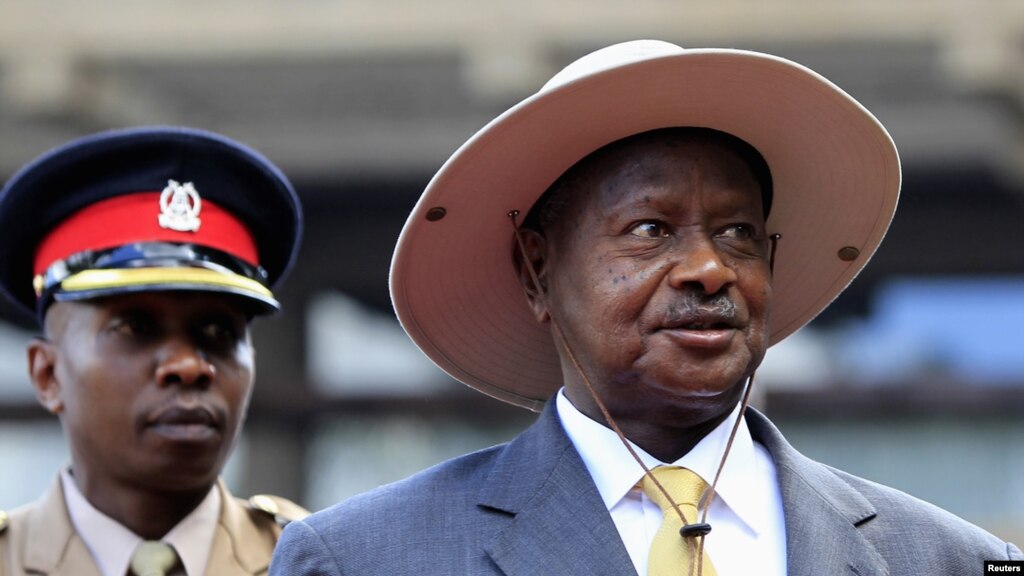
Ugandan President Yoweri Museveni has inadvertently added an extraordinary twist to the widening controversy over Kenya’s Government-to-Government petroleum importation arrangement after revealing that he only recently learnt that the Kenyan politician he credited with exposing alleged oil middlemen had died nearly a year earlier.
Museveni on Monday expressed condolences to the family of former Lugari MP and Cabinet minister Cyrus Jirongo, saying he had just discovered that the veteran politician died in a road accident in December 2025.
The revelation came days after Museveni publicly identified Jirongo as the Kenyan politician who, around 2019, allegedly alerted him to the existence of intermediaries involved in Uganda’s procurement of petroleum products through Kenya.
“I have just learnt that Senator Cyrus Jirongo passed away last December in a motor accident. I was not aware that he had died,” Museveni said, describing Jirongo as a patriotic leader who served Kenya with dedication.
The timing of the revelation has injected an unusual human and political dimension into an already explosive dispute over the petroleum trade between the two neighbouring countries.
 ADVERT
Museveni had earlier spoken of a Kenyan senator who, according to him, “woke me up” to the fact that Uganda was buying petroleum products through middlemen in Kenya.
He subsequently identified the politician as Jirongo and claimed the disclosure prompted him to question Uganda’s procurement arrangements and eventually move away from the system.
The Ugandan President has argued that the previous arrangement was unnecessarily expensive, claiming Uganda was paying about $118 per metric tonne for diesel compared with approximately $83 under its current arrangement involving Vitol and the Uganda National Oil Company.
Those figures have inevitably intensified questions about how much money changed hands under the previous system, who the intermediaries were, what services they provided and whether their involvement added legitimate logistical value or simply increased the cost of fuel.
But Nairobi has pushed back against the suggestion that Kenya’s petroleum importation system was an opaque racket operated through politically connected middlemen.
The Kenyan government has maintained that the G-to-G arrangement was introduced in response to serious foreign-exchange constraints and the need to guarantee a stable supply of petroleum products.
Under the arrangement, international oil companies supplied fuel on credit while licensed Kenyan oil marketing companies participated in the local distribution and supply chain.
That distinction is critical.
In any sophisticated petroleum market, the existence of intermediaries is not, by itself, evidence of wrongdoing. Importation, financing, shipping, storage, insurance, transportation and distribution necessarily involve multiple commercial actors.
The real question is whether those actors were competitively and transparently contracted, whether the prices were commercially justifiable and whether the Kenyan public received value for money.
That is where the Museveni revelations have opened a potentially uncomfortable conversation.
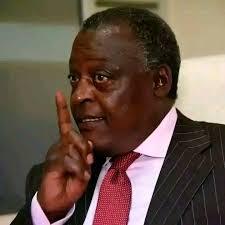
Jirongo’s death makes the matter even more intriguing because the man Museveni now credits with raising the alarm cannot publicly explain what he told the Ugandan President, what evidence he relied upon or precisely which transactions he was questioning.
Jirongo died on December 13, 2025, after his vehicle was involved in a road accident along the Nairobi-Nakuru Highway near Karai in Naivasha. He was 64.
He had served as Lugari MP and held a Cabinet position during the administration of former President Daniel arap Moi, making him a significant figure in Kenya’s political history.
Yet the most curious aspect of the latest episode is not simply Museveni’s admission that he was unaware of Jirongo’s death.
It is the fact that a conversation allegedly held years ago has suddenly become central to a contemporary regional petroleum controversy—with the principal Kenyan participant no longer alive to provide his side of the story.
That leaves governments in Nairobi and Kampala with an obligation to move beyond political statements and place the documentary record on the table.
If the previous procurement system was expensive, the contracts should show why.
If middlemen were involved, the contractual chain should identify them and explain their role.
If the G-to-G arrangement delivered savings, the figures should demonstrate those savings.
And if allegations of impropriety are unfounded, the underlying documents should make that equally clear.
The controversy should therefore not be reduced to a political duel between Nairobi and Kampala, nor to the bizarre revelation that Museveni learnt of Jirongo’s death months after the event.
At stake is something considerably larger: public confidence in how billions of shillings worth of petroleum products are procured, financed and transported across East Africa.
Museveni’s belated discovery of Jirongo’s death may have provided the headline. But the more consequential question remains buried beneath the political drama: who stood between the oil producer and the final consumer, what did each player earn, and who ultimately paid the bill?
That is a question neither Nairobi nor Kampala can afford to answer with political rhetoric alone.



