 ADVERT
 ADVERT
Kokwet electrification and the Tegat-Kaplelit-Kokwet-Toroton road project illustrate why development must ultimately be measured by its impact on ordinary citizens
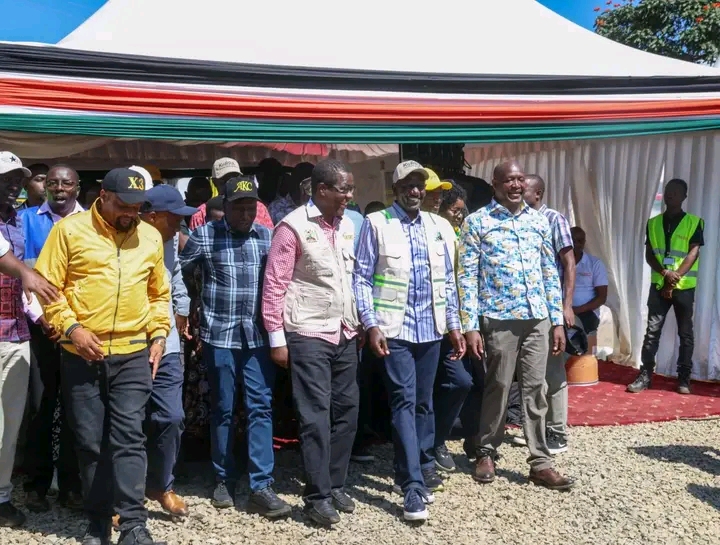
The launch of the Kokwet Last Mile Electrification Project and the construction of the Tegat-Kaplelit-Kokwet-Toroton Road in Kipkelion West, Kericho County, in the presence of President William Ruto and Cabinet Secretary for Energy and Petroleum Opiyo Wandayi, represents more than another sequence of government project launches.
It is a reminder of a fundamental truth about national development: infrastructure matters most when it changes the everyday lives of the people it is designed to serve.
Under the Bottom-Up Economic Transformation Agenda (BETA), the central question should therefore not be how many projects have been announced or how much money has been allocated. The more important question is whether families are gaining better access to electricity, markets, education, healthcare, technology and economic opportunity.
That is where the real test of development lies.
 ADVERT
Electricity as an engine of opportunity
For many rural households, electricity is no longer a luxury. It is an essential foundation for participation in a modern economy.
The Kokwet Last Mile Electrification Project has the potential to transform households, schools, health facilities and small businesses that have previously operated without dependable access to power.
For families, electricity can improve the environment in which children study, facilitate access to information and enable the use of digital devices and online services. For entrepreneurs, it can mean longer operating hours, refrigeration, machinery, digital connectivity and the ability to introduce new products and services.
For schools, reliable electricity can strengthen digital learning and access to educational resources. For health facilities, it can support essential equipment and improve the reliability of medical services. For public institutions, it increasingly underpins digital administration and communication.
This is why rural electrification should be understood not merely as the extension of power lines, but as an investment in human capability and economic participation.
Yet connecting a household to the grid should be the beginning—not the end—of the development conversation.
The next challenge is ensuring that communities can use electricity productively. Access to affordable credit, entrepreneurship training, technology, markets and business information must accompany electrification if the investment is to generate lasting economic value.
A powered rural economy should be capable of processing agricultural produce, supporting refrigeration, powering workshops, enabling digital businesses and creating new employment opportunities.
A road is a bridge to opportunity
The Tegat-Kaplelit-Kokwet-Toroton Road carries a similarly profound economic and social significance.
A road is far more than a strip of asphalt or gravel connecting two points on a map. It is a lifeline to markets, schools, hospitals, workplaces and public services.
For farmers, better roads can reduce the cost and difficulty of moving produce to market. For traders, they can expand access to customers and suppliers. For health workers, teachers and government officials, improved connectivity makes it easier to reach communities.
For residents, particularly those living in rural areas, a reliable road can mean quicker access to emergency medical care and essential services.
Good roads can also change the economic geography of an area. Businesses are more likely to establish themselves where transport is reliable. Traders can reach previously isolated markets. Service providers can expand their operations. Investors can begin to see communities that were once considered too remote as viable economic destinations.
But the value of a road ultimately depends on quality, connectivity and maintenance.
A road should not be considered a development success simply because its construction has been launched or commissioned. Its real value will be determined years later by whether it remains safe, usable and properly maintained.
From project launches to measurable results
This is where accountability becomes indispensable.
Public infrastructure is financed by taxpayers and should therefore be subjected to the highest standards of transparency, quality and oversight. Contractors must deliver according to approved specifications, while implementing agencies must enforce standards and timelines.
Communities, too, have an important role.
Public participation should not end when the foundation stone is laid or the ceremonial launch concludes. Residents should remain informed about project timelines, scope and implementation challenges. They should have channels through which they can report defects, raise legitimate concerns and monitor progress.
That is not obstructionism. It is citizenship and public accountability.
The strongest infrastructure programmes are those in which communities regard projects not as government property but as shared public assets whose success directly affects their future.
Equity must remain at the heart of development
The projects in Kipkelion West also raise a larger question about the meaning of equitable development in Kenya.
Despite significant progress, disparities in infrastructure access remain evident between urban and rural areas and between communities that are well connected and those that have historically received limited public investment.
Such disparities are not merely geographical. They influence educational outcomes, healthcare access, household incomes, business opportunities and the capacity of citizens to participate in the digital and national economy.
Equitable development therefore requires deliberate investment in areas where infrastructure deficits continue to constrain opportunity.
It means recognising that public investment should not only follow existing economic activity. In some cases, infrastructure must come first so that economic activity can emerge.
That is the logic behind taking electricity and roads closer to communities.
Making BETA visible in ordinary lives
The credibility of the Bottom-Up Economic Transformation Agenda will ultimately be determined not by speeches, slogans or project launches, but by what citizens can see and experience.
Can a child study more effectively because the home now has electricity?
Can a farmer transport produce to market at a lower cost because the road has improved?
Can a health facility operate more reliably?
Can a young entrepreneur establish a business that was previously impossible?
Can traders access new markets?
Can rural communities participate more fully in Kenya’s increasingly digital economy?
These are the questions that give development policy meaning.
Infrastructure becomes transformative when its individual components reinforce one another. Electricity can power a business, but a good road can take that business’s products to market. A school can benefit from digital learning, but connectivity makes educational resources more accessible. A health facility can acquire modern equipment, but roads determine how easily patients and emergency services can reach it.
The greatest development impact therefore comes from integrated planning rather than isolated projects.
National and county governments must work together
The responsibility for translating infrastructure investment into lasting prosperity does not rest with the national government alone.
National and county governments must coordinate their development priorities so that roads connect productive areas to markets and public facilities, while electricity supports the enterprises and services that communities seek to develop.
Local leaders should go beyond attending project launches. They should help communities understand projects, facilitate constructive public participation, monitor implementation and demand accountability where standards are not met.
Development leadership is ultimately about stewardship—not ceremony.
Protecting the investment
Communities also have a responsibility to protect public infrastructure.
Vandalism, theft and deliberate destruction of electricity equipment, roads and public facilities impose costs on everyone. Government must provide effective maintenance and enforcement, but citizens must also recognise that public infrastructure belongs to them.
Environmental and social considerations must equally remain part of project implementation. Construction should minimise unnecessary disruption to homes, farms, water sources and community facilities, while legitimate concerns from affected residents should be addressed through lawful and transparent processes.
A development project should improve lives without unnecessarily compromising the rights and livelihoods of the people it is intended to benefit.
The real measure of transformation
The significance of the Kokwet electrification project and the Tegat-Kaplelit-Kokwet-Toroton Road therefore extends beyond Kipkelion West.
Across Kenya, many communities still face inadequate electricity access, poor roads and limited access to essential public services. Bringing infrastructure to such areas is not simply an act of economic investment; it is an investment in national inclusion, dignity and cohesion.
Kenya’s transformation will not be achieved through policy declarations alone. It will require disciplined implementation, prudent management of public resources, quality workmanship, continuous maintenance and meaningful community participation.
The projects launched in Kipkelion West offer an opportunity to demonstrate what that transformation can look like when infrastructure is designed around people.
The electricity connection should create new possibilities. The road should open new economic corridors. Schools, health facilities, businesses and households should be better positioned to benefit. And government should remain accountable long after the ceremonial speeches have ended.
Ultimately, Kenya’s development should be judged from the ground up.
Not by the number of foundation stones laid, but by the number of lives improved.
Not merely by kilometres of roads constructed, but by the opportunities those roads unlock.
Not simply by electricity poles erected, but by the businesses, classrooms, health facilities and households that begin to thrive because power has finally reached them.
That is when infrastructure becomes transformation.
And that is when the promise of a bottom-up economy begins to move from policy documents into the daily lives of ordinary Kenyans.


