ADVERT
 ADVERT
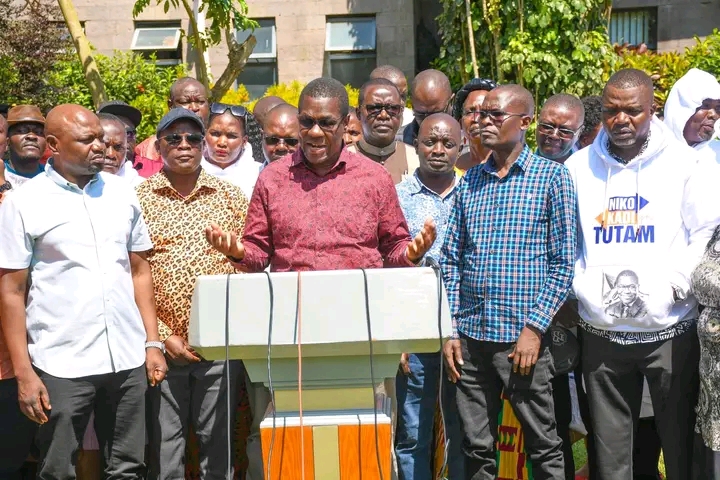
Energy Cabinet Secretary Opiyo Wandayi’s consultative meeting with Siaya leaders is an important moment in the unfolding political conversation around President William Ruto’s re-election bid and the Tutam movement. The meeting brought together leaders from Siaya County to consolidate support behind the President and keep the region aligned with the broad-based government arrangement associated with the late former Prime Minister Raila Odinga. Wandayi described the engagement as an unofficial meeting intended to consolidate numbers behind Tutam and ensure that Siaya remains behind President Ruto. The central question, however, is not whether Siaya leaders have the right to make a political choice. They do. The more important question is whether that choice will be explained to the people of Siaya in terms of clear benefits, honest commitments, and a development agenda that improves ordinary lives.
Tutam is a political slogan associated with calls for President Ruto to serve two terms, while its opposing slogan, Wantam, is used by critics who want him to serve only one term. Political slogans can mobilise supporters and give a campaign a simple message, but they cannot substitute for governance. Siaya leaders who are asking residents to support Tutam must therefore move beyond slogans and explain what the county will gain from that support. Political loyalty is legitimate, but it becomes more meaningful when it is connected to services, jobs, infrastructure, education, health, energy access, and economic opportunity. A political direction becomes credible when citizens can see how it responds to their daily concerns and improves their material conditions.
The meeting reportedly involved Members of Parliament, Members of the County Assembly, representatives of the county executive, youth, persons with disabilities, community representatives, and other local leaders. It focused on consolidating support for President Ruto ahead of the 2027 General Election and strengthening cooperation among leaders aligned with the broad-based government. This kind of consultation is useful because leadership should not be conducted through public pronouncements alone. Leaders need internal agreement, coordinated messaging, and a shared understanding of the priorities they intend to pursue. Yet consultation must not become a closed-door process in which leaders agree on positions without carrying the people along. The value of any meeting lies in whether its outcomes are communicated openly and translated into practical action.
Siaya occupies a special place in Kenya’s political history because of its long association with Raila Odinga and the Orange Democratic Movement. Wandayi argued that the leaders remain committed to the political arrangement between President Ruto and the late Raila Odinga, saying that Raila had led them into the broad-based arrangement and that it remains their honour to support it. That argument carries emotional and political weight, especially among supporters who see continuity with Raila’s leadership as an important political inheritance. Still, political inheritance should not be treated as an instruction that removes the responsibility of leaders to consult, deliberate, and account for their decisions. The people of Siaya deserve an explanation of how continuity with a political arrangement serves their present and future interests.
The death of Raila Odinga has naturally created a period of reflection within ODM and among its supporters. Wandayi said Siaya leaders were seeking to consolidate their numbers behind Tutam and ensure the region remains behind President Ruto. His position is that supporting the broad-based government is an act of loyalty to the political direction Raila had embraced. That is a defensible political argument. But it should be tested openly within the party and among the people, because a region’s political future cannot rest on the interpretation of one leader or a small group of elected officials. ODM remains a broad political family with members who hold different views, and those views deserve respect rather than dismissal.
 ADVERT
There is also a practical argument for continued cooperation with the national government. A county that works constructively with the national administration may be better placed to pursue projects, attract investment, and secure attention for local priorities. Wandayi himself is the Cabinet Secretary for Energy and Petroleum, a portfolio that directly affects households, businesses, schools, health facilities, and industries. Energy is not a distant policy issue. It affects the cost of living, the ability of young people to start enterprises, the functioning of hospitals, the operation of digital services, and the productivity of farms and workshops. If Siaya’s political alignment is to be justified, it should be demonstrated through tangible improvements in these areas.
The broad-based cooperation agreement between President Ruto and Raila Odinga was signed in March 2025 and committed Kenya Kwanza and ODM to a ten-point agenda covering inclusive governance, devolution, corruption, and the implementation of recommendations from the National Dialogue Committee. That agenda provides a useful standard against which the political partnership should be measured. It is not enough for leaders to say they support cooperation. They must show how the agreement has strengthened governance, expanded public participation, improved service delivery, and addressed the concerns that ordinary Kenyans raise every day. A political arrangement should be judged by its results, not only by the goodwill of the leaders who entered into it.
However, support for a national government should not be presented as an automatic exchange in which a region gives political loyalty and waits passively for rewards. Development is a shared responsibility. The national government must plan, allocate resources, and implement projects fairly. County leaders must identify priorities, supervise implementation, and communicate honestly with residents. Members of the County Assembly, in particular, have a duty to represent local interests rather than simply echo positions agreed in political meetings. The reported resolution by Siaya MCAs to support President Ruto in 2027 shows strong political coordination, but it also raises the need for continued engagement with voters. MCAs are the closest representatives of the people at the county level, and their legitimacy depends on their ability to carry community concerns into decision-making.
Unity within Siaya is desirable, but it must be unity of purpose rather than enforced silence. The leaders who attended the meeting called for unity and said they would continue engaging residents and coordinating political activities before the official campaign period. That is the right approach. Internal disagreements should not be treated as betrayal. Different views within a county or party can strengthen decision-making if they are handled with respect. The reported differences between leaders who support cooperation with President Ruto and those who prefer that ODM fields its own presidential candidate show that the party is not politically uniform. Such differences should be resolved through dialogue, internal party processes, and honest engagement with members rather than through pressure or exclusion.
Leaders should create room for youth, women, professionals, farmers, traders, religious institutions, persons with disabilities, and community organisations to contribute to the conversation. The Kisumu consultation reportedly included youth, persons with disabilities, and representatives of the private security sector, which is a positive indication that the discussion was not limited to elected leaders. A political decision that affects an entire county should not be made only by those who hold elective or appointive office. Young people need assurance that political alignment will create opportunities for skills, employment, innovation, and leadership. Women need assurance that their economic and social priorities will be reflected in county and national planning. Persons with disabilities need assurance that public infrastructure, services, and participation processes will be inclusive.
The broader national context also matters. Kenya’s political competition is increasingly framed around the Tutam and Wantam slogans, with supporters of the President advocating a second term and critics arguing against it. This framing may simplify public debate, but it risks reducing complex national questions to a contest of slogans. Citizens deserve a discussion about the cost of living, employment, public debt, taxation, healthcare, education, agriculture, security, corruption, and the delivery of government promises. A leader who asks for support should be prepared to defend the government’s record and explain how future plans will address the concerns of ordinary people. Political confidence is useful, but it cannot replace evidence, persuasion, and responsiveness.
For Siaya, the most convincing case for Tutam would be a clear development compact between the county and the national government. Such a compact should identify priority projects, timelines, responsibilities, and mechanisms through which residents can follow progress. It should cover areas such as road connectivity, water supply, electricity access, market development, agricultural support, technical training, and youth employment. It should also recognise that political support is not a blank cheque. Leaders who seek votes in 2027 must be willing to be judged by what they deliver between now and then. Every commitment made during political consultations should have a responsible institution, a clear timeline, and a way for citizens to monitor implementation.
Energy deserves particular attention because it connects directly to household welfare and local economic growth. Reliable and affordable electricity supports businesses, schools, health facilities, homes, irrigation, digital services, and industrial activity. Siaya leaders should therefore use their relationship with the national government to push for expanded electricity connectivity, reliable supply, affordable connections, and support for productive use of energy in farms, workshops, markets, and small enterprises. The Ministry of Energy and Petroleum has a direct role in energy security, access to power, petroleum services, and the transition to sustainable energy systems. If the county’s political support produces practical gains in energy access and affordability, it will be easier for residents to understand the value of that alignment.
Agriculture is another area where political cooperation must produce visible outcomes. Many households in Siaya depend on farming, fishing, trade, and small-scale enterprise. Leaders should ensure that national programmes on fertiliser, seeds, extension services, irrigation, market access, and rural infrastructure reach genuine farmers rather than remaining confined to announcements. They should also advocate for value addition, storage facilities, better roads to markets, and support for young people who want to engage in modern agriculture. A political movement that claims to represent the people must show that it understands the economic activities through which those people earn a living.
Education and skills development should also form part of the conversation. Siaya’s future depends on the ability of its young people to acquire relevant knowledge, technical skills, and opportunities for productive work. Leaders should push for well-equipped technical and vocational institutions, access to digital learning, support for learners from vulnerable households, and linkages between training institutions and local employers. Education is not only a social service. It is a foundation for innovation, employment, civic responsibility, and long-term county development. Political leaders who invest attention in education will be investing in the future leadership and productivity of the county.
Healthcare is equally central to the legitimacy of any political direction. Residents need accessible facilities, adequate medical personnel, reliable supply of medicines, maternal and child health services, and emergency care that does not depend on a family’s financial status. Leaders should ensure that national health reforms, county health planning, and community health programmes work together rather than leaving residents confused about where responsibility lies. A government that seeks political support must demonstrate that it can protect the health and dignity of its citizens. Health outcomes are among the most direct measures of whether public institutions are working for the people.
Public participation should be treated as a permanent feature of governance, not as an event organised only when leaders need political endorsement. Citizens should attend barazas, public forums, budget consultations, ward development meetings, and county assembly public participation sessions. They should ask questions, submit views, challenge unfulfilled promises, and follow the implementation of projects. A politically conscious population is the best protection against empty promises and unaccountable leadership. Leaders should not fear an engaged public. They should welcome it, because public participation gives government decisions legitimacy and helps ensure that projects respond to real needs rather than political convenience.
The issue of voter registration and civic participation is also important. Leaders reportedly urged residents to obtain national identity cards and register as voters ahead of the polls. This is a constructive message. Political participation begins long before election day. Citizens should register, follow public affairs, question their leaders, and demand explanations. At the same time, voter mobilisation should not be reduced to a partisan exercise. It should be presented as a civic duty that enables every eligible citizen to take part in shaping the leadership and policies that affect their lives. An informed electorate is stronger than a mobilised but uninformed one.
There is a further issue of party institutional integrity. ODM remains a major political institution with structures, members, and a history that extends beyond any single meeting. Wandayi’s reported recognition of Siaya Senator Oburu Oginga as the de facto leader of ODM reflects an effort to establish continuity within the party. Yet party unity cannot be sustained by declarations alone. It requires internal democracy, respect for members, transparent communication, and a clear political programme. If ODM leaders choose cooperation with President Ruto, they must explain that choice to the party membership and allow debate without intimidation. A party that suppresses internal debate may appear united in public, but it risks losing the trust and commitment of its members.
The broad-based government arrangement was intended to promote national cohesion and cooperation across political divides. That objective remains valuable in a country where political competition can become divisive. But broad-based politics should not mean the disappearance of accountability. Cooperation between different political traditions should produce better governance, not weaken the role of citizens in questioning power. A government that welcomes criticism, explains its decisions, and corrects its mistakes will earn more durable support than one that relies mainly on political loyalty. The true test of cooperation is whether it expands opportunity, strengthens institutions, and protects the public interest.
Siaya’s leaders now carry a heavy responsibility. They have taken a public position in favour of President Ruto and the Tutam movement. That position should be matched by visible service delivery, honest communication, and a development agenda that reaches ordinary households. The people of Siaya should not be asked to support a political direction merely because their leaders have agreed to do so. They should be given reasons, shown results, and allowed to make an informed decision. Political support is strongest when it is voluntary, informed, and based on a genuine belief that leaders are serving the public interest.
The consultative meeting is therefore best understood as the beginning of a longer conversation, not the end of it. Wandayi and other Siaya leaders have stated their intention to consolidate support and prepare for future political engagement. The test will be whether they can convert political consultation into public benefit. If they succeed, their case for Tutam will be stronger because it will rest on delivery rather than sentiment. If they fail, no amount of political coordination will convince residents that their interests were genuinely represented. Consultation without follow-through creates disappointment, while consultation followed by implementation builds trust.
Kenya needs political leadership that treats citizens as partners in development, not as spectators in elite negotiations. Siaya has an opportunity to demonstrate that political alignment can be combined with accountability, participation, and practical results. The leaders who met in Kisumu should now return to their constituencies and wards with a clear message: support must be earned through service, unity must be built through inclusion, and the future of the county must be shaped by the people who live in it. If Siaya’s political direction is anchored in delivery, transparency, and respect for citizens, it will not only strengthen the case for Tutam but also deepen democratic governance in the county and the country at large.
In Pictures: CS Opiyo Wandayi meets Siaya leaders in a consultative session to consolidate support for Tutam and lock in the zone behind President William Ruto.