 ADVERT

 ADVERThttps://youtu.be/Sny2O4mVqxU?feature=shared
Siaya Governor James Aggrey Bob Orengo’s conspicuous absence from the launch of the Linda Mwananchi Movement headquarters in Nairobi’s upmarket Lavington estate has added another intriguing twist to the unfolding opposition politics ahead of the 2027 General Election.
The Friday, October 30, 2026, event brought together an impressive collection of opposition heavyweights, including former Deputy President Rigathi Gachagua, Wiper leader Kalonzo Musyoka, DAP-Kenya leader Eugene Wamalwa, Trans Nzoia Governor George Natembeya and Embakasi East MP Babu Owino.
Presided over by Nairobi Senator Edwin Sifuna, the launch marked an important step in establishing Linda Mwananchi’s organisational and political machinery as the opposition intensifies preparations for the battle against President William Ruto in 2027.
But one notable absentee was Orengo, who had previously been associated with the movement’s political leadership and had expressed interest in competing for its presidential ticket.
His absence, however, was not without explanation.
 ADVERT
The governor was in South Korea as part of a Kenyan delegation advancing discussions on the country’s nuclear energy programme, particularly the proposed nuclear power project expected to be hosted in Siaya County.
During the visit, Orengo engaged with officials from the Korea Electric Power Corporation (KEPCO), alongside representatives of Kenya’s Nuclear Power and Energy Agency (NuPEA) and KenGen.
The governor has highlighted the strategic importance of the Korean partnership, including the training of 53 Kenyan professionals at the KEPCO International Nuclear Graduate School.
While his international assignment provides a legitimate explanation for missing the Nairobi function, the timing of his absence has inevitably attracted political attention.
From national opposition politics back to the Siaya battlefield
Beyond the diplomatic and energy engagements in South Korea, Orengo’s political calculations appear to be entering a critical phase.
The governor has increasingly found himself navigating a complicated opposition landscape following the emergence of competing political centres within the United Opposition.
His presidential ambitions through the Liberal Democratic Party have also complicated his relationship with Linda Mwananchi, particularly after the movement gravitated towards Sifuna as its preferred presidential standard-bearer.
Orengo unveiled the LDP on October 24, 2026, positioning it as an independent political vehicle capable of fielding candidates across elective positions, including the presidency.
However, the political question increasingly confronting the governor is whether his national ambitions can translate into tangible political influence or whether he must concentrate on protecting his position in Siaya.
There is a growing argument that his national opposition profile has lost some of its earlier momentum, particularly as Sifuna, Gachagua and Kalonzo increasingly occupy the centre of opposition mobilisation.
For Orengo, the practical political imperative may therefore be to return his attention to the ground where his immediate electoral fortunes will be decided: Siaya County.
Wandayi emerges as the formidable power broker
Perhaps Orengo’s biggest political headache is not necessarily the number of people seeking to succeed him, but the growing influence of Energy Cabinet Secretary James Opiyo Wandayi in shaping Siaya’s political direction.
Wandayi, a former Ugunja MP and one-time Minority Leader in the National Assembly, has steadily established himself as a powerful political interlocutor in the county.
His position in President William Ruto’s Cabinet, extensive political networks and growing engagement with Siaya elected leaders have given him considerable leverage in the unfolding succession contest.
In May 2026, Wandayi publicly declared that he would no longer take a back seat in Siaya politics, promising to help determine the county’s future leadership.
He has since intensified his criticism of Orengo, while cultivating relationships with elected leaders and political aspirants.
His October 19 engagement with Siaya politicians further demonstrated his willingness to become directly involved in the county’s political calculations.
The emergence of a political formation around Wandayi could prove particularly consequential because it potentially brings together leaders who have different electoral bases but share an interest in challenging Orengo’s political dominance.
Importantly, Wandayi has previously said he would not personally contest the Siaya governorship in 2027, preferring to concentrate on his Cabinet responsibilities and President Ruto’s re-election campaign.
That does not diminish his potential influence over the succession contest. Indeed, his role as a political kingmaker could be more consequential than becoming another gubernatorial candidate.
Three major challengers and the Wandayi factor
Nicholas Gumbo: The familiar gubernatorial challenger
Former Rarieda MP Nicholas Gumbo remains one of Orengo’s most formidable potential challengers.
Having lost to Orengo in the 2022 gubernatorial election, Gumbo is back in the political contest with renewed determination.
His return to ODM was publicly welcomed by party leader Oburu Oginga on February 21, 2026, in a development widely interpreted as strengthening his political prospects.
Gumbo has openly declared his intention to contest the governorship and has increasingly aligned himself with the broad-based political establishment.
His previous electoral experience, grassroots networks and renewed party positioning make him a serious contender.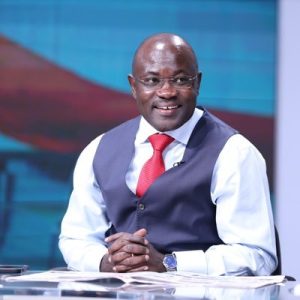
David Ochieng: The independent political equation
Ugenya MP David Ochieng presents a different kind of challenge.
As leader of the Movement for Democracy and Growth (MDG), Ochieng has demonstrated an ability to build an electoral constituency outside ODM’s traditional political structures.
He has openly criticised Orengo’s administration and positioned himself as an alternative for voters seeking a different development approach.
His political calculations are particularly interesting because he does not necessarily depend on Wandayi or ODM to mount a credible gubernatorial campaign.
Nevertheless, his relationship with the broad-based political establishment and his engagement with leaders associated with Wandayi’s political network could influence the eventual configuration of the race.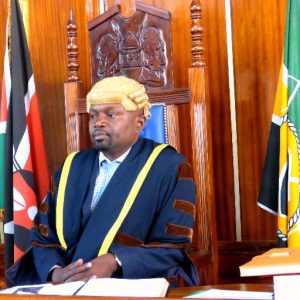
George Okode: The Assembly Speaker’s political ambitions
Siaya County Assembly Speaker George Omondi Okode is another emerging contender whose political fortunes could be influenced by his relationship with powerful national and county political actors.
Okode has been undertaking consultations ahead of his gubernatorial ambitions and has been linked to engagements involving Wandayi and other influential political figures.
His experience presiding over the County Assembly gives him visibility within county politics, while his Rarieda roots introduce another dimension to the contest.
However, his challenge will be translating institutional visibility and political alliances into a convincing countywide electoral movement.
The extent to which he can secure the backing of influential political networks, including those associated with Wandayi, will be an important factor to watch.
Orengo’s political dilemma
For the incumbent, the emerging configuration presents a difficult political equation.
He must contend with the possibility of facing a formidable opposition alliance at home while simultaneously navigating uncertainty within the national opposition.
His political history, stature as a Senior Counsel, experience in national politics and longstanding networks remain significant assets.
However, political stature alone cannot guarantee re-election.
The governor will also have to confront questions about his administration’s development record, public service delivery, county governance and the perception that he has devoted considerable political energy to national opposition politics.
His critics have repeatedly accused him of prioritising national political engagements over county responsibilities, an accusation he has had to contend with throughout his first term.
The Wandayi camp appears determined to turn these vulnerabilities into an electoral argument.
Yet the governor retains his own political constituency, and the eventual contest will depend on more than endorsements, political meetings and the influence of national personalities.
The real battle is for Siaya’s political machinery
The 2027 Siaya gubernatorial contest could ultimately become a referendum on two competing political approaches.
On one side is Orengo, whose political identity is closely associated with the opposition movement and his resistance to the broad-based arrangement between ODM and UDA.
On the other is an emerging network of politicians whose political calculations increasingly intersect with Wandayi’s influence and the national government’s political interests.
The most significant question is whether Gumbo, Ochieng and Okode can coordinate their interests or whether competing personal ambitions will fracture the anti-Orengo political formation.
Their different party affiliations, political constituencies and ambitions make a unified front far from guaranteed.
For Wandayi, the opportunity is to demonstrate that he can influence the choice of Siaya’s next governor without necessarily seeking the office himself.
For Orengo, the challenge is to prove that his national political stature still commands sufficient loyalty at home.
And for Siaya voters, the question is whether the 2027 election will be decided by political kingmakers or by the candidates’ competing development agendas.
One thing is increasingly apparent: the political contest to succeed Orengo has become a contest to determine who controls the county’s political machinery.
The governor may still have the advantage of incumbency, but Wandayi is rapidly becoming a central figure in the succession equation.
In Siaya’s unfolding 2027 political drama, Orengo may have to fight his most consequential battle not in Nairobi’s opposition rallies, but on his own political home turf.