 ADVERT

 ADVERThttps://youtu.be/Sny2O4mVqxU?feature=shared
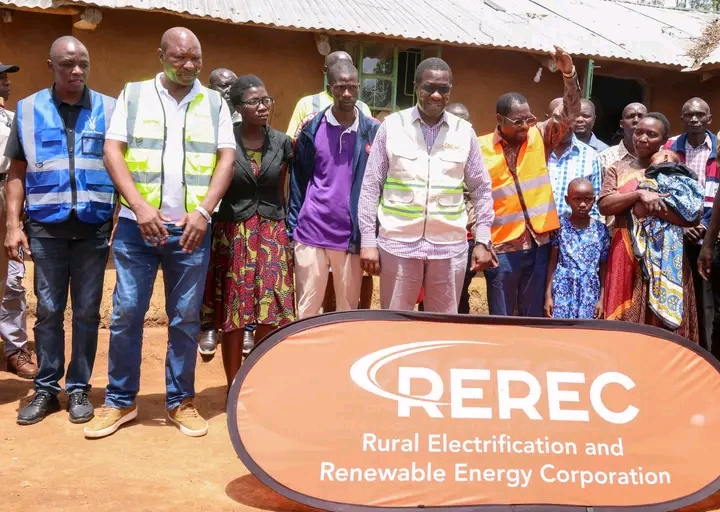
The commissioning and launch of Last Mile Connectivity Programme projects in Khalaba and Mayoni Wards during a development tour of Kakamega County represents more than the installation of transformers and the extension of electricity networks. It is a practical expression of a national commitment to bring essential services closer to ordinary households and strengthen local economies and ensure that development is not concentrated in urban centres while rural communities are left behind. The visit by Cabinet Secretary for Energy and Petroleum Opiyo Wandayi hosted by Matungu Member of Parliament Peter Oscar Nabulindo also demonstrates the value of cooperation between national government leadership and local representation in delivering tangible public goods. Electricity is not merely a convenience. It is a foundation upon which education health commerce communication security and dignity are built.
The Last Mile Connectivity Programme is significant because it addresses the final and often most difficult stage of electrification. In many rural areas the national grid may pass near a community yet individual households remain unconnected because of the cost distance or technical requirements involved in reaching them. The programme seeks to close that gap by extending infrastructure directly to homes public institutions and small businesses. It focuses especially on households and enterprises located near existing transformers where the cost of connection can be reduced and access can be expanded more quickly. This approach recognises that a country cannot claim inclusive development when large sections of its population remain outside the basic infrastructure that supports modern life. The Government has consistently described the programme as part of its wider agenda to achieve universal electricity access and promote socio economic growth at the grassroots level.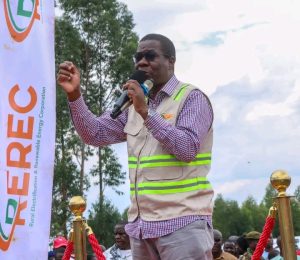
For the households in Khalaba and Mayoni Wards connection to electricity will change daily life in practical ways. Children will be able to study after dark. Families will reduce dependence on costly and sometimes unsafe sources of lighting and homes will be able to use appliances that save time and improve comfort. Small traders will be able to preserve perishable goods operate machinery extend business hours and expand the range of services they offer. Health facilities schools churches markets and administrative offices will function more reliably when they have stable power. In this sense electricity becomes an enabler of opportunity rather than an end in itself. It allows people to participate more fully in the economy and to access services that improve their quality of life.
The importance of such projects must also be understood within the broader question of equitable development. Kenya like many countries has historically experienced uneven access to infrastructure between urban and rural areas between regions and between wealthier and poorer households. When public investment is directed toward communities that have long waited for connection to the national grid it affirms the principle that every citizen deserves a fair share of national progress. The Last Mile Connectivity Programme is therefore not only an energy project. It is a statement about fairness inclusion and the responsibility of government to serve all regions. The Ministry of Energy and Petroleum Kenya Power and the Rural Electrification and Renewable Energy Corporation have been identified as key implementers of this work across underserved areas.
The collaboration between the national government and local leadership deserves particular attention. A Cabinet Secretary visiting Kakamega County and working with the Member of Parliament for Matungu sends a message that development is strongest when leaders at different levels share a common purpose. National government provides policy direction funding technical capacity and coordination while local leaders understand the needs priorities and realities of their communities. When these roles are aligned projects are more likely to reach the people who need them and to be sustained after launch events have ended. This partnership should be encouraged across the country because infrastructure delivery is not the responsibility of one office alone. It requires planning accountability community engagement and follow through from all levels of leadership.
 ADVERT
At the same time the value of electrification depends on more than connection. A household may be connected to the grid but the benefits will be limited if power supply is unreliable unaffordable or poorly maintained. The Government must therefore ensure that new connections are accompanied by dependable service fair billing responsive customer care and continued investment in network maintenance. Communities should also be supported to use electricity productively through access to affordable appliances business training and opportunities for local enterprise. Connection is the beginning of a process not the conclusion of it. If the programme is to transform livelihoods it must be matched by measures that help households and businesses convert power into income learning and improved services.
There is also an important environmental and economic dimension to expanding electricity access. Reliable grid connection can reduce reliance on kerosene lamps charcoal firewood and diesel generators which carry financial health and environmental costs. Electricity supports cleaner cooking alternatives modern farming methods digital services and energy efficient technologies. As Kenya continues to pursue economic growth energy access must be linked to sustainability so that development today does not create burdens for future generations. The country’s wider renewable electrification agenda recognises this connection between access affordability and long term national development.
The projects in Khalaba and Mayoni Wards should therefore be viewed as part of a larger national effort to make development visible in people’s lives. A transformer installed in a village may appear to be a technical achievement but its real meaning lies in the opportunities it creates for a student a shopkeeper a farmer a nurse or a small manufacturer. The measure of success should not be the number of launch ceremonies held but the number of homes that remain connected the reliability of supply the growth of local enterprises and the improvement of public services. Development becomes meaningful when citizens can point to practical changes in their daily circumstances.
The commitment to unity of purpose and equitable development is tested not in speeches but in the distribution of resources and the consistency of implementation. The Last Mile Connectivity Programme offers an opportunity for government to demonstrate that no community is too remote too poor or too politically insignificant to deserve access to modern energy. Kakamega County’s participation in this programme is a reminder that rural Kenya is central to the country’s future. When power reaches homes it reaches ambitions. When it reaches businesses it reaches employment. When it reaches schools and health facilities it reaches the foundations of a stronger society.
Ultimately the launch of these projects in Matungu should inspire continued vigilance rather than complacency. Leaders implementing agencies and communities must work together to ensure that every promised connection is completed every installed network is maintained and every household that is connected can genuinely benefit from the service. Electricity has the capacity to expand opportunity reduce inequality and improve livelihoods but only when it is delivered reliably and used productively. The Last Mile Connectivity Programme is therefore a test of whether national development can move from policy documents and public announcements into the homes and daily lives of ordinary Kenyans. If pursued with honesty efficiency and sustained commitment it can help build a country where progress is shared opportunity is widespread and no community is left in darkness. The Government’s stated commitment to universal electricity access makes this responsibility even more urgent and gives citizens a clear standard against which progress should be judged.
Photo: Cabinet secretary for energy and Petroleum Opiyo Wandayi during LMCP.