 ADVERT


 ADVERThttps://youtu.be/Sny2O4mVqxU?feature=shared
Residents demand ward-based LPG refill stations, biomass investment and stronger safeguards against environmental risks as County Government seeks public input on its 2026–2035 Energy Policy.
The County Government of Siaya has embarked on an ambitious journey to transform the county’s energy sector through a proposed 10-year Siaya County Energy Policy 2026–2035, with residents raising critical questions about nuclear energy, environmental protection, affordability and access to clean cooking solutions.
The Department of Public Works and Energy on Thursday conducted public participation forums to gather citizens’ views on the draft policy, an exercise aimed at ensuring that the proposed framework reflects the aspirations, concerns and practical energy needs of Siaya residents.
The exercise, held in Rarieda, Alego Usonga and Ugenya, was anchored in Article 10(2)(a) of the Constitution, which recognises public participation as a national value and principle of governance. It was also guided by Sections 87–92 and 115 of the County Governments Act, which provide for structured citizen engagement, information sharing and civic education in county policy formulation, planning and development.
The proposed policy seeks to establish a coherent, inclusive and sustainable energy framework that will expand access to reliable and affordable electricity, accelerate the transition to clean cooking technologies, promote productive applications of renewable energy and strengthen institutional governance.
 ADVERT
Ultimately, the county hopes to leverage sustainable energy to drive socioeconomic transformation, environmental conservation and climate resilience.
Ten-year roadmap for energy transformation
Among its key objectives, the policy proposes strengthening institutional coordination and governance within the energy sector, facilitating affordable electricity access within the county government’s mandate and promoting cleaner, more efficient and sustainable cooking solutions.
It also seeks to expand renewable energy applications across productive sectors, improve energy efficiency and conservation, strengthen financing and resource mobilisation, and establish robust energy data management, monitoring and reporting systems.
Importantly, the framework incorporates gender, disability and social inclusion, while integrating environmental sustainability, public health and climate change considerations into energy planning.
Research, innovation and capacity development in renewable and clean energy technologies also feature prominently.
The policy is anchored on eight guiding principles: sustainability; equity and inclusiveness; affordability and accessibility; coordination and partnership; evidence-based planning; innovation and adaptability; public participation and transparency; and cooperative governance and subsidiarity.
Its scope covers energy-related activities throughout Siaya County, providing a strategic reference for planning, investment, implementation, decision-making and stakeholder coordination within the county’s constitutional and statutory mandate.
Bondo residents raise concerns over nuclear energy
One of the most contentious issues emerging from the public participation exercise in Bondo was the proposed consideration and adoption of nuclear energy, particularly concerns surrounding emissions, radioactive waste disposal and potential environmental and public health consequences.
Some residents questioned provisions relating to nuclear power plants associated with NuPEA and other energy sources, arguing that the county must exercise caution before embracing technologies they fear could expose communities to environmental hazards and undermine climate resilience.
Their concerns underscored the importance of balancing the quest for reliable and affordable energy with public safety, environmental sustainability and meaningful community consent.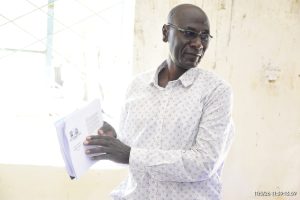
The submissions also highlighted the need for greater clarity on the county’s role in energy technologies whose development and regulation extend beyond its direct constitutional mandate.
Clean cooking, LPG access and women’s economic empowerment
The proposed policy recognises the disproportionate burden women and girls shoulder in accessing household cooking energy, particularly through firewood collection.
To address this challenge, it proposes incentives amounting to 30 per cent to support women in acquiring alternative cooking energy solutions.
However, some Bondo residents suggested that the county should go beyond providing incentives and directly invest in biomass gas to make clean cooking more accessible and affordable.
They further proposed that LPG refill stations be established within individual wards rather than concentrated in a few urban centres, arguing that decentralised distribution would reduce transport costs and improve access for rural households.
The draft also proposes identifying suitable locations for LPG refill stations and promoting awareness of safe and affordable cooking alternatives.
On biomass energy, the policy explores the use of livestock waste as a potential source of energy, opening opportunities for agricultural communities to convert locally available resources into productive energy solutions.
It also proposes promoting responsible charcoal production through tree-planting initiatives, including replacing trees harvested for charcoal production.
Solar power for fishing communities
The fishing industry is another sector targeted for transformation under the proposed framework.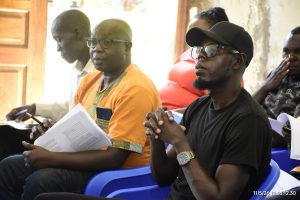
The policy proposes establishing solar energy facilities at selected landing beaches to support fishing communities and reduce the cost of accessing energy for their daily economic activities.
Such interventions could help improve productivity, lower operational expenses and expand the use of renewable energy within the blue economy.
The framework also proposes energy awareness clinics, demonstration projects and short training programmes through a proposed County Directorate of Energy.
These initiatives would educate residents on the health implications of inefficient cooking stoves, energy conservation and the practical benefits of transitioning to cleaner technologies.
Proposed Energy Directorate and Sh400.5 million budget
A major institutional proposal is the establishment of a dedicated Directorate of Energy, supported by adequate budgetary allocations to ensure effective implementation.
The proposed directorate would coordinate energy programmes, mobilise resources and collaborate with schools, municipalities and other institutions to promote appropriate and sustainable energy solutions.
The draft policy proposes an estimated budget of Sh400.5 million over its 10-year implementation period, with additional allocations required for specific interventions depending on their implementation timelines.
It also provides for ring-fenced departmental funding, including resources for energy efficiency, training and maintenance of street lighting infrastructure.
An allocation of Sh30 million is proposed for energy data collection, reflecting the importance of reliable information in planning, monitoring and evaluating the county’s energy programmes.
The policy further identifies opportunities for mobilising donor support and accessing carbon-credit financing, provided the county can adequately quantify the environmental benefits arising from its energy conservation and climate resilience interventions.
Research, innovation and practical demonstration projects are also expected to feature in the implementation strategy.
Accountability, annual reporting and policy reviews
To strengthen accountability, the proposed framework establishes responsibilities for the county government, the Directorate of Energy, the relevant planning committee and the County Assembly of Siaya.
It provides for annual consolidated implementation reports, including comparative assessments of progress against the policy’s implementation matrix.
The reports are intended to inform decision-making and enable residents to assess whether the county is achieving its energy development targets.
The framework proposes annual reporting and a comprehensive policy review every five years following adoption.
It also envisages continued public participation through countywide and ward-level awareness programmes, with annual implementation reports made available through the county government’s website.
During the Bondo engagement, stakeholders proposed the establishment of village and ward energy committees to strengthen grassroots participation, improve accountability and ensure that local energy priorities inform countywide planning.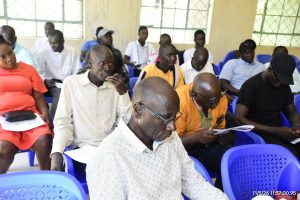
Public participation team guides residents through the draft
Participants were taken through the draft policy by the facilitation team comprising Sakwa North Administrator Willis Ang’awa, who served as moderator, Public Participation and Civic Education Director Rebecca Opondo, Jivance Opewo and sign language interpreter George Ochieng.
The technical team had structured the policy into five chapters covering the policy framework and context, situational analysis and the identified gaps the proposed interventions seek to address, alongside the other key implementation and governance components.
The public forums provided residents with an opportunity to scrutinise the proposals, seek clarification and recommend amendments before the document proceeds through the remaining policy approval processes.
The proposed Siaya County Energy Policy 2026–2035 represents an important opportunity to reposition energy as a catalyst for economic growth, improved household welfare and environmental sustainability.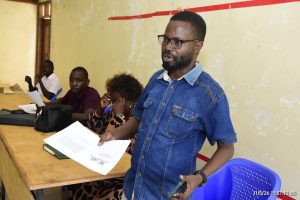
However, the submissions from Bondo residents demonstrate that successful implementation will depend not merely on ambitious targets and budgetary projections, but also on affordability, accessibility, transparency and public confidence.
Ultimately, the success of the policy will be measured not by the number of proposals contained in the document, but by whether ordinary households, women, farmers, fishermen, businesses and institutions across Siaya County can access affordable, reliable and sustainable energy.